Philosophy Quotes often give us insights that help make sense of life and the choices we face. Raymond Aron, a French philosopher and political thinker, once said that foreknowledge of the future allows people to influence both friends and enemies. This idea is not just for politicians or leaders—it’s something we can all use to understand consequences and make wiser decisions in everyday life.
Imagine life as a chess game: knowing what might come next helps you plan your moves carefully. By anticipating challenges or opportunities, you can act more wisely, avoid unnecessary mistakes, and even guide others toward better outcomes. Aron’s words remind us that observation, foresight, and thoughtful action are key to navigating life successfully and staying truly happy along the way.
1.“It does not matter how slowly you go as long as you do not stop.”
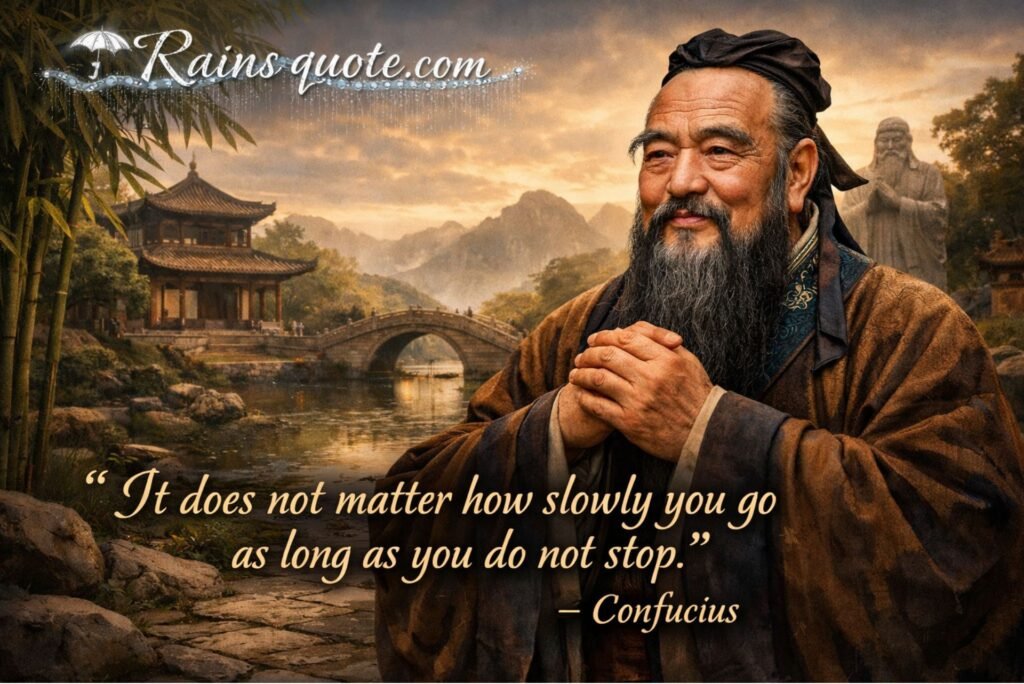
— Confucius
About the Author: Confucius was an ancient Chinese philosopher and teacher who lived around 551–479 BCE. He is known for his wisdom on ethics, discipline, and personal growth, and his teachings have shaped Chinese culture and philosophy for centuries.
🎬 Context of the Quote: This quote reflects Confucius’s belief in steady progress and patience in life. He taught that success is not about speed but about consistency—moving forward step by step without giving up, no matter how slow the journey feels.
2.“Know thyself, know thy enemy. A thousand battles, a thousand victories.”
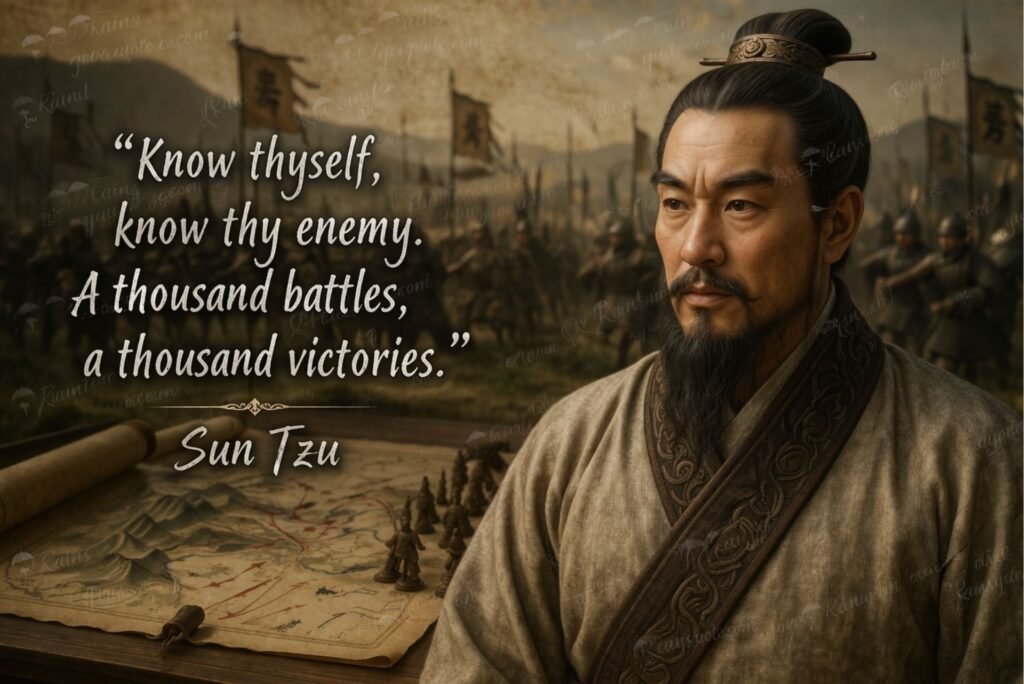
— Sun Tzu
About the Author: Sun Tzu was a Chinese general, military strategist, and philosopher, best known for writing The Art of War. His teachings focus on strategy, discipline, and understanding both oneself and opponents to achieve success.
🎬 Context of the Quote: This quote highlights the power of self-awareness and strategic thinking in any conflict or challenge. Sun Tzu teaches that true victory comes when you understand your own strengths and weaknesses while also deeply knowing your opponent.
3.“Love is composed of a single soul inhabiting two bodies.”
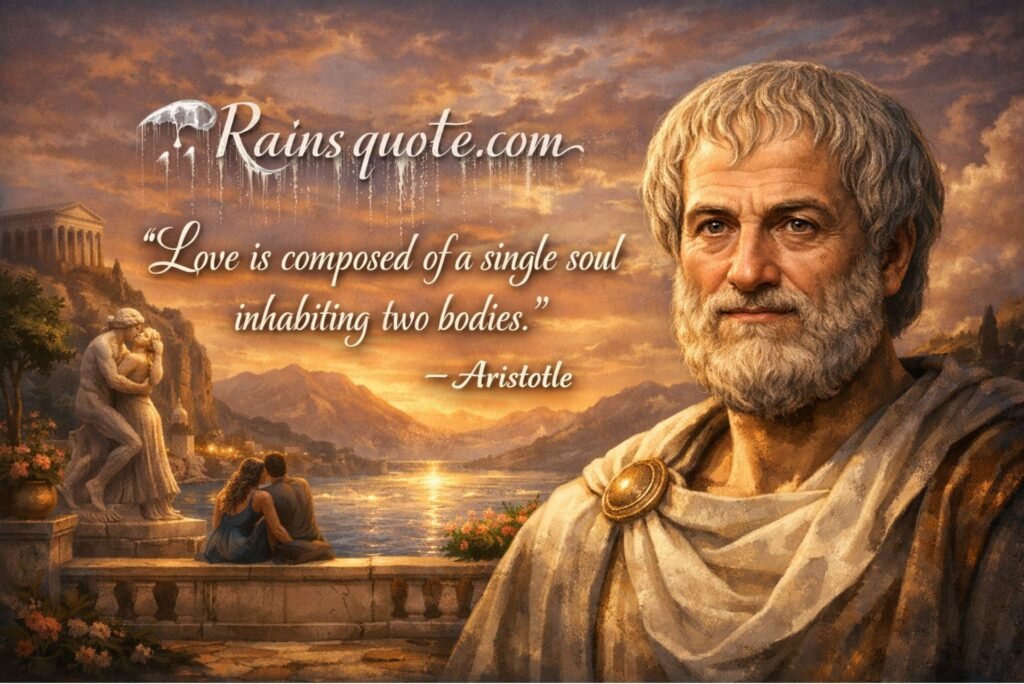
— Aristotle
About the Author: Aristotle was a Greek philosopher and student of Plato, who made lasting contributions to logic, ethics, science, and philosophy. His ideas about human relationships and emotions continue to influence modern thinking.
🎬 Context of the Quote: This quote reflects Aristotle’s deep view of love as a true connection between two people. He believed that real love is not just attraction, but a shared understanding, unity, and emotional bond that makes two individuals feel like one soul.
4.“History repeats itself, first as tragedy, second as farce.”
— Karl Marx
About the Author: Karl Marx was a German philosopher, economist, and social theorist known for his analysis of capitalism and society. His ideas on class struggle and historical change have deeply influenced politics and economics worldwide.
🎬 Context of the Quote: This quote suggests that major events in history often repeat, but in a distorted or less serious way the second time. Marx used this idea to show how people fail to learn from the past, turning real struggles into almost absurd repetitions.
5.“War does not determine who is right — only who is left.”

— Bertrand Russell
About the Author: Bertrand Russell was a British philosopher, logician, and Nobel Prize winner known for his work in philosophy, mathematics, and social criticism. He was also a strong advocate for peace and spoke openly against war and violence.
🎬 Context of the Quote: This quote reflects Russell’s anti-war beliefs, showing that war does not prove justice or truth. Instead, it only reveals who survives, often at the cost of immense human suffering and loss.
6.“We have two ears and one mouth so that we can listen twice as much as we speak.”
— Epictetus
About the Author: Epictetus was a Greek Stoic philosopher who taught that self-control, discipline, and wisdom are the keys to a good life. His teachings focused on mastering one’s thoughts and actions rather than external events.
🎬 Context of the Quote: This quote emphasizes the importance of listening more than speaking in everyday life. Epictetus believed that true wisdom comes from understanding others, observing, and speaking thoughtfully rather than impulsively.
7.“No man’s knowledge here can go beyond his experience.”
— John Locke
About the Author: John Locke was an English philosopher and one of the most influential thinkers of the Enlightenment. He is known for his ideas on knowledge, experience, and human understanding, especially the concept that the mind starts as a blank slate (tabula rasa).
🎬 Context of the Quote: This quote reflects Locke’s belief that all knowledge comes from experience. He argued that we learn through our senses and interactions with the world, meaning our understanding can only grow as far as what we have personally experienced.
8.“It is no measure of health to be well adjusted to a profoundly sick society.”

— Jiddu Krishnamurti
About the Author: Jiddu Krishnamurti was an Indian philosopher and speaker known for his teachings on psychological freedom, truth, and self-awareness. He questioned social norms and encouraged individuals to think independently rather than blindly follow society.
🎬 Context of the Quote: This quote challenges the idea that fitting into society always means being mentally healthy. Krishnamurti suggests that if society itself is deeply flawed, then adapting to it without question may not be a sign of true well-being, but rather a lack of awareness.
9.“Women, can’t live with them, can’t live without them.”

— Desiderius Erasmus
About the Author: Desiderius Erasmus was a Dutch philosopher, scholar, and theologian of the Renaissance period, known for his wit, critical thinking, and writings on religion and society. He often used humor and satire to convey his ideas about human nature.
🎬 Context of the Quote: This quote humorously reflects the paradoxical nature of relationships between men and women. Erasmus highlights the universal tension and dependence in human relationships, suggesting that while companionship can be challenging, it is also essential to life.
10.“Curiosity is the lust of the mind.”
— Thomas Hobbes
About the Author: Thomas Hobbes was an English philosopher best known for his work on political philosophy, especially Leviathan. He explored human nature, society, and the motivations that drive people’s behavior, emphasizing reason and observation.
🎬 Context of the Quote: This quote describes curiosity as a powerful, almost passionate drive of the human mind. Hobbes suggests that the desire to learn and explore is an intense mental appetite, fueling knowledge, discovery, and intellectual growth.
11.“I can, therefore I am.”
— Simone Weil
About the Author: Simone Weil was a French philosopher, mystic, and social activist known for her writings on ethics, spirituality, and human suffering. She combined deep intellectual insight with a lifelong commitment to social justice and empathy.
🎬 Context of the Quote: This quote emphasizes the power of action as proof of existence and purpose. Weil suggests that our ability to act, choose, and engage with the world affirms our being and reflects our inner strength and responsibility.
12.“Out of difficulties grow miracles.”
— Jean de La Bruyère
About the Author: Jean de La Bruyère was a French philosopher and writer of the 17th century, best known for his work The Characters, in which he explored human behavior and morality with insight and wit.
🎬 Context of the Quote: This quote highlights the idea that challenges and hardships can lead to unexpected growth and positive outcomes. La Bruyère suggests that perseverance through difficulties often brings about remarkable transformations or “miracles.”
13.“The most difficult thing in life is to know yourself.”
— Thales
About the Author: Thales was an ancient Greek philosopher, mathematician, and astronomer, often regarded as one of the Seven Sages of Greece. He is considered a pioneer of natural philosophy and early scientific thought.
🎬 Context of the Quote: This quote emphasizes the challenge of self-awareness. Thales suggests that understanding one’s own thoughts, motivations, and character is often harder than understanding the world around us, yet it is essential for wisdom and personal growth.
14.“A man will renounce any pleasures you like, but he will not give up his suffering.”
— George Gurdjieff
About the Author: George Gurdjieff was an Armenian spiritual teacher and philosopher known for his teachings on self-awareness, human consciousness, and personal transformation. He emphasized the importance of inner work to overcome mechanical habits of life.
🎬 Context of the Quote: This quote highlights human attachment to familiar suffering. Gurdjieff observed that people often cling to their discomforts and struggles, even when offered pleasures, because suffering has become a familiar and defining part of their identity.
15.“The state is not abolished, it withers away.”
— Friedrich Engels
About the Author: Friedrich Engels was a German philosopher, social scientist, and collaborator of Karl Marx. He co-developed Marxist theory and wrote extensively on socialism, economics, and the critique of capitalism.
🎬 Context of the Quote: This quote explains Engels’s view of a classless society. He suggested that the state, as an instrument of oppression, does not vanish suddenly but gradually becomes unnecessary and “withers away” as society reaches equality and self-governance.
16.“The secret of happiness is: Find something more important than you are and dedicate your life to it.”
— Daniel Dennett
About the Author: Daniel Dennett is an American philosopher, writer, and cognitive scientist known for his work on the philosophy of mind, consciousness, and human behavior. He explores how understanding ourselves and the world can lead to meaningful living.
🎬 Context of the Quote: This quote emphasizes that true happiness comes from purpose beyond oneself. Dennett suggests that dedicating your energy to a cause, idea, or mission larger than personal desires brings fulfillment, meaning, and lasting satisfaction in life.
17.“Well-being is attained by little and little, and nevertheless is no little thing itself.”
— Zeno of Citium
About the Author: Zeno of Citium was an ancient Greek philosopher and the founder of Stoicism. He taught that virtue, self-discipline, and rational living are essential for achieving a good and meaningful life.
🎬 Context of the Quote: This quote emphasizes that well-being is a gradual process. Zeno suggests that small, consistent efforts in living virtuously and wisely accumulate over time, ultimately creating something profoundly significant in one’s life.
18.“Like other revolutionaries, I can thank God for the reactionaries. They clarify the issue.”
— R. G. Collingwood
About the Author: R. G. Collingwood was a British philosopher, historian, and archaeologist known for his work on philosophy of history, aesthetics, and the theory of knowledge. He emphasized understanding human thought and action in historical context.
🎬 Context of the Quote: This quote reflects the idea that opposition can sharpen purpose. Collingwood suggests that reactionaries—those resisting change—help revolutionaries by highlighting the real issues, making goals clearer, and motivating decisive action.
19.“Appearances are a glimpse of the unseen.”
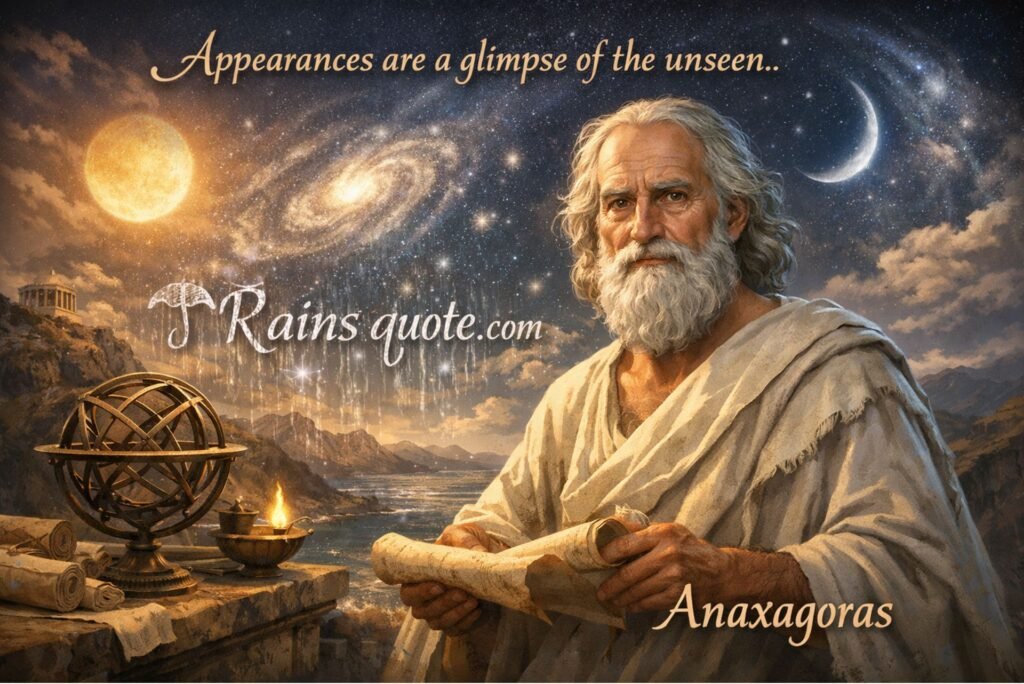
— Anaxagoras
About the Author: Anaxagoras was an ancient Greek philosopher who introduced the concept of Nous (Mind) as a cosmic principle and explored natural phenomena through observation and reason. He significantly influenced later thinkers in philosophy and science.
🎬 Context of the Quote: This quote suggests that what we perceive is only a hint of a deeper reality. Anaxagoras believed that appearances in the world reveal underlying principles or truths that are not immediately visible, encouraging careful observation and contemplation.
20.“Foreknowledge of the future makes it possible to manipulate both enemies and supporters.”

— Raymond Aron
About the Author:Raymond Aron was a French philosopher, sociologist, and political thinker known for his analysis of international relations, political theory, and the dynamics of power. He emphasized realism and strategic thinking in politics.
🎬 Context of the Quote:This quote highlights the strategic advantage of understanding future events. Aron suggests that anticipating outcomes allows a person or leader to influence both opponents and allies effectively, using foresight to shape decisions and control situations.
Conclusion
In the end, philosophy is not just about big ideas or deep thinkers—it’s about understanding ourselves and the world around us a little better. These quotes from Einstein and other great minds remind us to pause, reflect, and look at life from a different angle. Sometimes, a single line can change the way we think, feel, or even act.
Take these words with you, think about them in your own way, and apply what makes sense to your life. Because real wisdom isn’t just in reading quotes—it’s in living them, step by step, in your everyday journey.
FAQS
1. What is the best philosophy quote?
One of the most loved philosophy quotes is from Socrates: “Know thyself.” It reminds us that true wisdom begins with understanding ourselves.
2. What are some famous quotes everyone should know?
Famous quotes often come from great thinkers like Albert Einstein and Aristotle. These quotes usually focus on life, knowledge, and human nature, offering timeless lessons.
3. What are 5 wise quotes about life?
Wise quotes about life usually teach simple but powerful lessons—like staying patient, learning from mistakes, and valuing self-awareness. Many come from philosophers who studied human behavior deeply.
4. What is a good deep quote?
A deep quote makes you stop and think. For example, Friedrich Nietzsche said, “He who has a why to live can bear almost any how.” It shows the importance of purpose in life.
5. What is a strong 3-word quote?
Short quotes can be very powerful. A simple example is “Know yourself.” Even in just three words, it carries a deep message about self-awareness and growth.