Have you ever seen a blue orchid flower and wondered if it’s real? These flowers are some of the most beautiful and unique in the world, but naturally, bright blue orchids are very rare. Most of the “blue orchids” sold in stores are actually white orchids that have been dyed to look blue, unlike natural Gerbera flowers, which get their vibrant colors naturally.
In this article, we’ll explain the truth about blue orchids, why they are so uncommon in nature, and how to care for them if you bring one home. By the end, you’ll understand the difference between natural and dyed blue orchids and learn how to keep these stunning flowers, including Daisies, healthy and vibrant
What Is a Blue Orchid Flower?
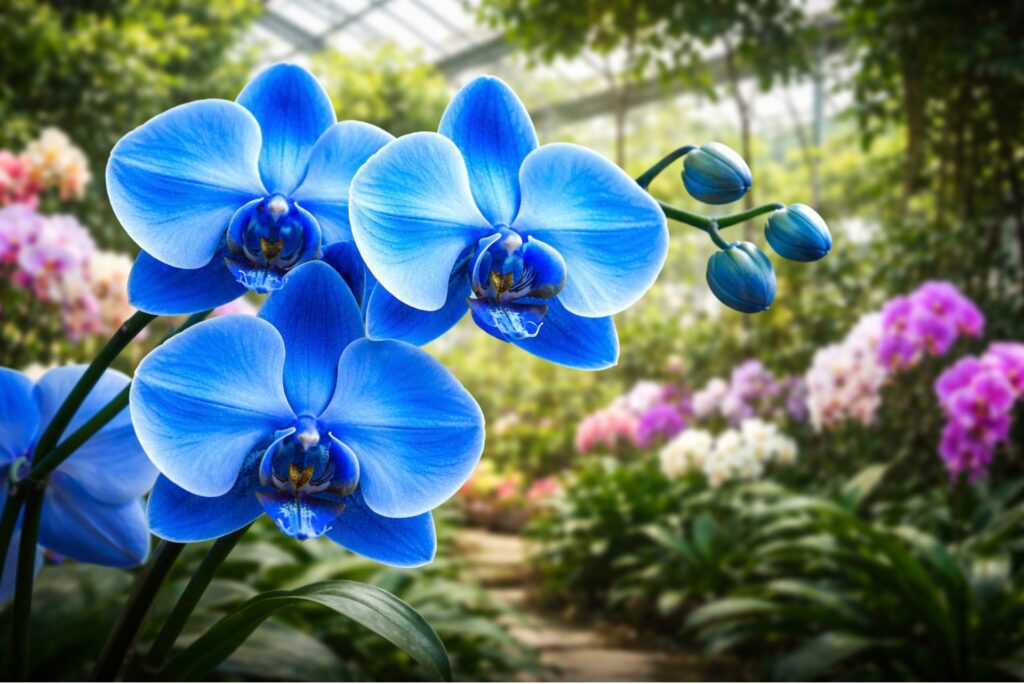
A blue orchid flower is real as a plant, but in most cases, the blue color you see in shops is not natural. True, naturally blue orchids are very rare in the world. Most “blue orchids” sold in stores are actually white orchids that are dyed blue using color injection. There are a few real orchid species with bluish or violet-blue shades, but pure bright blue is uncommon in nature. So if you see a bright blue orchid, it is usually a dyed flower, not naturally blue.
Are Blue Orchids Real or Fake?
Blue orchids are real plants, but the bright blue flowers you often see in stores are usually fake. Most “blue orchids” sold commercially are actually white orchids that have been dyed blue by injecting color into the stems. When these orchids bloom again, the flowers return to their natural white color, not blue.
In nature, true blue orchids are very rare, but some species do have naturally bluish or violet-blue flowers.
For example:
- Vanda coerulea (Blue Vanda) grows in Northeast India and nearby Asian regions and has bluish-purple flowers. (Source Wikipedia)
- Thelymitra crinita (Blue Lady Orchid) is found in Western Australia and produces naturally blue flowers. (Source Wikipedia)
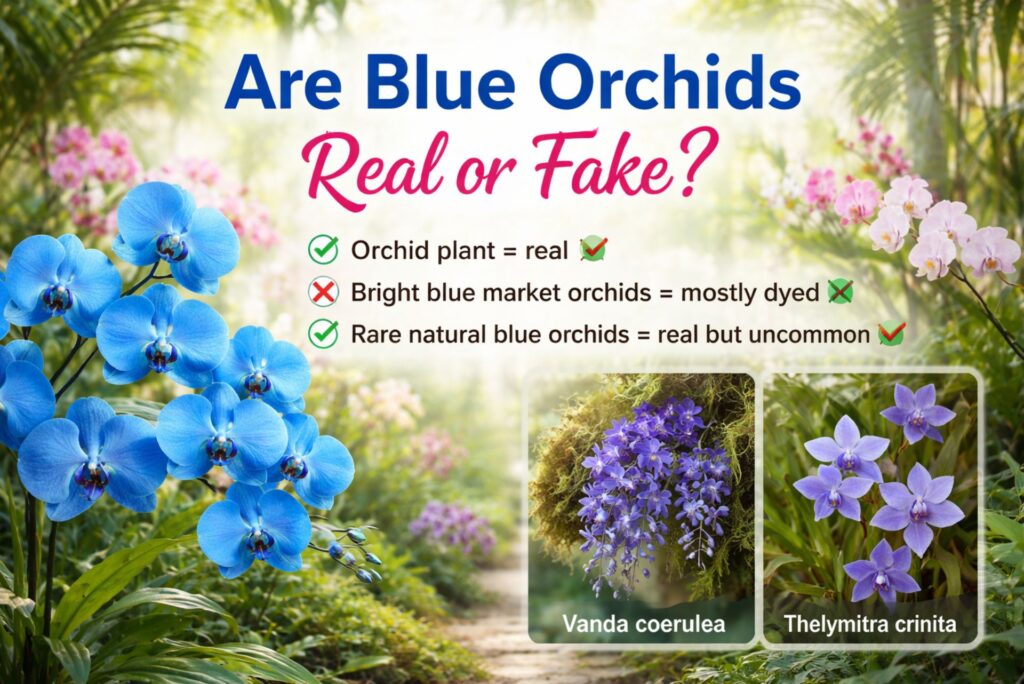
So, the orchid plant itself is real, but if you see a bright, vivid blue orchid in a shop, it is almost always dyed. Natural blue orchids exist, but they are rare and usually more violet-blue than bright blue.
Summary:
- Orchid plant = real ✅
- Bright blue market orchids = mostly dyed ❌
- Rare natural blue orchids = real but uncommon ✅
Why Are Blue Orchids So Rare in Nature?
Blue orchids are rare because most orchids cannot produce the pigment needed for true blue flowers. Only a few species, like Vanda coerulea (Blue Vanda) and Thelymitra crinita (Blue Lady Orchid), have naturally bluish tones. These orchids also need special climates and conditions to grow, which makes them uncommon in the wild. Most bright blue orchids you see in stores are actually white orchids dyed blue.
Summary:
- True blue pigment is hard for orchids to produce naturally ✅
- Only a few species have natural bluish flowers ✅
- They require special growing conditions ✅
- Most store-bought blue orchids are dyed ❌
How to Care for Blue Orchids
Blue orchids are stunning and unique, but to keep them healthy and blooming, they require proper care. Here’s everything you need to know about sunlight, humidity, and temperature.
🌞 1. Sunlight
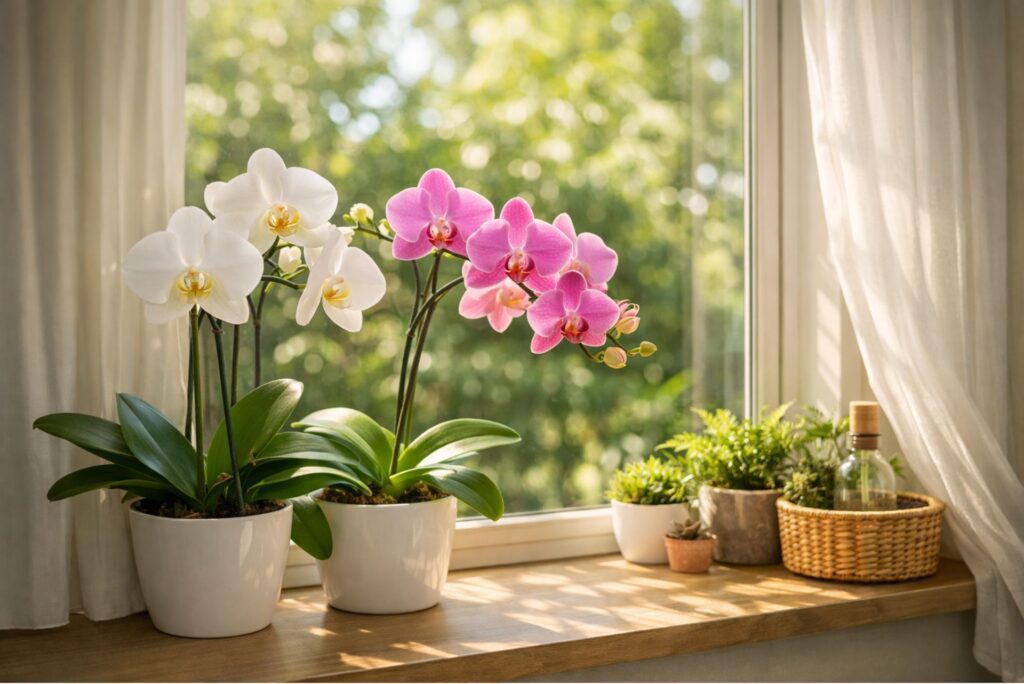
- Bright, indirect light is best — not direct hot sun. Too much direct sunlight can burn the leaves and cause yellow or brown spots. (Source plants.sorumatik.co)
- Place orchids near an east‑ or west‑facing window (filtered light is ideal).
- If sunlight is too strong, use sheer curtains or blinds so the light is soft.
✔️ Tip: If the leaves are dark green, they might not be getting enough light. Light green or slightly yellowish leaves usually show better light conditions.
💧 2. Humidity
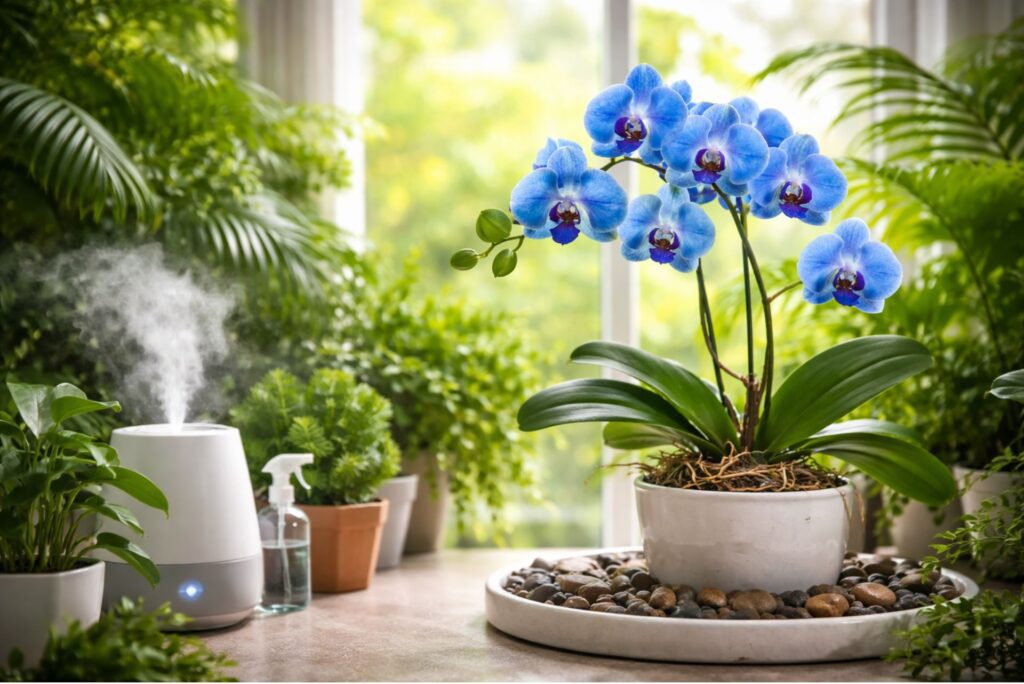
- Blue orchids (like most orchids) are native to tropical regions and love humidity. Aim for about 50%–70% humidity. (Source thegreenthumbler)
- Homes are often drier than this, so use tricks like:
• A pebble tray + water under the orchid pot (pot sits above water, not in it).
• A humidifier near the plant increases humidity.
• Grouping plants creates a humid micro‑environment. - Avoid misting leaves at night (can cause fungal problems).
💡 Why humidity matters: Good humidity helps orchids keep blooms longer and prevents dry, wrinkled leaves.
🌡️ 3. Temperature

Orchids are tropical — they like warmth, but not extremes:
✔️ Ideal day temperatures:
• ~65–75°F (18–24°C) — comfortable and good for growth.
✔️ Ideal night temperatures:
• ~55–65°F (13–18°C) — slightly cooler helps flower development.
❗ Avoid sudden changes: Rapid shifts between hot and cold stress orchids, slowing growth, or dropping blooms.
🌀 Airflow: Soft air movement (like a small fan on a low setting) helps keep leaves dry and prevents disease.
Types of Naturally Occurring Blue Orchids
Blue orchids are rare in nature, and only a few species naturally have that stunning blue color. Here are some of the most well-known ones:
1. Vanda coerulea
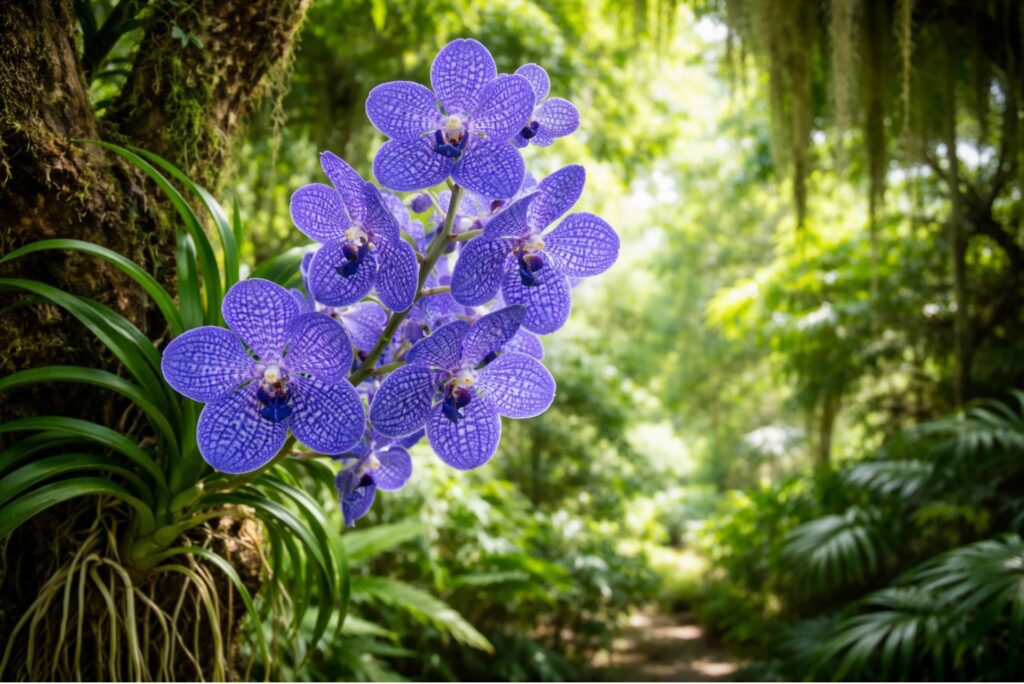
- Common name: Blue Vanda Orchid
- Origin: India, Bhutan, and Myanmar
- Description: This is one of the most famous blue orchids. It has bright blue to violet flowers with a unique, patterned lip. The blooms can last for several weeks.
- Growth: Vandas are epiphytic, meaning they grow on trees in their natural habitat. They need lots of light, high humidity, and warm temperatures.
2. Boella coelestis
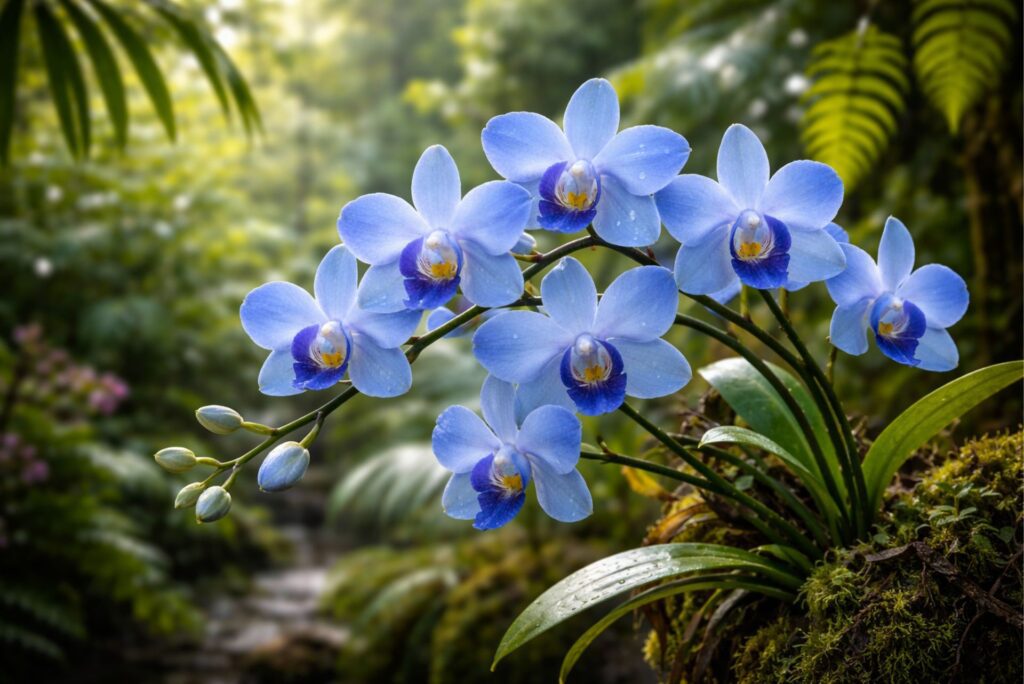
- Common name: Blue Boella Orchid
- Origin: Southeast Asia
- Description: Known for its delicate blue petals, this orchid is smaller than Vanda coerulea but equally beautiful. Its flowers are vivid blue and often fragrant.
- Growth: It prefers bright indirect light, good air circulation, and high humidity.
3. Thelymitra crinite
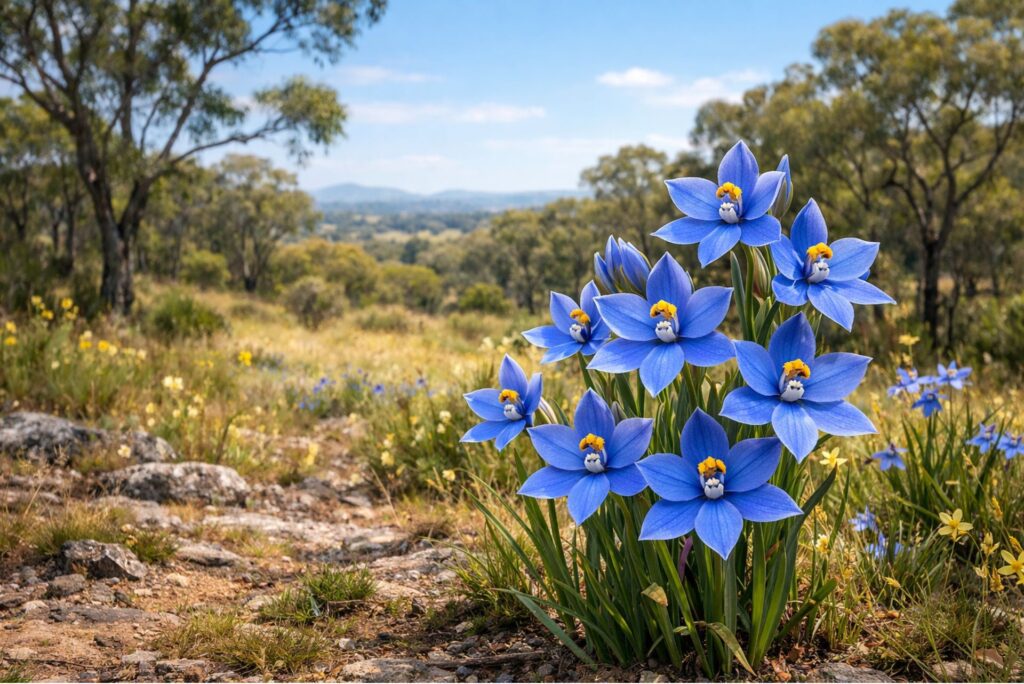
- Common name: Blue Sun Orchid
- Origin: Australia
- Description: Unlike the tropical Vanda or Boella, this orchid grows in temperate regions. Its flowers are a soft to vivid blue, often with darker veins on the petals.
- Growth: These orchids are terrestrial, meaning they grow in soil rather than on trees. They like sunny spots with moderate humidity.
Conclusion
Blue orchids are rare and fascinating plants that capture attention with their unique color. While most store-bought blue orchids are dyed, some species like Vanda coerulea and Thelymitra crinita naturally have beautiful bluish tones. By learning how to spot real blue orchids and giving them proper care—right sunlight, humidity, and temperature—you can enjoy these stunning flowers in their full beauty for years. Understanding the difference between natural and dyed orchids helps you truly appreciate their rarity and elegance.
FAQS
1. Are blue orchids real flowers?
Yes! Blue orchids are real, but naturally bright blue ones are very rare. Most store-bought blue orchids are actually white flowers that have been dyed.
2. Why are blue orchids so rare?
Blue orchids are rare because most orchids can’t naturally produce the pigment for true blue flowers. Only a few species have bluish or violet-blue tones.
3. Can you grow blue orchids at home?
Yes, you can grow them at home! They need bright, indirect light, moderate humidity, and consistent temperatures to thrive.
4. What does a blue orchid symbolize?
Blue orchids represent uniqueness, rarity, and beauty. They are often seen as a symbol of strength and elegance.
5. Which color orchid is considered lucky?
Purple and white orchids are often considered lucky and symbolize good fortune, while blue orchids are prized for rarity and uniqueness.