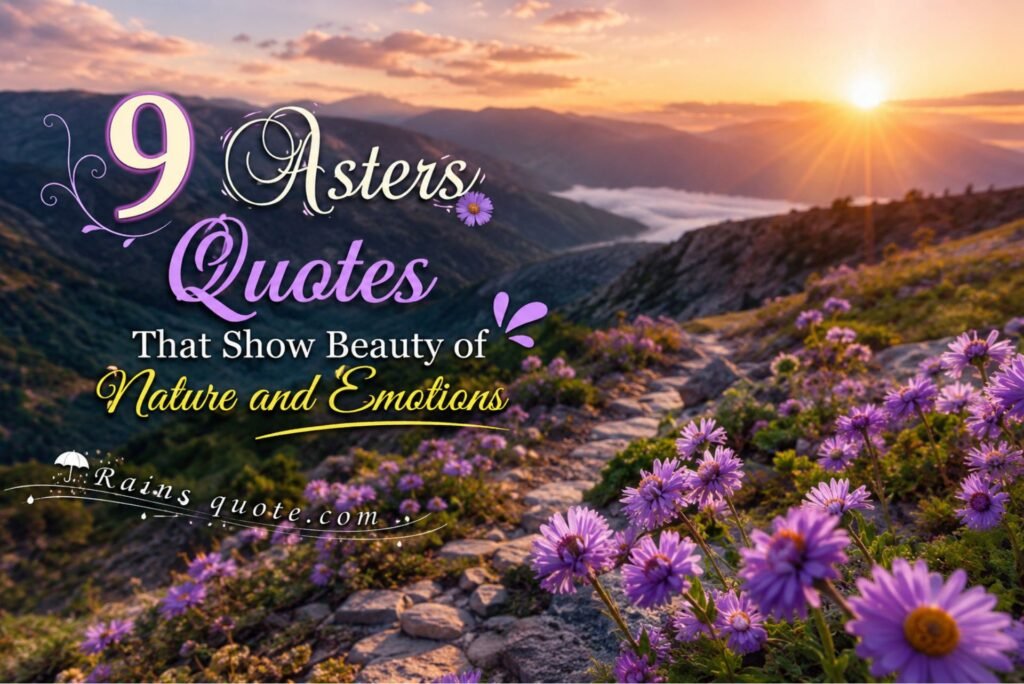
This collection of ASTERS QUOTES feels like a small journey through nature, where different writers notice a simple flower and turn it into something full of meaning. It reads like a soft story where every quote adds a new feeling about life, time, and beauty in nature.
Each author describes the aster in their own way—some see it as a gentle smile of nature, some connect it with memories and emotions, and others use it to show changing seasons and hidden meanings in life. Together, they make one simple flower feel deep, emotional, and meaningful.
1. “The aster greets us as we pass with her faint smile.”
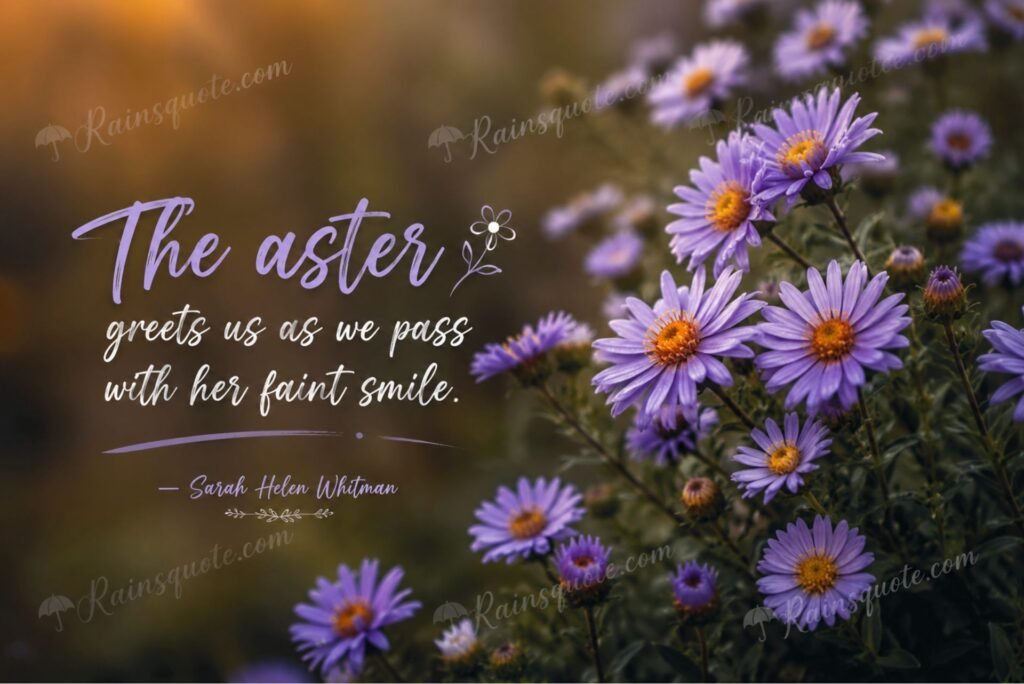
— Sarah Helen Whitman
Author: Sarah Helen Whitman was an American poet and essayist associated with transcendentalist ideas. She was known for her reflective, romantic, and nature-inspired poetry.
🎬 Context of the Quote: This quote beautifully personifies the aster flower, showing nature as gentle and welcoming. It reflects a calm, poetic moment where simple natural beauty feels alive and expressive.
2. “I end not far from my going forth by picking the faded blue of the last remaining aster flower to carry again to you.”
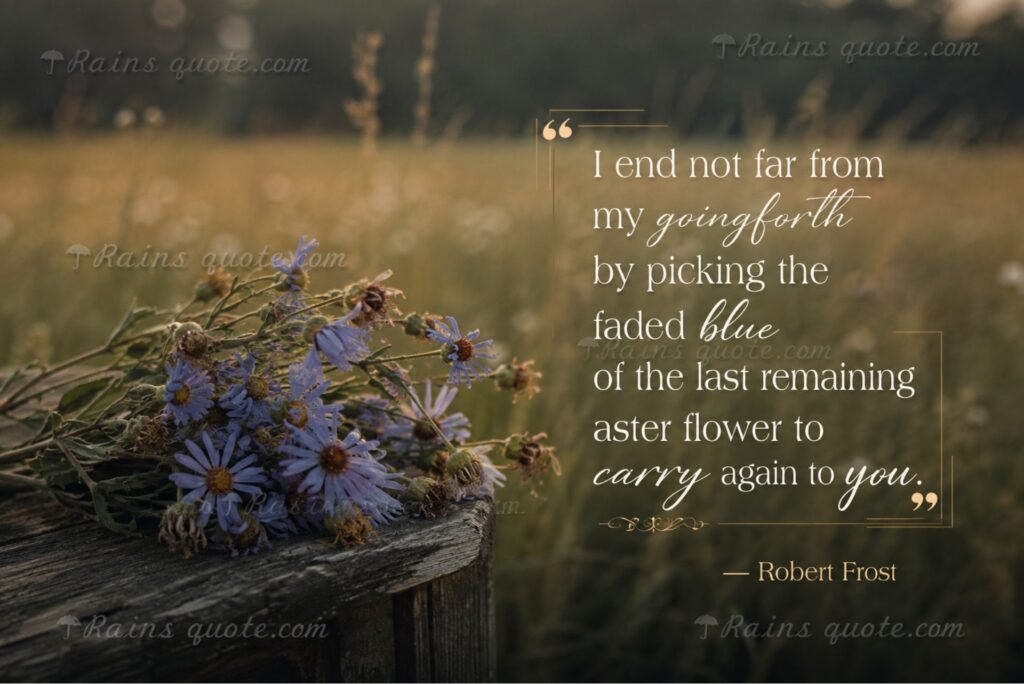
— Robert Frost
Author: Robert Frost was a famous American poet known for his deep, simple, and nature-inspired poems about rural life and human emotions.
🎬 Context of the Quote: This quote reflects a journey that feels like it has come full circle. It shows how small natural symbols, like a flower, can carry deep emotional meaning and connection.
3. “The lands are lit with all the autumn blaze of golden-rod, and everywhere the purple asters nod and bend and wave and flit.”
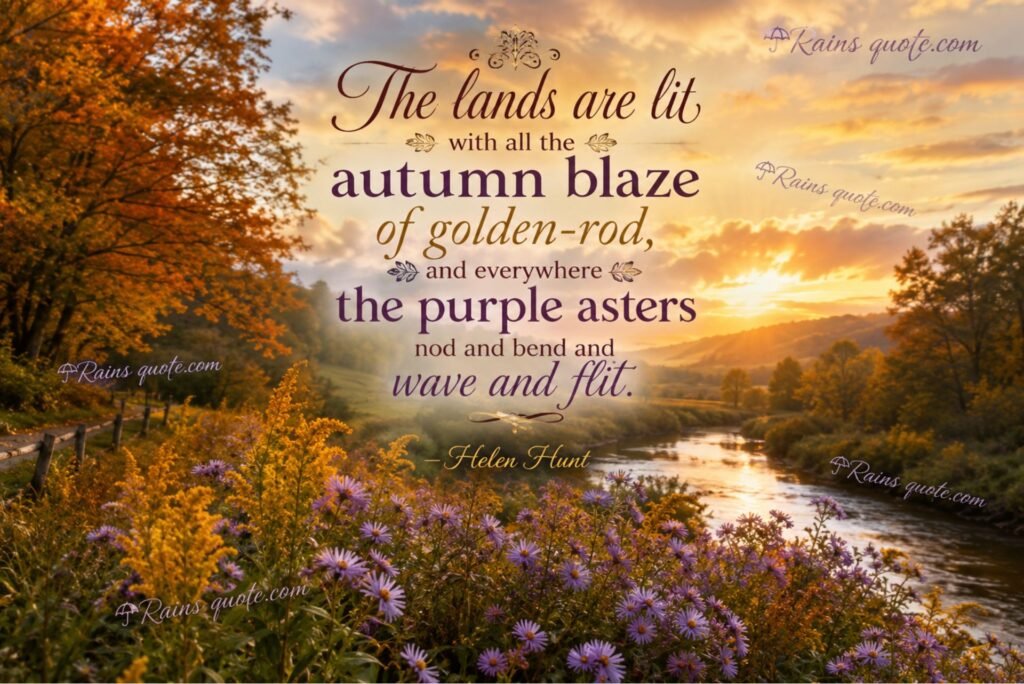
— Helen Hunt
Author: Helen Hunt Jackson was an American writer and poet known for her vivid nature descriptions and works that also highlighted social issues. Her writing often blends beauty of the natural world with deep emotion.
🎬 Context of the Quote: This quote paints a colorful autumn landscape filled with golden-rod and asters. It captures the movement, beauty, and calm energy of nature in a poetic way.
4. “Along the river’s summer walk, the withered tufts of asters nod; and trembles on its arid stalk the hoar plum of the golden-rod.”
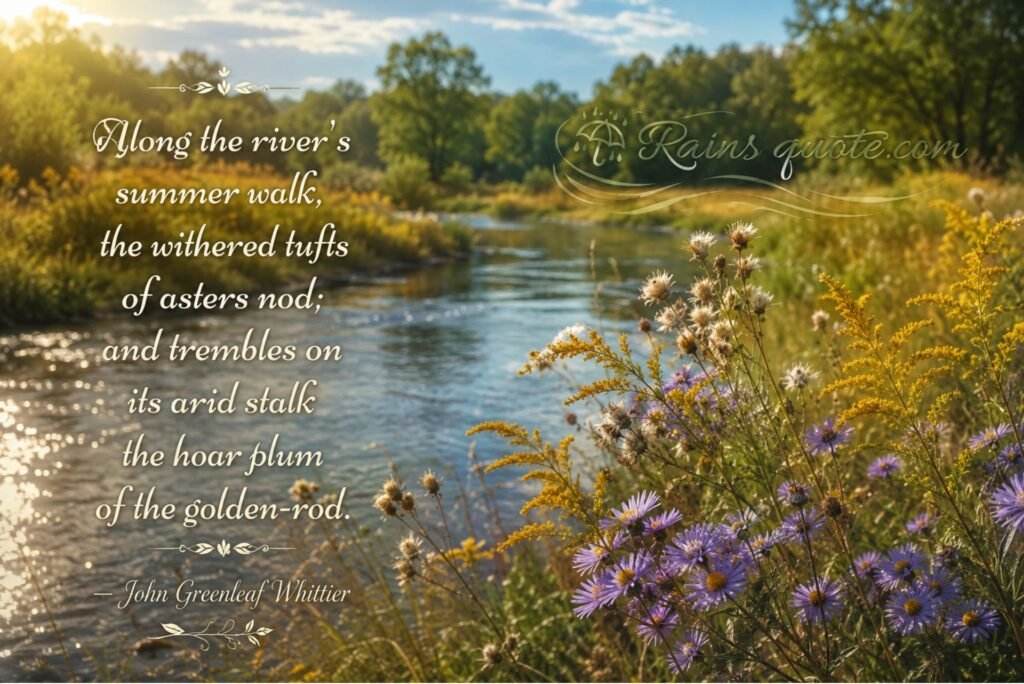
— John Greenleaf Whittier
Author: John Greenleaf Whittier was an American poet and social reformer, widely known for his anti-slavery writings and peaceful, nature-inspired poetry.
🎬 Context of the Quote: This quote describes a quiet riverside scene in late summer where flowers begin to fade. It reflects nature’s gentle transition from summer to autumn through vivid poetic imagery.
5. “The scarlet of the maples can shake me like a cry of bugles going by. And my lonely spirit thrills to see the frosty asters like a smoke upon the hills.”
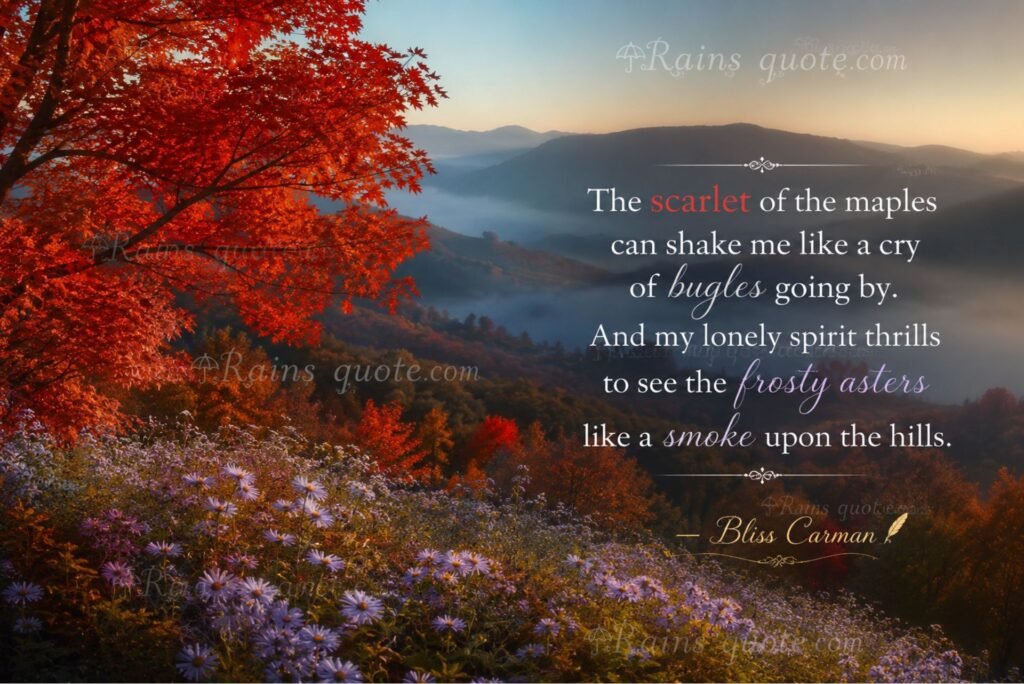
— Bliss Carman
Author: Bliss Carman was a Canadian poet celebrated for his lyrical, nature-focused writing. His poems often explore emotion, landscape, and a deep connection between human feeling and the natural world.
🎬 Context of the Quote: This quote expresses a powerful emotional response to autumn scenery. The changing colors of nature awaken deep feelings of beauty, solitude, and wonder in the speaker.
6. “I wish, and I wish that the spring would go faster, nor long summer bide so late; and I could grow on like the foxglove and aster, for some things are ill to wait.”
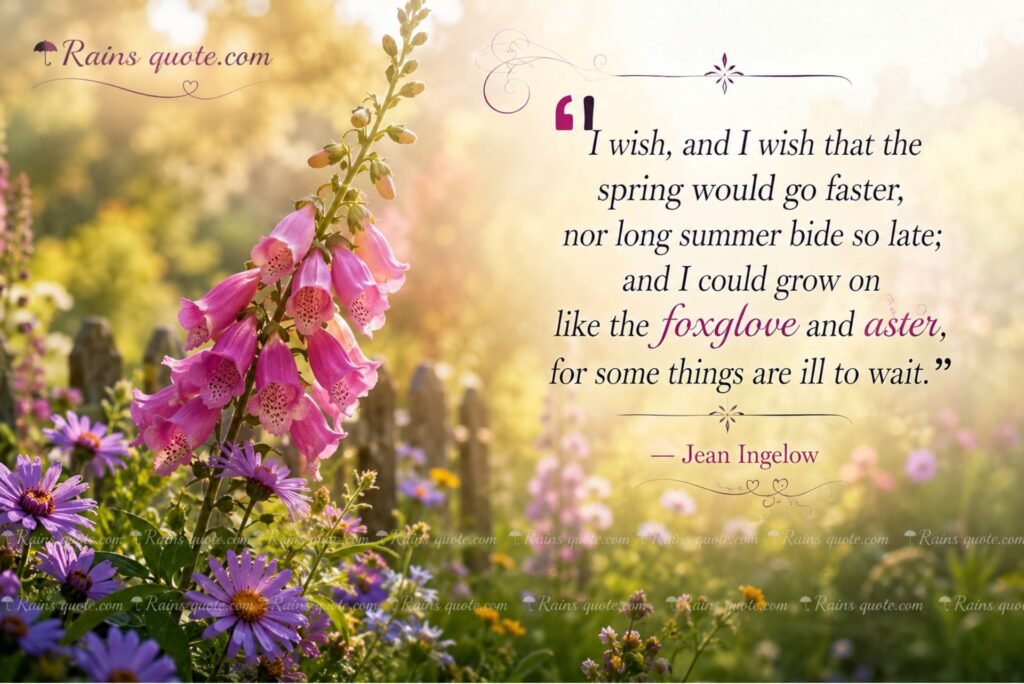
— Jean Ingelow
Author: Jean Ingelow was a Victorian English poet and novelist whose work often reflects deep emotion, nature imagery, and reflections on time and growth.
🎬 Context of the Quote: This quote expresses impatience with time and a desire for faster personal growth. It uses nature imagery to show how human emotions often mirror seasonal change and natural cycles.
7. “The word ‘dis-aster,’ in fact, means ‘bad star.’”
— Kenneth Franklin
Author: Kenneth Franklin was an American astronomer recognized for his contributions to radio astronomy and scientific communication. He helped advance early studies of cosmic radio waves and space science.
🎬 Context of the Quote: This quote explains the origin of the word “disaster,” which historically refers to a “bad star” or unfavorable celestial influence. It reflects how ancient people linked misfortune to astronomical events.
8. “Wrapped in his sad-colored cloak, the Day, like a Puritan, standeth stern in the joyless fields, rebuking the lingering color,—dying hectic of leaves and the chilly blue of the asters.”
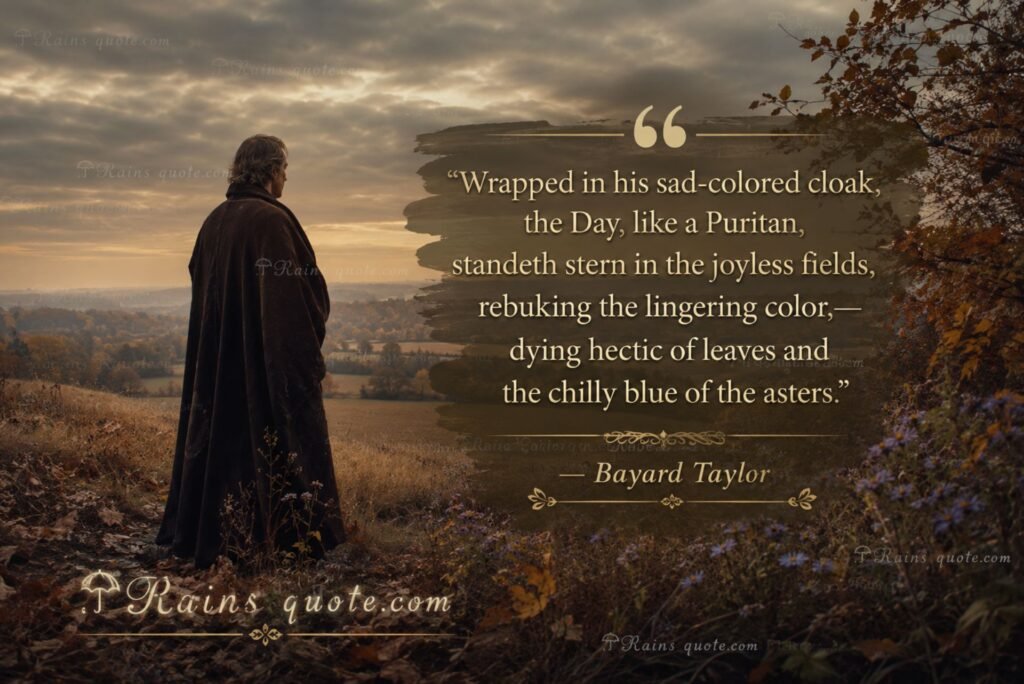
— Bayard Taylor
Author: Bayard Taylor was an American writer, poet, and diplomat. He was known for his vivid travel writings and rich descriptive poetry that often captured landscapes and seasonal moods.
🎬 Context of the Quote: This quote portrays a cold, fading season where nature is losing its brightness. It uses powerful imagery to show autumn’s decline and the quiet, solemn beauty of dying colors in the landscape.
9. “His aster-blue eyes shone out from a face blackened by bruises and soot… he looked rather like a demon, raised from the dead, trading for souls on the other side.”

— Cinda Williams Chima
Author: Cinda Williams Chima is an American writer best known for her young adult fantasy series such as The Seven Realms and Heir Chronicles. Her work often features magic, kingdoms, and strong character-driven storytelling.
🎬 Context of the Quote: This quote describes a dramatic, fantasy-style character emerging from chaos and injury. It uses vivid imagery like “aster-blue eyes” to create a striking contrast between beauty and darkness.
Conclusion
These quotes show how a simple flower can reflect deep feelings, memories, and the beauty of changing seasons. Writers use it to express emotions and connect nature with human life in a meaningful way.
In the end, it helps us understand that even small things in nature can carry strong messages about life, time, and feelings.
FAQS
1. What do asters symbolize?
Asters symbolize love, patience, and the beauty of nature. They are often seen as a sign of gentle emotions and peaceful feelings.
2. What is special about asters?
Asters are special because they bloom in late seasons and add color to fading nature, showing beauty even during change and endings.
3. What does aster stand for?
The aster stands for deep emotions, memories, and the connection between nature and human feelings in poetry and art.
4. Why are asters important in quotes and poetry?
Asters are important because writers use them to express feelings, seasons, and life lessons in a simple but meaningful way.