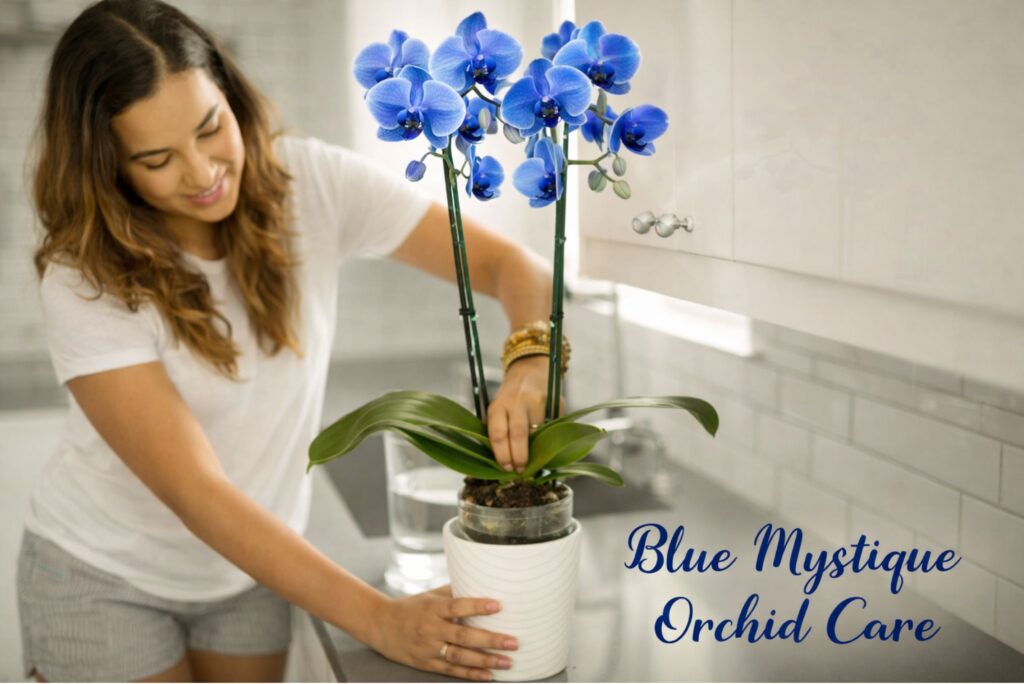
The Blue Mystique Orchid is a stunning indoor plant that instantly catches attention with its rare-looking blue flowers and elegant appearance. Many people think it is a naturally blue orchid, but the truth about Daisy is even more interesting. Its beauty, soft colors, and unique look make Gerbera a popular choice for home décor and indoor plant lovers.”
This guide on Blue Mystique Orchid Care will help you understand what this plant really is, where its color comes from, and how to look after it the right way. You’ll learn simple, practical tips to keep your orchid healthy, help it grow well, and enjoy its beauty for a long time — so it never looks sad, but stays a living, thriving plant. 🌿
Blue Mystique Orchid Care

As a plant expert, I always tell people this first: Phalaenopsis Blue Mystique is not a naturally blue orchid. It is a white Phalaenopsis that has been carefully injected with blue dye to create its striking color. The plant itself is completely real and healthy, but the blue shade is temporary. Once the current blooms fade, the next flowering cycle will produce white flowers — its true natural color. Structurally, it has thick green leaves, a central flower spike, and long-lasting blooms just like any standard moth orchid. If you understand that the blue is cosmetic and not genetic, you can appreciate it for what it is — a beautifully enhanced decorative orchid, not a rare blue species.
🌿 Light Guide for Indoor Plants
Most indoor plants love bright, indirect light—plenty of light, but no harsh sun on the leaves.
Best spots:

- East-facing windows → gentle morning sun.
- North-facing windows → soft, consistent light.
Too much light? Brown, crispy, or faded leaves → move the plant slightly away.
Too little light? Droopy, yellow, or stretched stems → bring it closer to the window.
Seasonal tip: Winter → move closer to windows. Summer → protect from the strong sun with curtains or a slight shift back.
✅ Rule of thumb: Healthy, firm leaves = right light; burned or weak growth = adjust. Watch your plant—it will tell you what it needs!
💧 Watering Guide for Indoor Plants
Watering right is one of the most important things for healthy plants. Most plants need water about once a week, but this can change with the seasons—less in winter, more in hot months.

Avoid overwatering—this is the main cause of root rot. Always let excess water drain out; never let it sit in the pot or in the crown of the plant. A good method is soak and drain: water thoroughly until it drains, then let the soil dry slightly before the next watering.
Best water: filtered, rainwater, or low-mineral tap water keeps your plant happy and healthy.
Check soil moisture: stick your finger 1–2 inches into the soil—if it feels dry, it’s time to water. If it’s still damp, wait a few days.
✅ Rule of thumb: soil slightly moist + no standing water = perfect watering. Listen to your plant—it will show you signs if it’s thirsty or overwatered!
Orchid Bed & Repotting Guide
For healthy growth, use a well-draining orchid mix—bark, sphagnum moss, charcoal, and perlite work best. Avoid standard potting soil, as it holds too much moisture and can rot the roots.
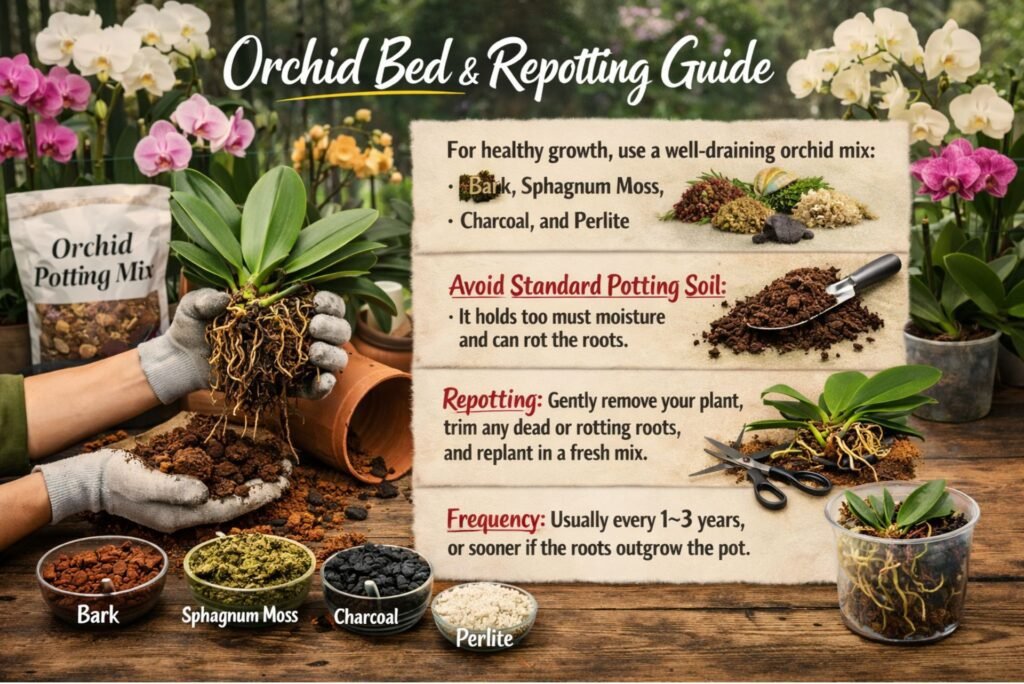
Repotting: Gently remove your plant, trim any dead or rotting roots, and replant in a fresh mix.
Frequency: Usually every 1–3 years, or sooner if the roots outgrow the pot.
✅ Rule of thumb: Healthy roots + fresh mix = happy plant. Repot carefully and your plant will thrive!
🌱 Fertilizing & Feeding Guide
Feeding your plant correctly helps it grow strong and bloom beautifully. Use a balanced orchid or houseplant fertilizer. During active growth, feed weekly or every two weeks, but always dilute to ¼–½ strength—too strong fertilizer can burn roots.

In winter or dormant periods, reduce or skip fertilization, since the plant isn’t actively growing.
💡 Tip for blooms: Healthy leaves + proper light + regular, gentle feeding = better flowers. Watch your plant—if leaves look vibrant and growth is steady, your feeding schedule is working!
🌸 Blooming & Aftercare
After your plant finishes flowering, proper care helps it stay healthy and rebloom. Prune the stem about 2 inches (5 cm) above the leaves—this encourages new growth and future blooms.
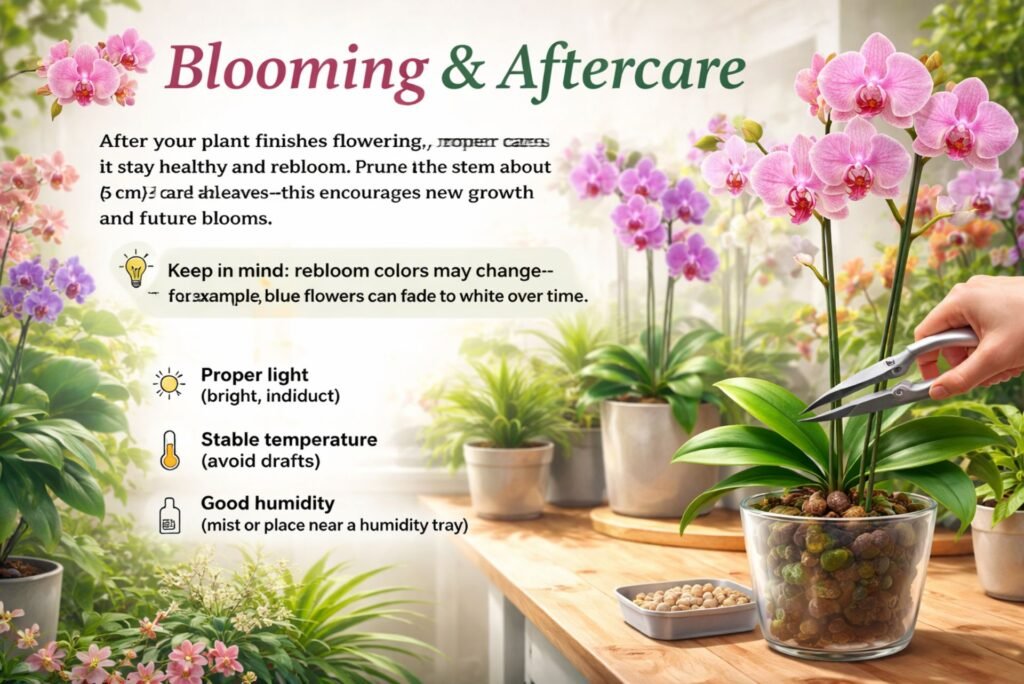
Keep in mind: rebloom colors may change—for example, blue flowers can fade to white over time.
To encourage blooms, make sure your plant gets:
- Proper light (bright, indirect)
- Stable temperature (avoid drafts)
- Good humidity (mist or place near a humidity tray)
🛠 Common Problems & How to Fix Them
Even the healthiest plants can face problems—but most have simple solutions if you know what to look for:

- Yellow leaves → Usually from too much or too little light or water. Check placement and adjust your watering schedule.
- Root rot → Caused by overwatering or poor drainage. Repot the plant in fresh soil and water less.
- No blooms → Often due to low light or incorrect temperature. Move the plant to a brighter spot and maintain stable temperatures.
- Wrinkled leaves → Sign of underwatering. Water the plant thoroughly and consistently.
- Pests → Mealybugs or spider mites can attack leaves. Clean them off and use insecticidal soap if needed.
✅ Rule of thumb: observe your plant daily, notice changes early, and adjust care quickly—most problems are easy to fix if caught in time.
Conclusion
The Blue Mystique Orchid is more than just a strikingly colored plant—it’s a unique decorative orchid that combines beauty with the joys of proper care. While its blue hue is temporary, understanding its needs for light, water, and nutrients ensures it stays healthy and blooms beautifully year after year. By following simple care tips, you can enjoy this orchid not just for its color, but as a thriving, vibrant part of your home. 🌿
FAQS
1. Do Blue Mystique Orchids need sunlight?
Blue Mystique Orchids thrive in bright, indirect light. Direct sunlight can burn their leaves, so place them near a window with filtered light.
2. How do you take care of a Blue Mystique Orchid?
Keep the soil slightly moist, provide good drainage, maintain stable temperatures, and feed with a diluted orchid fertilizer during growth periods.
3. How long do Blue Mystique Orchids last indoors?
With proper care, they can bloom and thrive for several years. While the blue color fades with new blooms, the plant itself stays healthy.
4. What are the common problems with Blue Mystique Orchids?
Yellow leaves, root rot, lack of blooms, and wrinkled leaves are common. Most issues can be fixed by adjusting light, water, or repotting.
5. Where is the best place to put a Blue Mystique Orchid in your house?
Place it in a spot with bright, indirect light, away from drafts or direct sun. East-facing windows are ideal for gentle morning light.