Have you ever wondered why marigolds are used in festivals, gardens, and ceremonies, or why their bright petals feel so meaningful? Marigolds are more than just colorful flowers—they carry messages of positivity, respect, and remembrance that people have valued for centuries. By learning the Marigold Flower Meaning, you can understand not just their beauty, but the stories and traditions they represent.
Whether you’re looking to add life to your garden, honor a loved one, or simply explore the symbolism behind this beloved flower, Petunia offers something for everyone. They brighten spaces, repel pests naturally, and even provide health and herbal benefits. This article will guide you through everything you need to know, helping you connect with marigolds and the cheerful Daisy in a way that feels meaningful and personal.
Marigold Flower Meaning & Symbolism
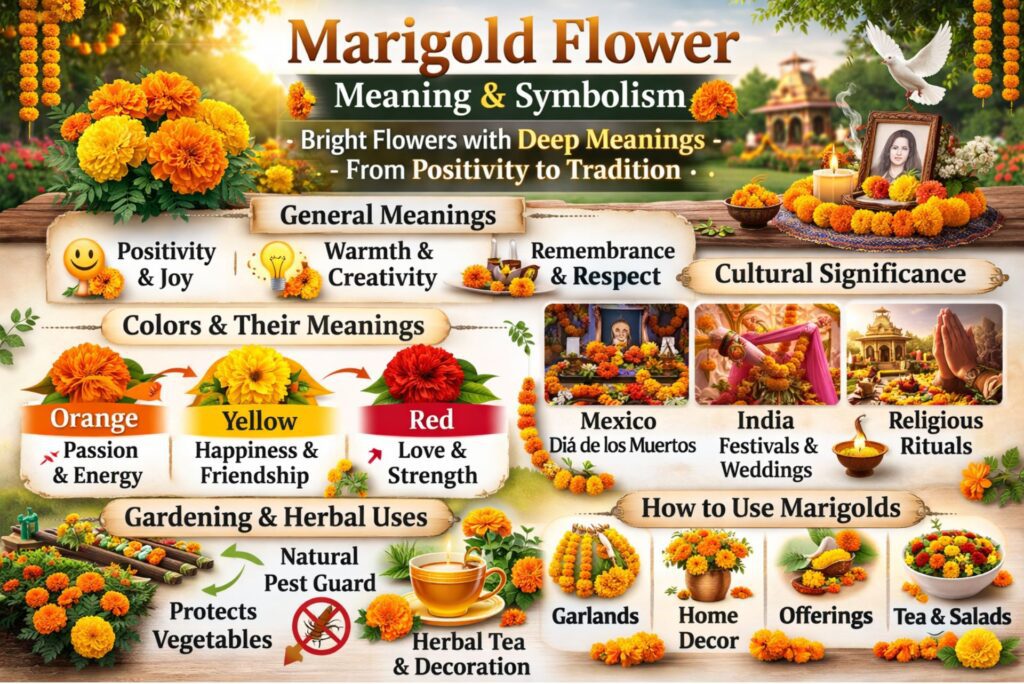
Marigolds are more than just bright flowers—they carry meanings, emotions, and cultural significance across the world.
General Meanings
- Positivity & joy – their bright colors bring happiness.
- Warmth & creativity – symbolize energy and optimism.
- Remembrance & respect – often used in honoring ancestors in some cultures.
Colors & Their Meanings
- Orange → Passion, creativity, enthusiasm
- Yellow → Friendship, happiness, optimism
- Red → Love, courage, strength
Cultural Uses & Traditions
- Mexico (Día de los Muertos) – Marigolds guide spirits with their bright color and scent.
- India (Festivals & Weddings) – Used in garlands, decorations, and religious rituals.
- Gardening & Herbal Uses – Companion planting to protect vegetables; petals sometimes used in teas or decoration.
What Is a Marigold Flower
A marigold is a bright yellow or orange flower that is easy to grow and very popular in gardens. It has round blooms and a strong scent that can help keep insects away. Because it grows quickly and blooms for a long time, many gardeners like it.
Marigolds belong to the genus Tagetes, part of the daisy family (Asteraceae). There are about 50 species, and they originally come from Mexico and other parts of Central America. The Aztecs once used marigolds in their religious ceremonies.
Today, marigolds are grown worldwide. In India, they are used in weddings and festivals like Diwali, and in Mexico, they are important during the Day of the Dead. Some types are also used as companion plants and natural food color.
Types of Marigold Flowers
Marigolds belong to the Tagetes genus and are popular garden flowers. Most gardens have three main types, along with some mini and giant varieties.
1. African Marigold (Tagetes erecta)
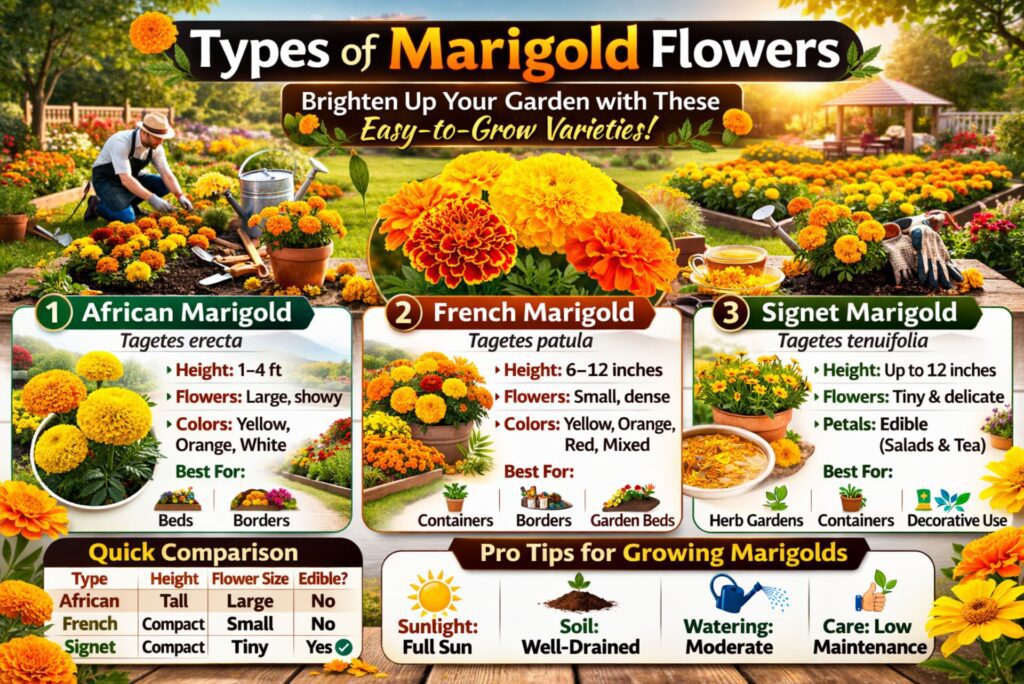
According to Gardenia.net, African marigolds grow up to about 1–4 ft tall and produce large, showy flowers in yellow, orange, and white, making them ideal for beds and borders.
2. French Marigold (Tagetes patula)
According to Gardenia.net, French marigolds are compact, bushy annuals that typically grow up to about 6–12 inches tall and have bright flowers in shades of yellow, orange, red, and mixed colors. They are great for garden beds, borders, and containers.
3. Signet Marigold (Tagetes tenuifolia)
According to Gardenia.net, signet marigolds are compact, easy‑to‐grow marigolds with tiny flowers, and their petals can be used in salads or teas — they are suitable for herb or decorative gardens.
Health Benefits & Uses of Marigold
Marigolds aren’t just pretty—they have real medicinal, edible, and cosmetic benefits supported by science.
🌿 Medicinal Uses

- Anti-inflammatory & Wound Healing: Marigold extracts can help soothe cuts, burns, and skin irritation by reducing inflammation and promoting faster healing. (Study PubMed)
- Digestive Support: Drinking herbal teas made from marigold petals may help calm stomach issues and support digestion. (Study ScienceDirect)
- Eye & Immunity Health: Marigold is rich in lutein and antioxidants, which help protect eye health and boost overall immunity. (Study PMC)
🍽️ Edible Uses

- Petals in salads & teas – The bright marigold petals are edible and often added to salads for color and mild flavor, and dried flowers are used to make herbal tea. (Study Wikipedia)
- Food decoration – Fresh or dried petals are used as a colorful garnish or natural food color (sometimes called “poor man’s saffron”). (Study Wikipedia)
- Herbal remedies & natural dye – Petals are used in traditional herbal drinks and as natural dyes in foods because of their color and mild taste. (Study Wikipedia)
💄 Cosmetic Uses
- Skin care creams & oils: Marigold (Calendula) extract is widely used in creams and topical products because it soothes irritated skin, reduces redness, and helps calm inflammation. It’s included in many skincare products for sensitive or inflamed skin. (Study mdpi.com)
- Natural makeup ingredient: Calendula extract is used in lip balms, soaps, face masks, and other personal care items because of its gentle, skin‑conditioning properties. (Study uk.typology )
- Anti‑aging & brightening: The antioxidants in calendula (such as flavonoids and carotenoids) help protect skin cells from oxidative damage, supporting healthier, more radiant skin and helping slow signs of aging. (Study mdpi.com)
How to Grow Marigold Flowers
Marigolds are easy to grow and brighten up any garden. Follow these steps for healthy, blooming plants.
1️⃣ Best Soil & Sunlight
– Grow in well‑draining, moderately fertile soil for healthy growth and more flowers.
– Marigolds love full sun — at least 6–8 hours of direct sunlight each day for best blooms. (Study almanac.com)
2️⃣ How to Plant
– Seeds: Sow outdoors after frost or start 6–8 weeks before last frost indoors.
– Cover seeds lightly with soil so they germinate.
– Transplants: Set young seedlings outside after frost, spacing about 6–12 inches apart depending on variety.
3️⃣ Watering Guide
– Water moderately — keep soil moist but not soggy.
– Water at the base rather than overhead to prevent fungal diseases.
– Once established, plants tolerate some drought but still flower better with regular watering.
4️⃣ Fertilizer Tips
– Use a balanced, all‑purpose fertilizer at planting or lightly once a month.
– Avoid too much fertilizer because high nitrogen encourages leaves over blooms.
5️⃣ Seasonal Care
– Spring: Start seeds indoors or prep beds outdoors.
– Summer: Maintain moisture and deadhead spent flowers to keep blooming.
– Fall: Save seeds for next year and remove plants before frost
Common Pests & Problems
Marigolds are generally hardy, but a few pests and diseases can cause trouble. Knowing prevention tips keeps them healthy.
Aphids & Pest Prevention: Marigolds can get aphids, spider mites, whiteflies, etc. You can control them with water sprays, insecticidal soap, neem oil, and by improving airflow around plants. Encouraging beneficial insects like ladybugs and lacewings also helps. (Study floraflick)
Disease Control (Powdery Mildew & Fungi): Powdery mildew and other fungal spots show up mainly in wet, humid conditions. To prevent them, avoid overhead watering, water at the soil level, keep good spacing, and remove infected leaves.
Tips for Healthy Growth: Proper spacing helps air circulation, deadheading spent flowers encourages more blooms, and balanced fertilizer (used sparingly) prevents excessive leaf growth that attracts pests.
Garden & Landscape Ideas with Marigolds
Marigolds aren’t just beautiful—they’re also practical and versatile in gardens.
🥕 Marigolds with Vegetables
Planting marigolds near veggies like tomatoes, peppers, cucumbers, squash, and beans helps naturally deter pests such as aphids, whiteflies, and soil nematodes that harm roots — without chemicals.
🌿 Companion Planting Benefits
- Natural pest control: Their scent and root compounds help repel harmful insects.
- Attracts beneficial insects & pollinators: Marigolds draw ladybugs, hoverflies, bees, and butterflies that pollinate crops and eat pests.
- Soil health: Marigold roots release compounds that suppress some harmful soil nematodes and can improve soil ecosystem balance.
🌸 Design Ideas
- Borders & Edges: Use marigolds along garden paths or beds for bright color and pest‑repelling benefits.
- Containers & Pots: Dwarf or mini marigolds add color to balconies, patios, and container gardens.
- Cut Flowers: Larger marigold varieties (like African marigolds) make attractive, long‑lasting bouquets for indoors. (Study gardenia.net )
Conclusion
Marigolds are more than just beautiful flowers—they carry meaning and tradition. They brighten gardens, celebrate special occasions, and connect us to culture. Their petals offer practical benefits, from natural remedies to decoration. By understanding marigolds, we can appreciate both their beauty and their significance.
FAQS
1. What do marigolds symbolize in love?
Marigolds often represent warmth, passion, and devotion, making them a meaningful flower to express love and affection.
2. Do marigolds represent pain or grief?
In some cultures, marigolds are linked to remembrance and honoring those who have passed, symbolizing both respect and sorrow.
3. What is the spiritual meaning of marigold petals?
Marigold petals are believed to bring positivity, protection, and spiritual blessings, and are often used in rituals and offerings.
4. Which god is associated with marigold flowers?
In Hindu traditions, marigolds are especially loved by deities like Lord Vishnu and Goddess Lakshmi, often used in prayers and ceremonies.
5. Can we offer marigold flowers to God?
Yes, marigolds are considered sacred in many cultures and are commonly offered in temples, home altars, and religious ceremonies.