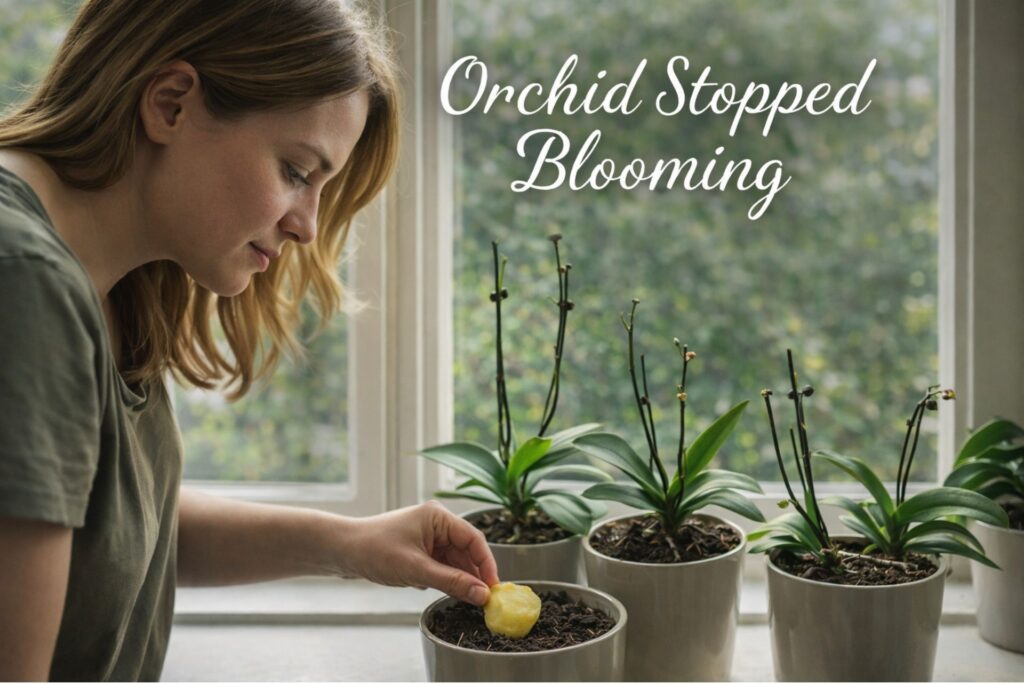
Orchids are beautiful, elegant plants, but sometimes your orchid stopped blooming, leaving you wondering why. Understanding the orchid’s natural rest periods and the right care techniques is key to keeping these plants, as well as other flowers like Gerbera, healthy and full of life.
In this guide, we cover everything from identifying signs of a resting orchid to step-by-step tips for encouraging blooms, seasonal care advice, and repotting tips. By following these simple, practical steps, you can ensure your orchid thrives and enjoy its stunning flowers again and again.
🌸 Know the Blooming Cycle
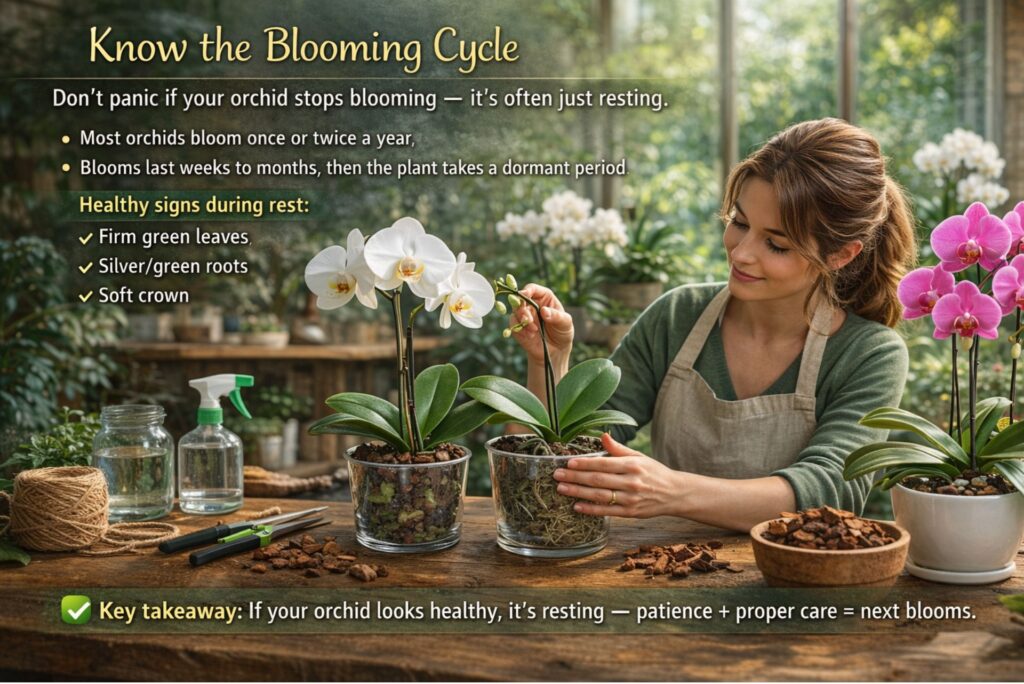
- Don’t panic if your orchid stops blooming — it’s often just resting.
- Most orchids, like Phalaenopsis (moth orchids), bloom once or twice a year.
- Bloom can last weeks to a few months, then the plant takes a dormant period to store energy.
- Healthy signs during rest: firm green leaves, silver/green roots, and a soft crown.
- Dormancy can last 3–18 months, depending on species and care.
- Flower spikes grow when conditions are right:
- Cooler nights (about 10–15°F drop)
- Bright, indirect light
- ✅ Key takeaway: If your orchid looks healthy, it’s resting — patience + proper care = next blooms.
🌸 Why Did My Orchid Stop Blooming?
Even a healthy orchid may stop flowering for several reasons. Here’s what to check:
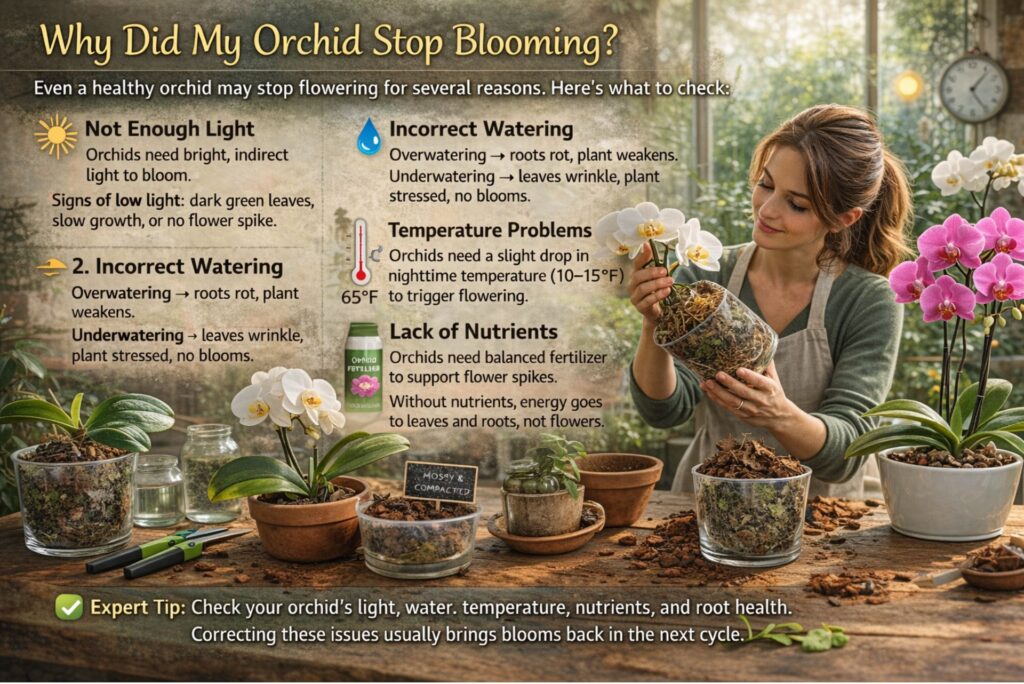
🌤 1. Not Enough Light
- Orchids need bright, indirect light to bloom.
- Signs of low light: dark green leaves, slow growth, or no flower spike.
💧 2. Incorrect Watering
- Overwatering → roots rot, plant weakens.
- Underwatering → leaves wrinkle, plant stressed, no blooms.
🌡 3. Temperature Problems
- Orchids need a slight drop in nighttime temperature (10–15°F cooler) to trigger flowering.
- Too warm or inconsistent temperatures can delay blooms.
🌱 4. Lack of Nutrients
- Orchids need balanced fertilizer to support flower spikes.
- Without nutrients, energy goes to leaves and roots, not flowers.
🪴 5. Old or Compacted Potting Mix
- Roots need air and drainage.
- Old bark or moss can suffocate roots, preventing blooms.
🐛 6. Pests or Disease
- Mealybugs, scale, fungus, or root rot weaken the plant.
- A stressed orchid focuses on survival, not flowers.
✅ Expert Tip: Check your orchid’s light, water, temperature, nutrients, and root health. Correcting these issues usually brings blooms back in the next cycle.
🌸 Step-by-Step: How to Make Your Orchid Bloom Again
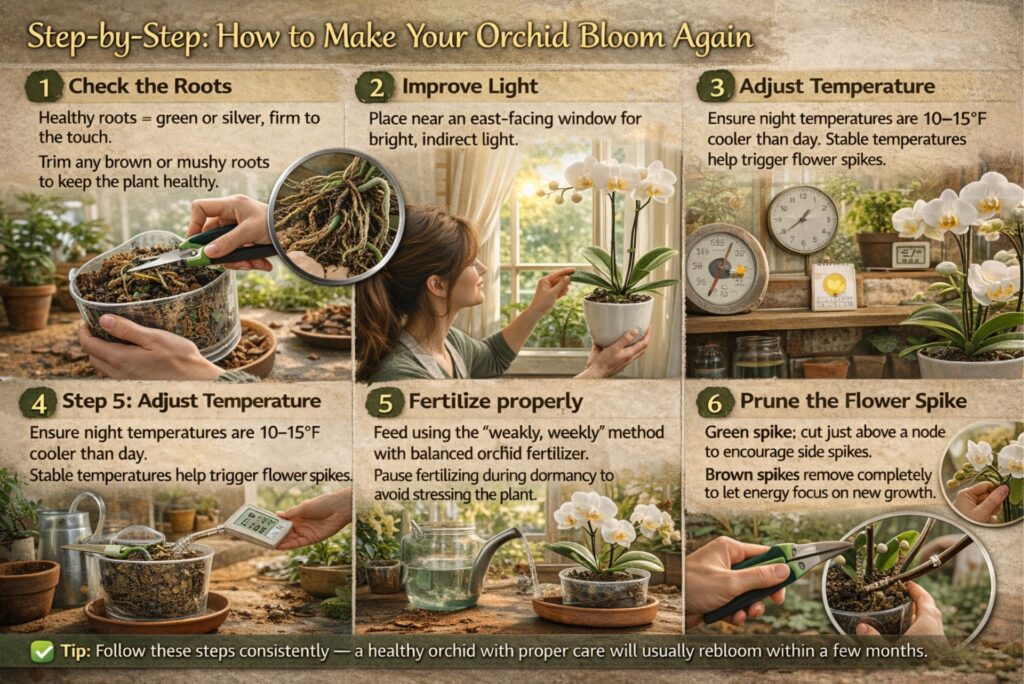
Step 1: Check the Roots
- Healthy roots = green or silver, firm to the touch.
- Trim any brown or mushy roots to keep the plant healthy.
Step 2: Improve Light
- Place near an east-facing window for bright, indirect light.
- Avoid direct, harsh sunlight that can burn the leaves.
Step 3: Adjust Temperature
- Ensure night temperatures are 10–15°F cooler than day.
- Stable temperatures help trigger flower spikes.
Step 4: Water Correctly
- Use the soak-and-drain method: water thoroughly, then let excess drain.
- Only water when the potting mix is dry to prevent root rot.
Step 5: Fertilize Properly
- Feed using the “weakly, weekly” method with balanced orchid fertilizer.
- Pause fertilizing during dormancy to avoid stressing the plant.
Step 6: Prune the Flower Spike
- Green spike: cut just above a node to encourage side spikes.
- Brown spike: remove completely to let energy focus on new growth.
✅ Tip: Follow these steps consistently — a healthy orchid with proper care will usually rebloom within a few months.
🌸 Seasonal Orchid Care Guide
🌞 Summer Care
- Water more often to keep roots hydrated, but avoid overwatering.
- Protect your orchid from direct heat or strong sunlight that can burn leaves.
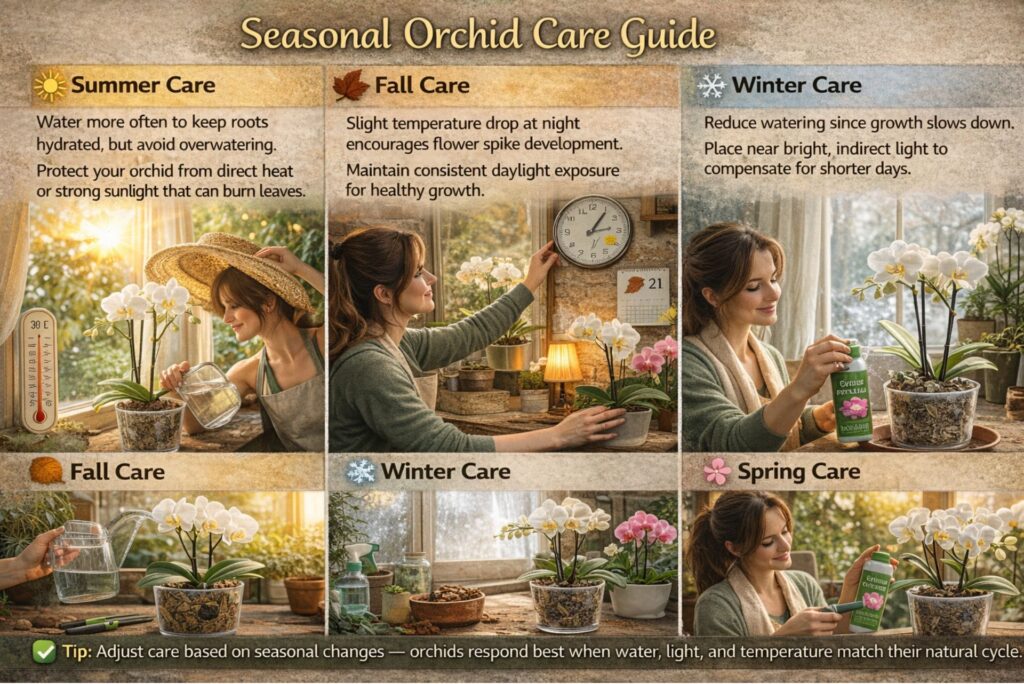
🍂 Fall Care
- Slight temperature drop at night encourages flower spike development.
- Maintain consistent daylight exposure for healthy growth.
❄ Winter Care
- Reduce watering since growth slows down.
- Place near bright, indirect light to compensate for shorter days.
🌸 Spring Care
- This is the active growth period: new leaves and roots emerge.
- Resume regular watering and light fertilizing to support upcoming blooms.
✅ Tip: Adjust care based on seasonal changes — orchids respond best when water, light, and temperature match their natural cycle.
🌸 When to Repot Your Orchid
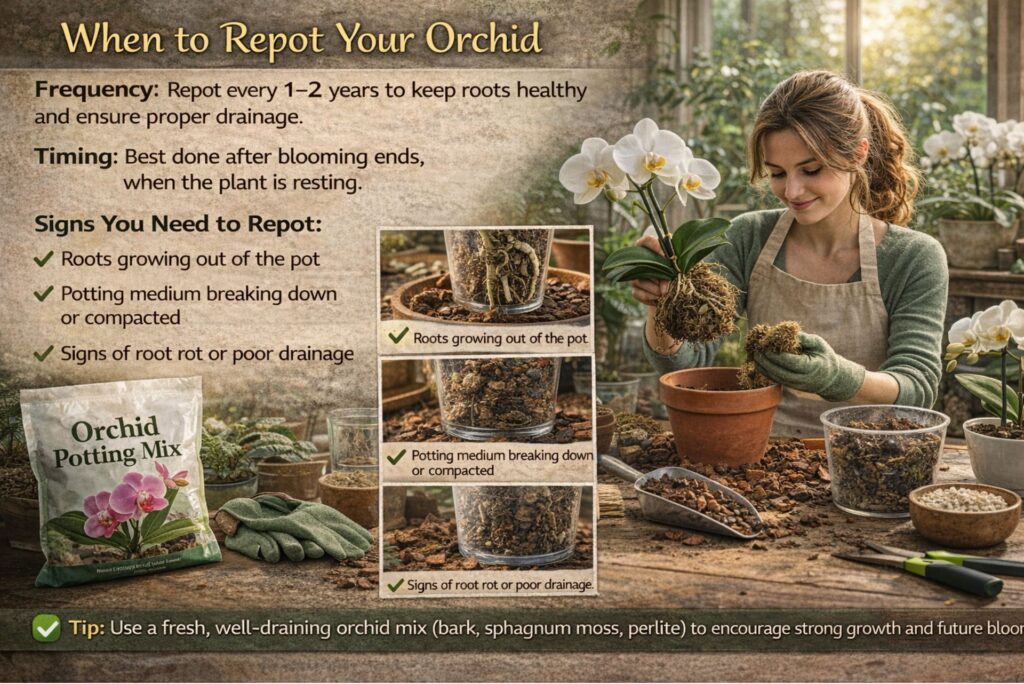
- Frequency: Repot every 1–2 years to keep roots healthy and ensure proper drainage.
- Timing: Best done after blooming ends, when the plant is resting.
- Signs You Need to Repot:
- Roots growing out of the pot
- Potting medium breaking down or compacted
- Signs of root rot or poor drainage
✅ Tip: Use a fresh, well-draining orchid mix (bark, sphagnum moss, perlite) to encourage strong growth and future blooms.
🌸 How Long Does It Take for an Orchid to Rebloom?
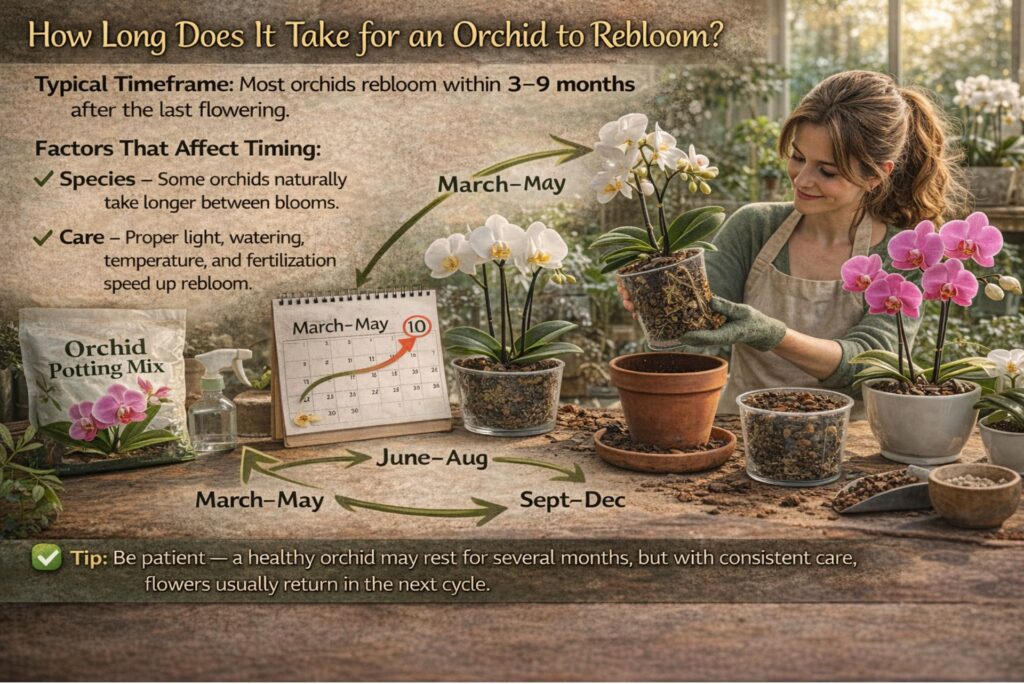
- Typical Timeframe: Most orchids rebloom within 3–9 months after the last flowering.
- Factors That Affect Timing:
- Species – Some orchids naturally take longer between blooms.
- Care – Proper light, watering, temperature, and fertilization speed up rebloom.
✅ Tip: Be patient — a healthy orchid may rest for several months, but with consistent care, flowers usually return in the next cycle.
Conclusion
With the right care and attention, orchids can continue to thrive and reward you with stunning blooms. Paying attention to light, watering, temperature, and nutrients, along with seasonal adjustments and proper potting, ensures the plant stays healthy. Consistent care and small, mindful steps make it easier to enjoy vibrant flowers that brighten your space for months to come.
FAQS
1. How do you get an orchid to bloom again?
Learn the key steps to encourage flowers, including adjusting light and temperature, and proper watering and fertilization.
2. Why did my orchid stop blooming?
Discover the common reasons orchids pause flowering and what signs indicate it’s resting or stressed.
3. How to revive an orchid with no flowers?
Practical tips to restore health, strengthen roots, and support the plant until blooms return.
4. What triggers an orchid to bloom?
Understand the environmental cues and care techniques that naturally encourage flowering.
5. What are the signs of an unhealthy orchid?
Identify problems early by spotting wilted leaves, root issues, or other stress indicators.