Power can shape the way we think, act, and treat others. But what happens when we have the chance to use it? The answer is not always about controlling others—it can also be about controlling ourselves.
These Power Quotes share different ideas about strength, humility, creativity, courage, and responsibility. Each author gives a simple view of how power can influence our choices and the way we live.
1. “Moral power is probably best when it is not used. The less you use it the more you have.”
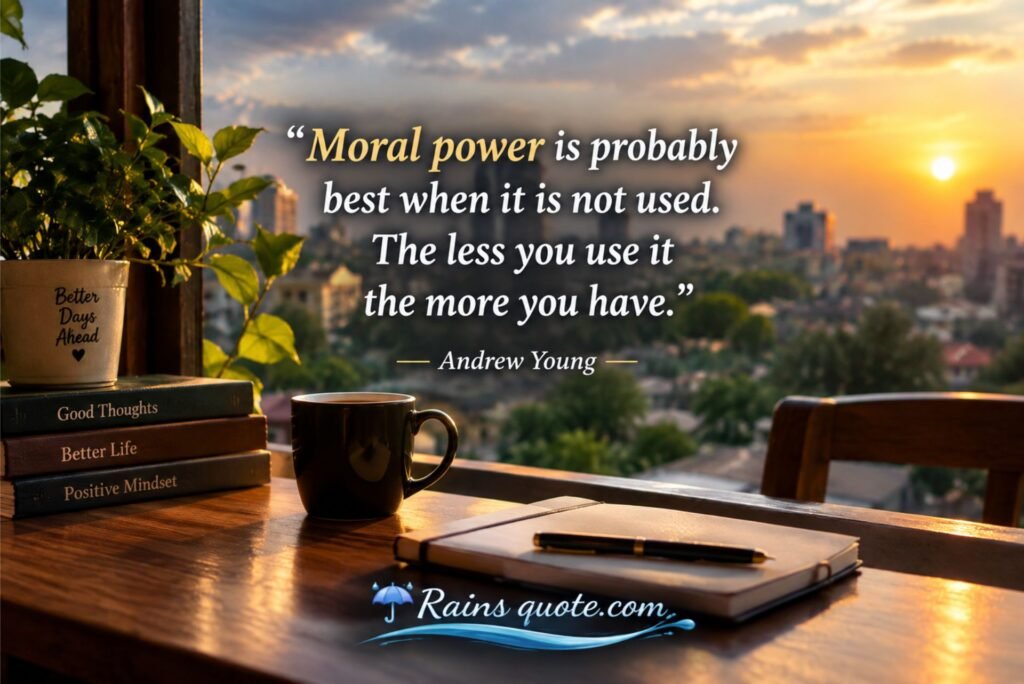
— Andrew Young
Author: Andrew Young is an American diplomat, politician, pastor, and civil rights leader who served as the U.S. Ambassador to the United Nations.
🎬 Context of the Quote: This quote suggests that moral influence can become stronger when it is guided by restraint. It emphasizes that having the ability to exercise power does not always mean it should be used.
2. “Power is dangerous unless you have humility.”
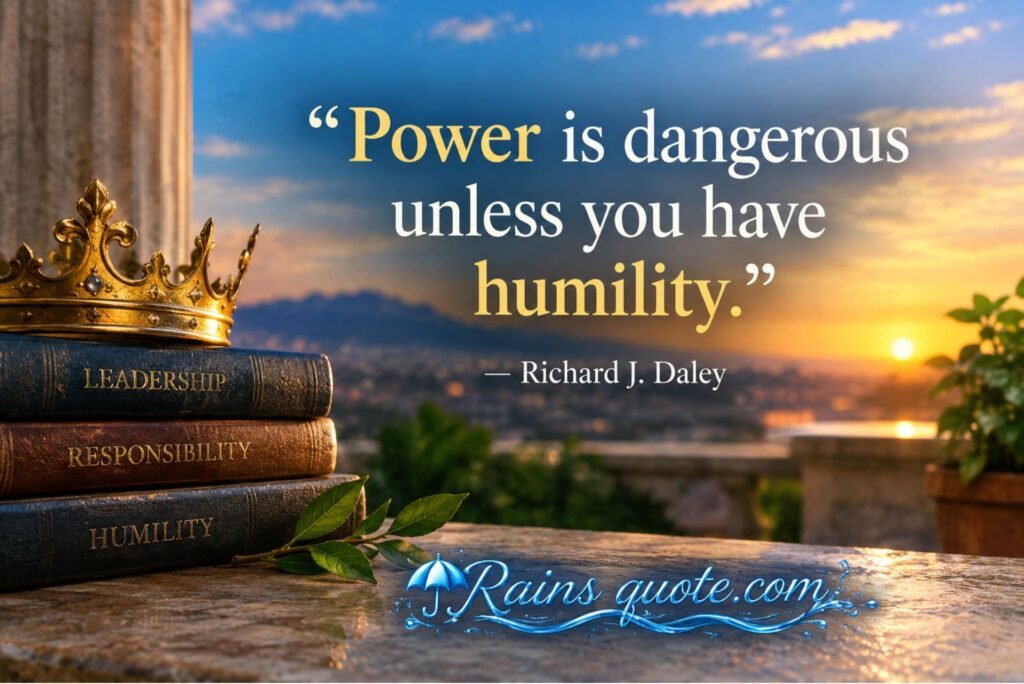
— Richard J. Daley
Author: Richard J. Daley was an American politician who served as the mayor of Chicago for more than two decades and became one of the city’s most influential political figures.
🎬 Context of the Quote: This quote highlights the importance of humility when holding authority. Without humility, power can easily lead to arrogance or poor decisions.
3. “The world itself is the will to power – and nothing else! And you yourself are the will to power – and nothing else!”
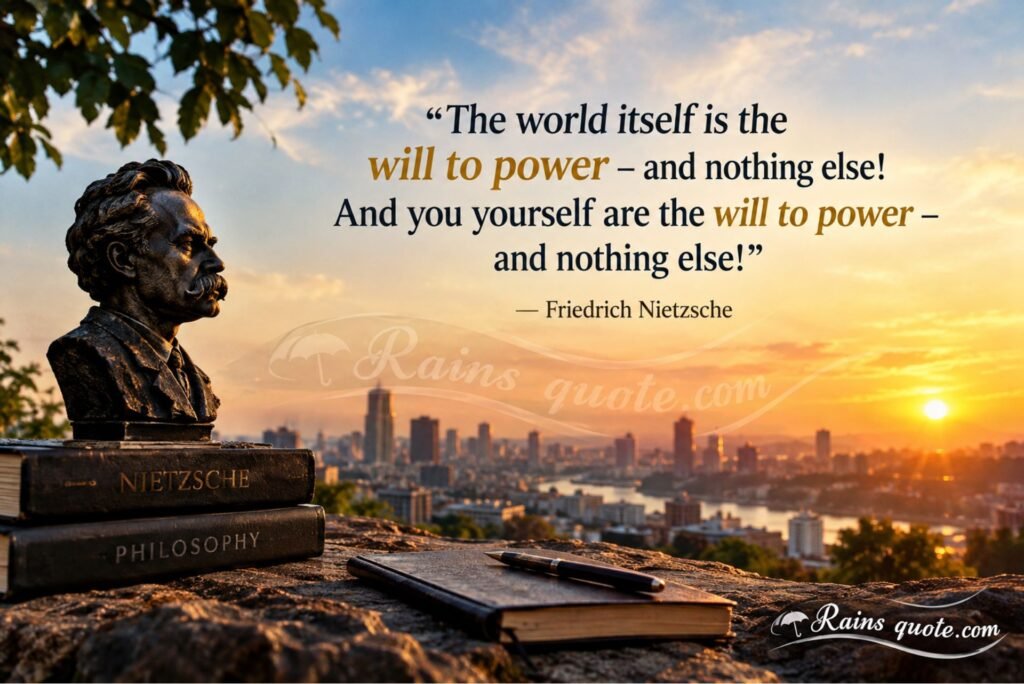
— Friedrich Nietzsche
Author: Friedrich Nietzsche was a German philosopher, cultural critic, and writer whose ideas had a major influence on modern philosophy and literature.
🎬 Context of the Quote: This quote reflects Nietzsche’s philosophical concept of the “will to power.” It presents power and the drive to assert and develop oneself as central ideas in understanding human existence.
4. “There is no meaning to life except the meaning man gives his life by the unfolding of his powers.”
— Erich Fromm
Author: Erich Fromm was a German-American social psychologist, psychoanalyst, and philosopher known for his writings on human nature, freedom, love, and society.
🎬 Context of the Quote: This quote connects the meaning of life with personal development. It suggests that people create meaning by developing their abilities and expressing their potential.
5. “Creativity is the power to connect the seemingly unconnected.”
— William Plomer
Author: William Plomer was a South African-born British writer, poet, and novelist known for his literary works and contributions to modern poetry.
🎬 Context of the Quote: This quote describes creativity as the ability to see relationships between ideas that may initially appear unrelated. It highlights connection and imagination as important parts of creative thinking.
6. “To achieve, you need thought. You have to know what you are doing and that’s real power.”
— Ayn Rand
Author: Ayn Rand was a Russian-American writer and philosopher best known for her novels The Fountainhead and Atlas Shrugged and her philosophy of Objectivism.
🎬 Context of the Quote: This quote emphasizes deliberate thinking as a source of effectiveness. It suggests that understanding your actions and having a clear purpose can give you greater control over your efforts.
7. “Power is no blessing in itself, except when it is used to protect the innocent.”
— Jonathan Swift
Author: Jonathan Swift was an Irish-born writer and satirist best known for works such as Gulliver’s Travels and A Modest Proposal.
🎬 Context of the Quote: This quote focuses on the responsibility that comes with power. It suggests that authority gains moral value when it is used to defend people who are vulnerable or unable to protect themselves.
8. “Circumstances are beyond human control, but our conduct is in our own power.”
— Benjamin Disraeli
Author: Benjamin Disraeli was a British statesman and writer who served twice as Prime Minister of the United Kingdom and played an important role in Victorian politics.
🎬 Context of the Quote: This quote distinguishes between events people cannot control and their own responses to those events. It encourages personal responsibility over one’s behavior and choices.
9. “Each underestimates her own power and overestimates the other’s.”
— Deborah Tannen
Author: Deborah Tannen is an American sociolinguist and author known for her research and writing about communication, language, and relationships.
🎬 Context of the Quote: This quote examines how people can misjudge their own influence while giving too much importance to someone else’s. It points to the role of perception in interpersonal relationships.
10. “The purpose of getting power is to be able to give it away.”
— Aneurin Bevan
Author: Aneurin Bevan was a Welsh politician and a leading figure in the British Labour movement, particularly known for his role in establishing the National Health Service.
🎬 Context of the Quote: This quote presents power as something that can be used to empower others. It suggests that gaining authority can have greater purpose when it helps distribute opportunities and influence more widely.
11. “Sooner or later, man has always had to decide whether he worships his own power or the power of God.”
— Arnold J. Toynbee
Author: Arnold J. Toynbee was a British historian and philosopher of history known for his extensive study of civilizations and their rise and decline.
🎬 Context of the Quote: This quote explores the tension between human power and religious faith. It asks people to consider whether they place ultimate trust in their own abilities or in divine power.
12. “Will power is only the tensile strength of one’s own disposition. One cannot increase it by a single ounce.”
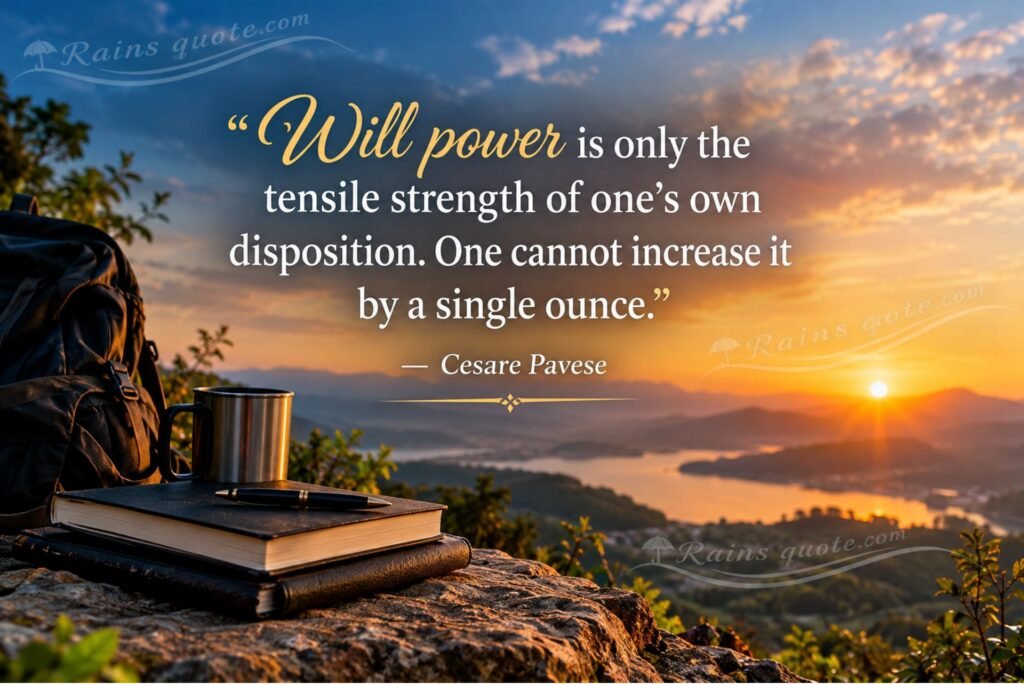
— Cesare Pavese
Author: Cesare Pavese was an Italian poet, novelist, and translator who became an important figure in 20th-century Italian literature.
🎬 Context of the Quote: This quote reflects on the limits of willpower and personal disposition. It suggests that determination is closely connected to a person’s existing character and inner strength.
13. “No matter what has happened, you too have the power to enjoy yourself.”
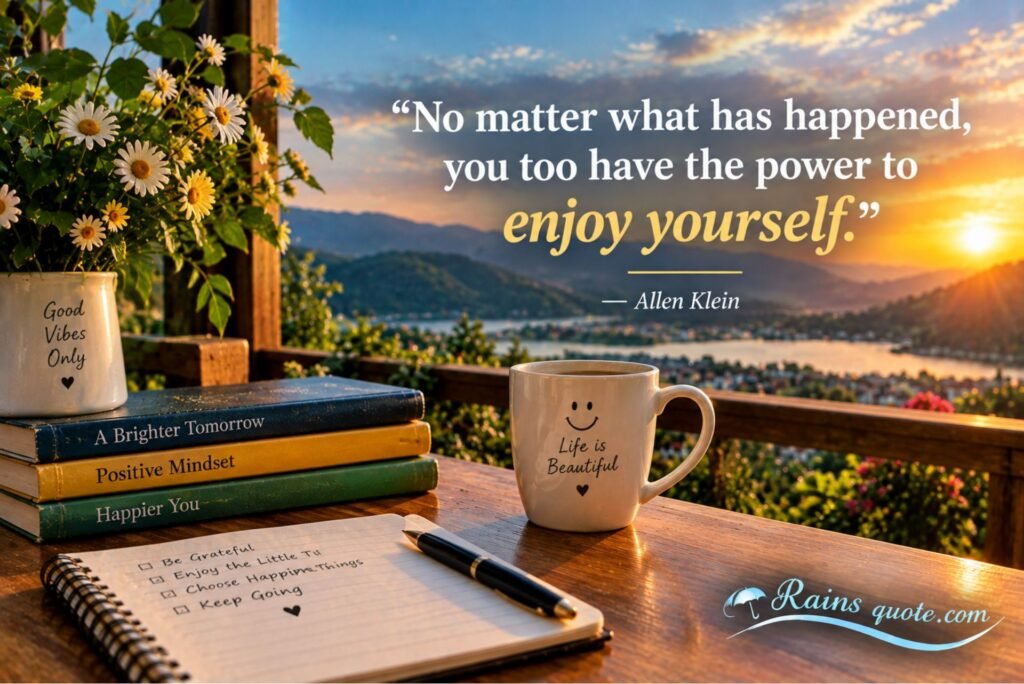
— Allen Klein
Author: Allen Klein was an American author, humorist, and motivational speaker known for his books about humor, happiness, and coping with difficult experiences.
🎬 Context of the Quote: This quote emphasizes personal agency in finding moments of enjoyment. It suggests that even after difficult experiences, people can still choose activities and attitudes that bring them happiness.
14. “Power tends to corrupt and absolute power corrupts absolutely.”
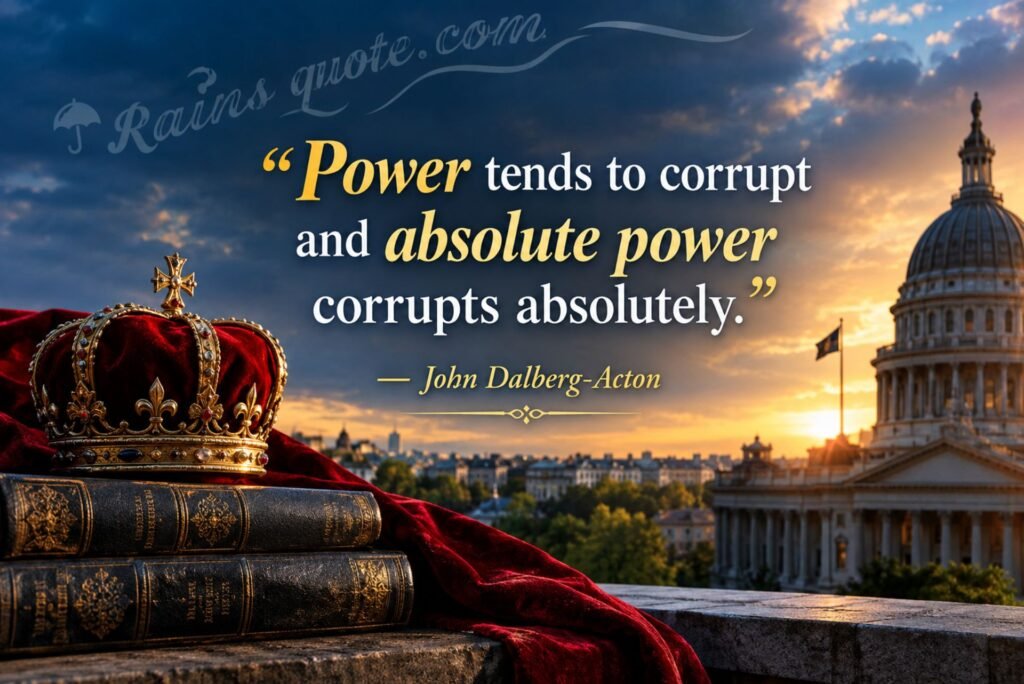
— John Dalberg-Acton
Author: John Dalberg-Acton was an English historian and politician known for his writings on liberty, history, and the dangers of concentrated political authority.
🎬 Context of the Quote: This quote warns about the risks associated with unchecked authority. It is commonly used to express the idea that a lack of accountability can increase the potential for abuses of power.
15. “The power of the people and the power of reason are one.”
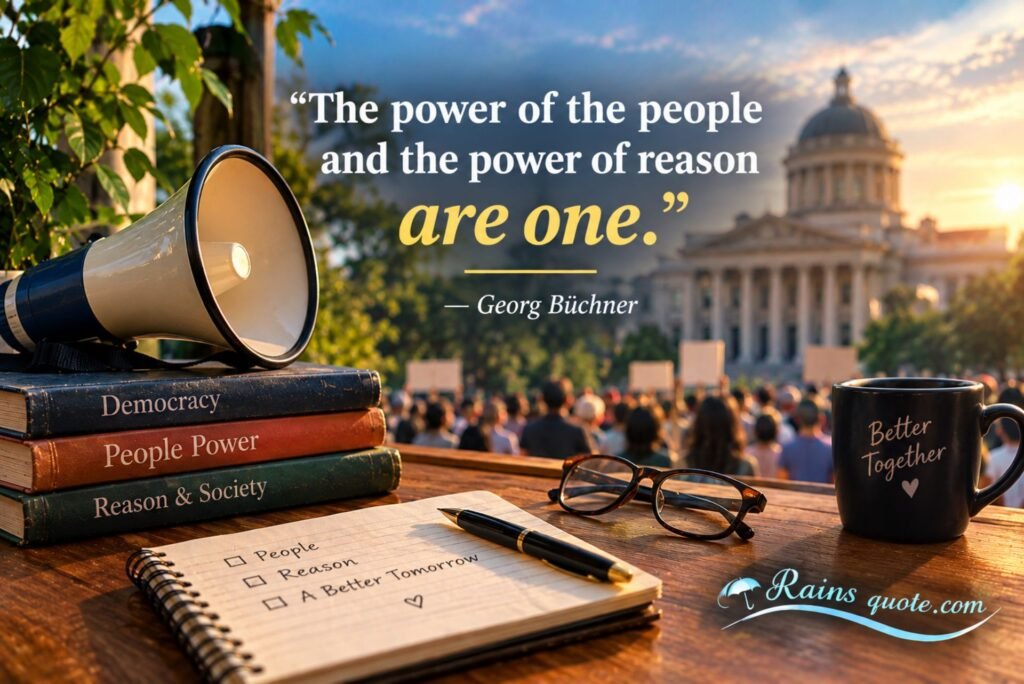
— Georg Büchner
Author: Georg Büchner was a German playwright, poet, and revolutionary thinker best known for works including Woyzeck and Danton’s Death.
🎬 Context of the Quote: This quote connects collective public influence with rational thought. It suggests that the strength of people can be closely connected to their ability to think, question, and reason.
16. “Power concedes nothing without a demand. It never did and it never will.”
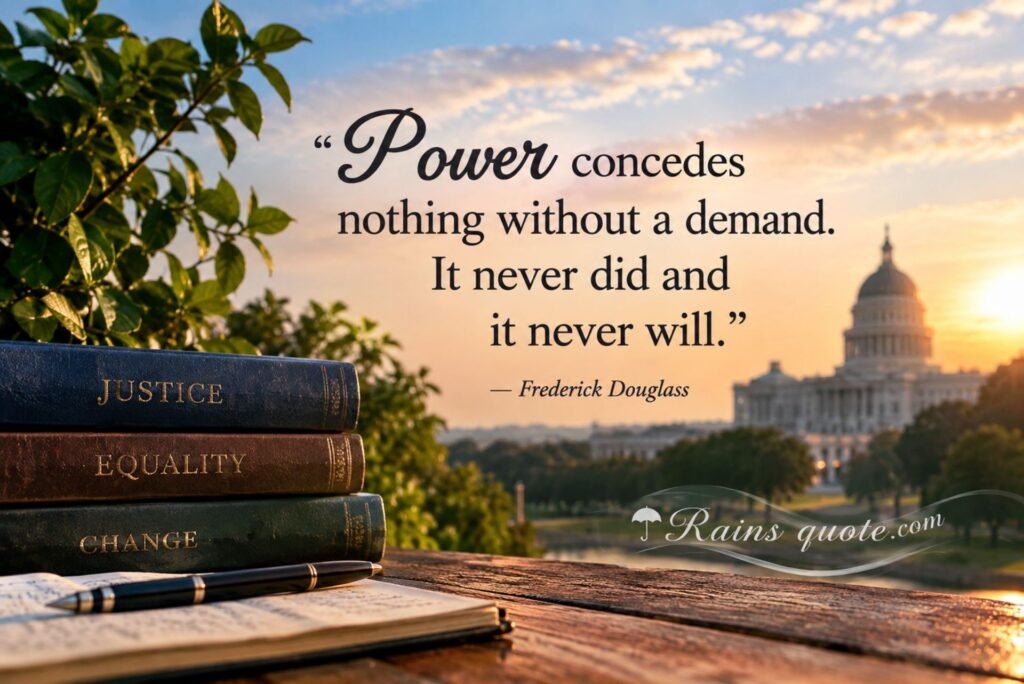
— Frederick Douglass
Author: Frederick Douglass was an American abolitionist, writer, orator, and statesman who became one of the most prominent advocates for the abolition of slavery and equal rights.
🎬 Context of the Quote: This quote argues that those who hold power rarely surrender it voluntarily. It emphasizes the importance of persistent demands and action when seeking social or political change.
Conclusion
Power is not only about control or authority; it is also about knowing how to use influence wisely. These quotes show that true strength comes with responsibility, humility, and thoughtful choices. They remind us that the way we use our power can shape our own lives and affect the people around us.