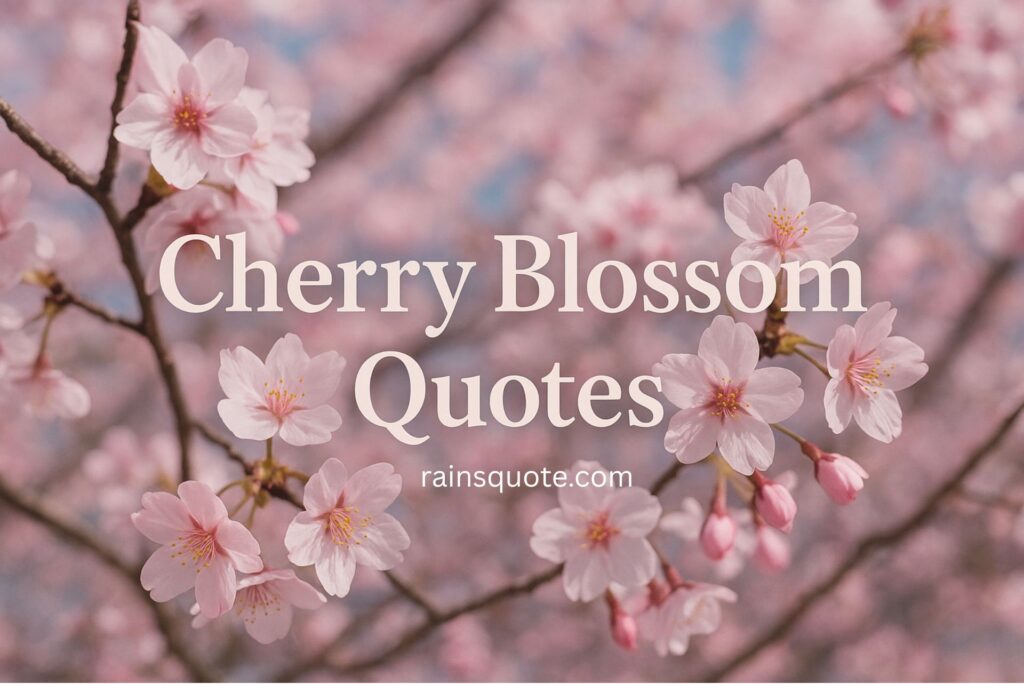
In old Japanese poetry, writers often used Cherry Blossom Quotes to explain the meaning of life. Poets like Matsuo Bashō, Issa, and Ryōkan saw cherry blossoms as a symbol of beauty that never lasts long. They believed these falling flowers remind us that everything in life is temporary.
This small collection of quotes brings their ideas together like a story. Each writer feels something different—some see joy, some feel sadness, and some think about time passing. But all of them agree on one thing: life is short, beautiful, and every moment should be valued before it passes.
1. “Look at the cherry blossoms! Their color and scent fall with them, are gone forever, yet mindless. Spring comes again.”
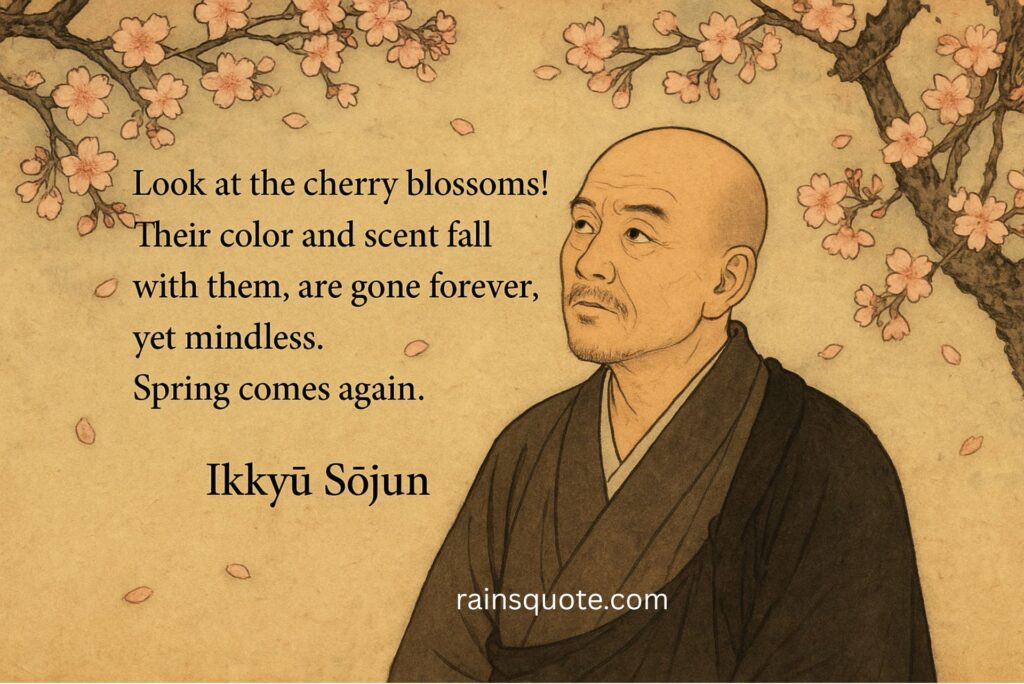
— Ikkyū Sōjun,
Author: Ikkyū Sōjun was a famous Japanese Zen Buddhist monk and poet known for his deep spiritual insights and unconventional, free-thinking style. He often expressed Buddhist teachings through simple yet powerful poetry about life and impermanence.
🎬 Context of the Quote: This quote reflects the Buddhist idea of impermanence, showing how beauty in life is temporary. It reminds us that even though things fade away, nature continues its cycle without stopping.
2. “The blossoms fall as if urging us to treasure every moment of spring.”
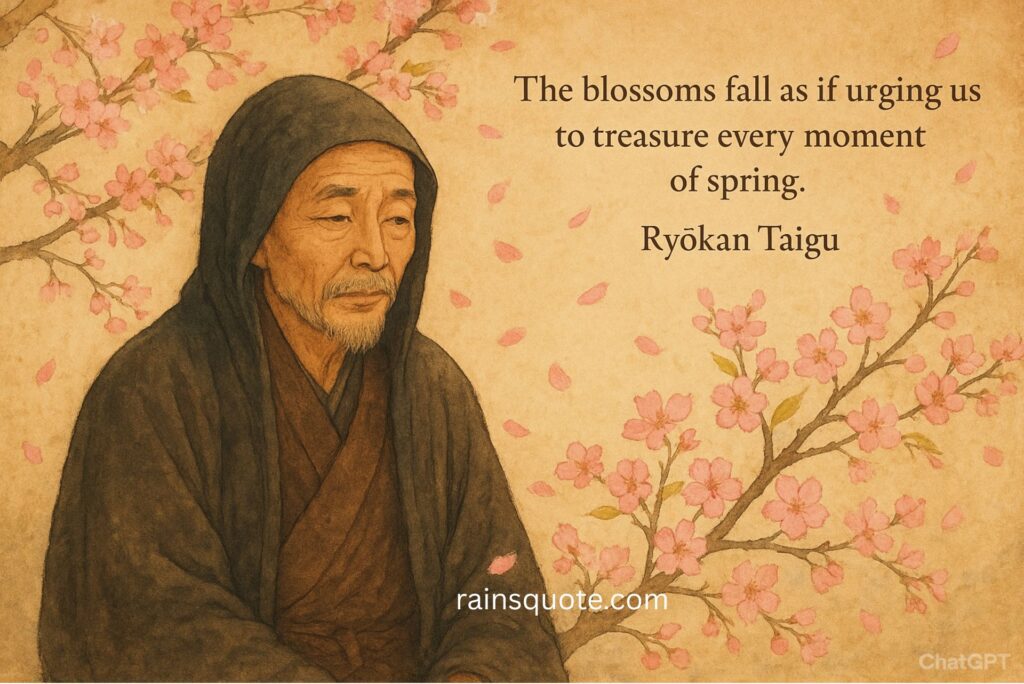
— Ryōkan Taigu
Author: Ryōkan Taigu was a Japanese Zen Buddhist monk known for his gentle nature, simplicity, and deeply reflective poetry. His works often focus on nature, mindfulness, and appreciating life’s small, fleeting moments.
🎬 Context of the Quote: This quote emphasizes the beauty of impermanence and encourages us to value each moment while it lasts. It reflects a mindful way of living, inspired by the changing seasons of nature.
3.“The flowers withered, their color faded away, while meaninglessly I spent my days in the world and the long rains were falling.”
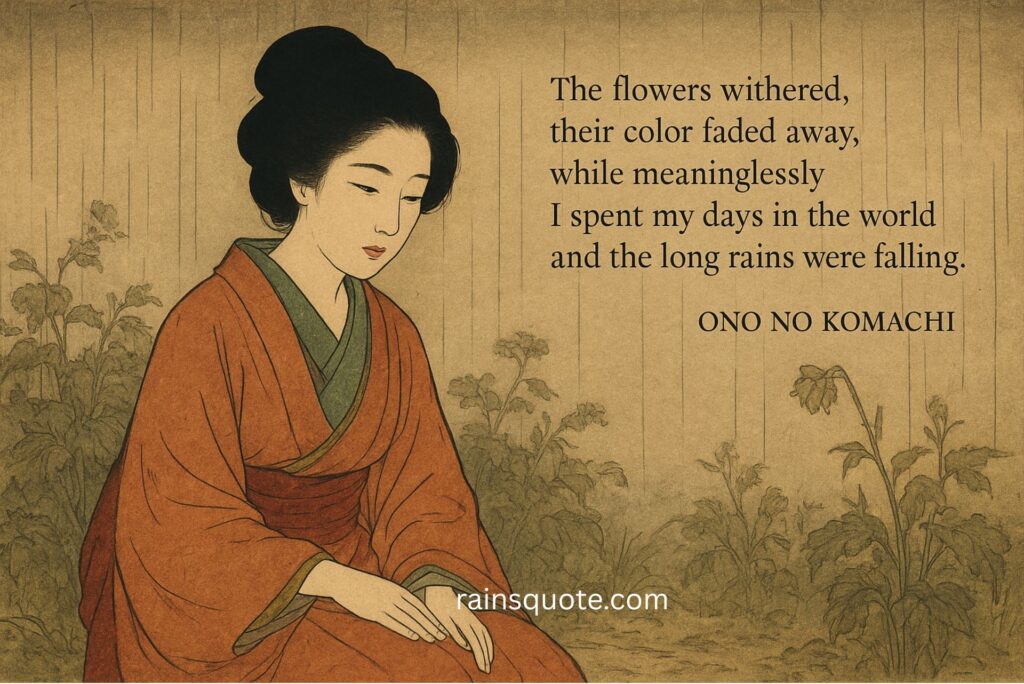
— Ono no Komachi
Author: Ono no Komachi was a famous Japanese poet from the Heian period. She is known for her emotionally deep waka poems about love, beauty, and the sadness of time passing.
🎬 Context of the Quote: This quote reflects on the fading beauty of life and nature. It expresses regret and awareness of time wasted while life and seasons continue to move forward.
4.“Though many things pass, the cherry blossoms return each spring, pure and fleeting as ever.”
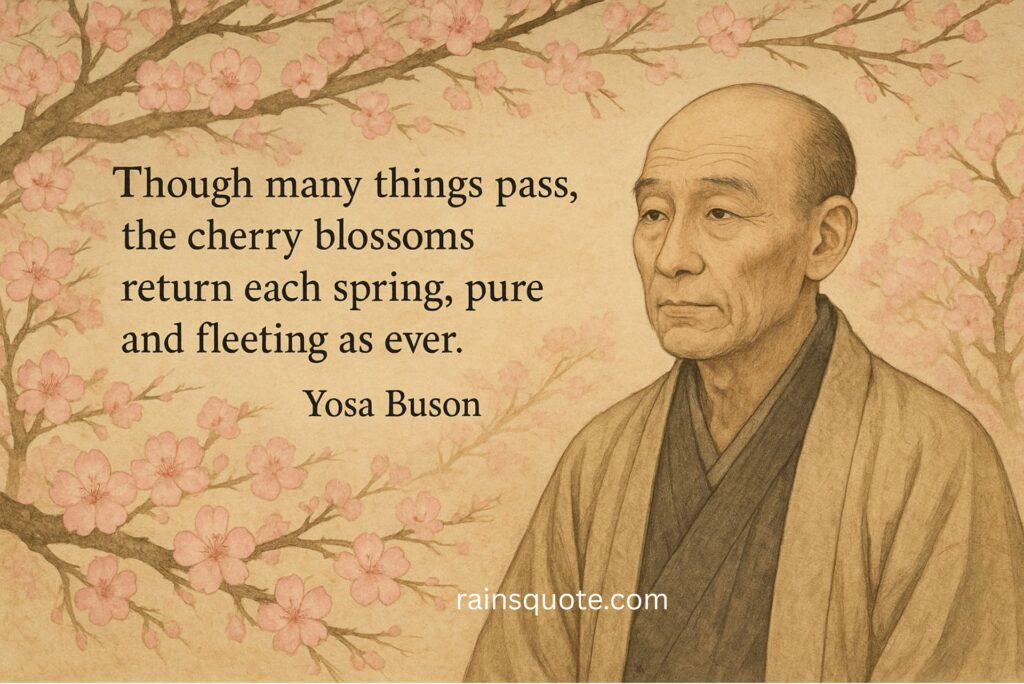
— Yosa Buson
Author: Yosa Buson was a Japanese poet and painter from the Edo period, widely known for his haiku poetry. His work beautifully blends nature imagery with emotional depth and visual artistry.
🎬 Context of the Quote: This quote reflects the cycle of nature and the idea that life continues despite change. It highlights the beauty of renewal and the fleeting nature of moments.
5. “If I were asked to explain the Japanese spirit, I would say it is wild cherry blossoms glowing in the morning sun.”
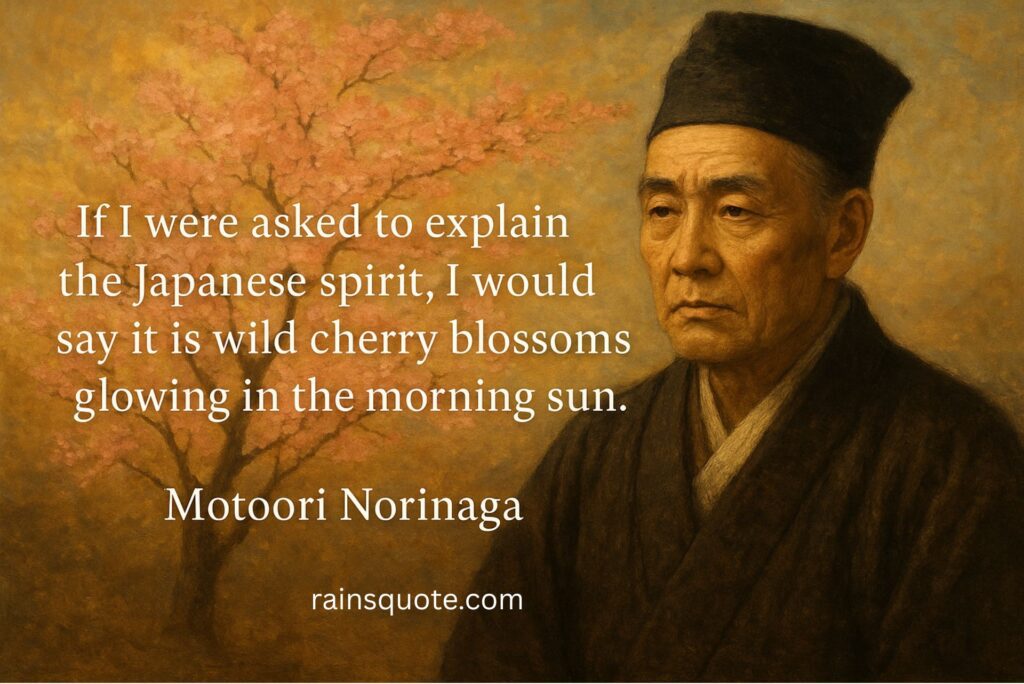
— Motoori Norinaga
Author: Motoori Norinaga was an influential Japanese scholar of the Edo period known for his studies of ancient Japanese literature and culture. He played a key role in shaping ideas about Japanese identity and classical traditions.
🎬 Context of the Quote: This quote expresses an idealized vision of the Japanese spirit through nature imagery. It connects national identity with the beauty, purity, and fleeting brilliance of cherry blossoms.
6.“What a strange thing! to be alive beneath cherry blossoms.”
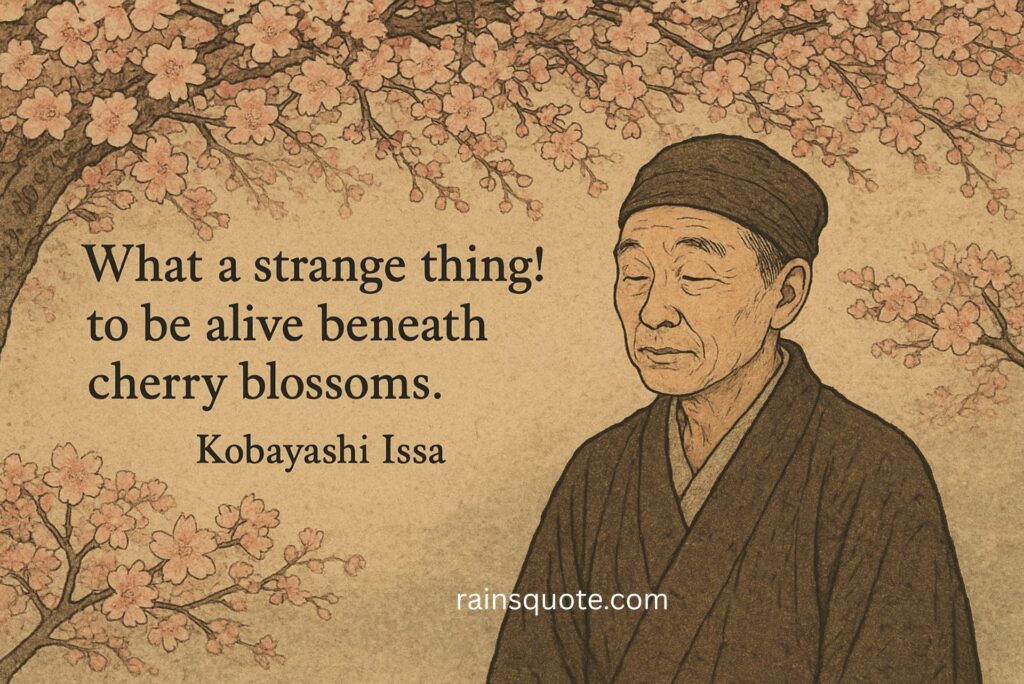
— Kobayashi Issa
Author: Kobayashi Issa was a Japanese haiku poet known for his deeply human, emotional, and often humorous poems. His work reflects compassion, impermanence, and a close connection to everyday life and nature.
🎬 Context of the Quote: This quote expresses a sense of wonder and humility toward life and nature. It highlights the beauty of simply being alive in a world filled with fleeting natural beauty like cherry blossoms.
7.“Between our two lives, there is also the life of the cherry blossom.”
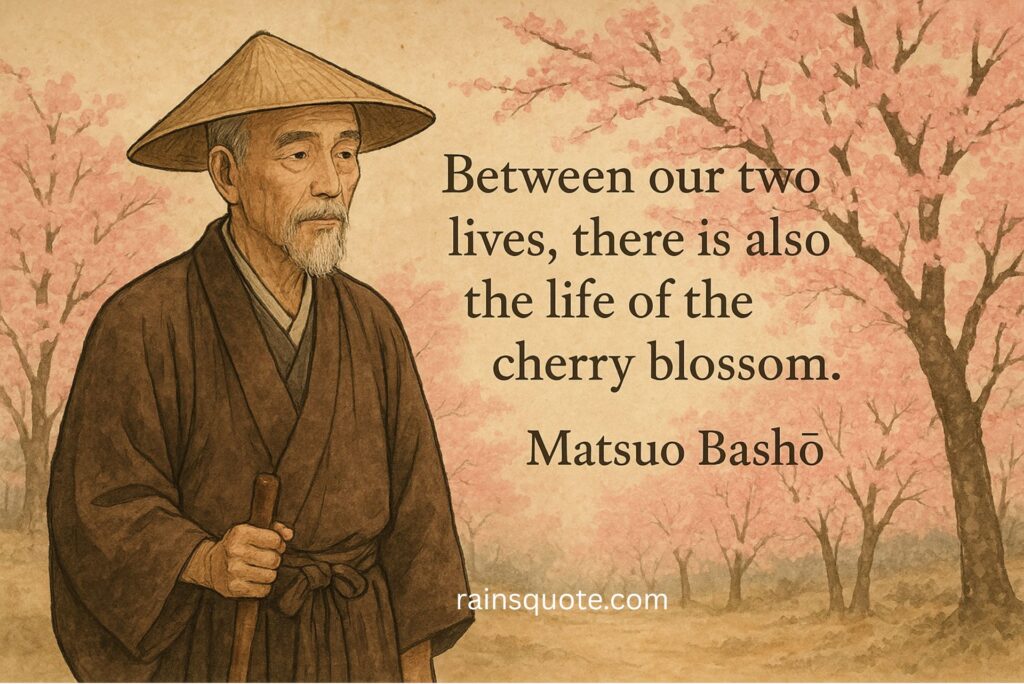
— Matsuo Bashō
Author: Matsuo Bashō was one of Japan’s most famous haiku poets. He is known for his deep, nature-inspired poetry that reflects simplicity, impermanence, and spiritual awareness.
🎬 Context of the Quote: This quote reflects the idea that human life is deeply connected with nature. It highlights the fleeting beauty of existence, like cherry blossoms that bloom briefly between moments of life.
8.“The clouds of cherry blossoms scatter; is it the storm, or have I grown old?”
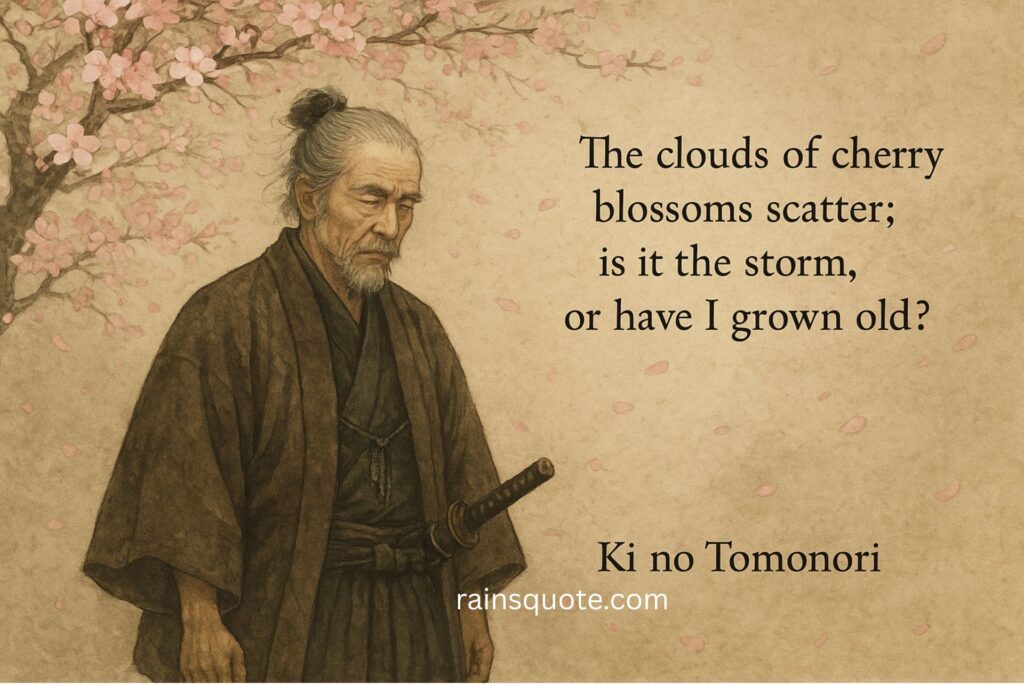
— Ki no Tomonori
Author: Ki no Tomonori was a Japanese poet from the Heian period and one of the Thirty-Six Poetry Immortals. He is known for his elegant waka poetry that often reflects nature, beauty, and emotional sensitivity.
🎬 Context of the Quote: This quote reflects on the fleeting beauty of cherry blossoms as a symbol of time passing. It also expresses a deep personal question about aging and how perception of life changes over time.
9.“The wind has brought enough fallen leaves to build a house, yet the cherry blossoms still fall.”
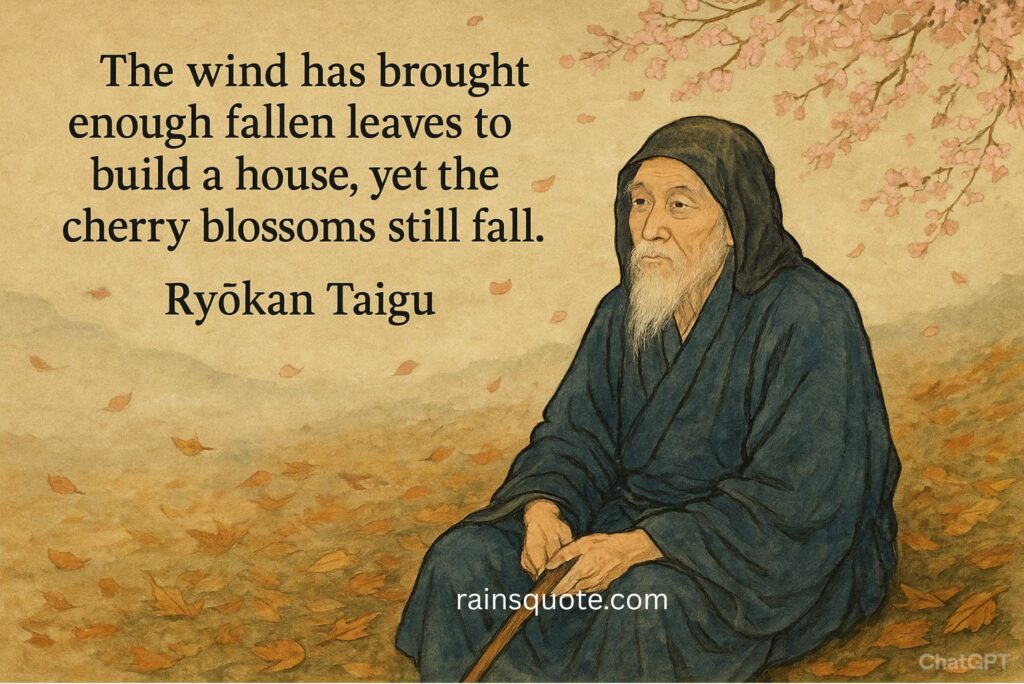
— Ryōkan Taigu,
Author: Ryōkan Taigu was a Japanese Zen monk and poet known for his simple lifestyle and deeply peaceful, nature-inspired poetry. His writings often reflect mindfulness, humility, and acceptance of life’s impermanence.
🎬 Context of the Quote: This quote highlights the endless cycle of change in nature, where even abundance cannot stop natural flow. It reflects the Zen idea that life continues to move and transform regardless of accumulation or loss.
10.“How many, many things they call to mind — these cherry blossoms!”
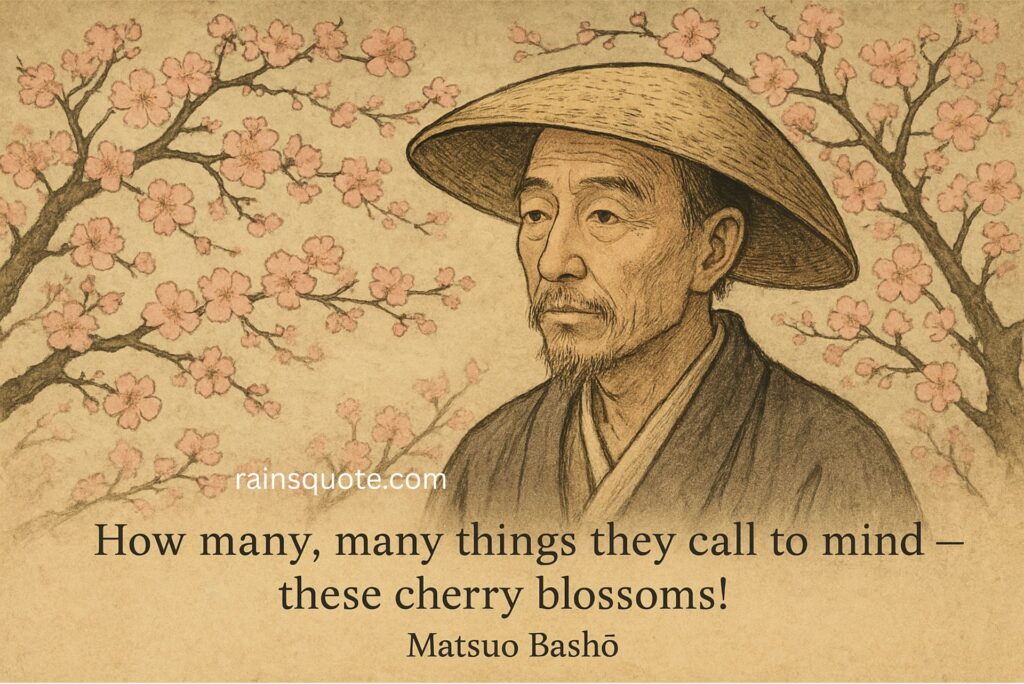
— Matsuo Bashō
Author: Matsuo Bashō was one of Japan’s greatest haiku masters. His poetry is known for its simplicity, deep emotion, and close connection to nature, especially moments of seasonal change.
🎬 Context of the Quote: This quote reflects how cherry blossoms trigger deep memories and emotions. It shows how a simple natural sight can bring back many thoughts about life, time, and human experience.
11. “I write of hell; I describe it with cherry blossoms.”
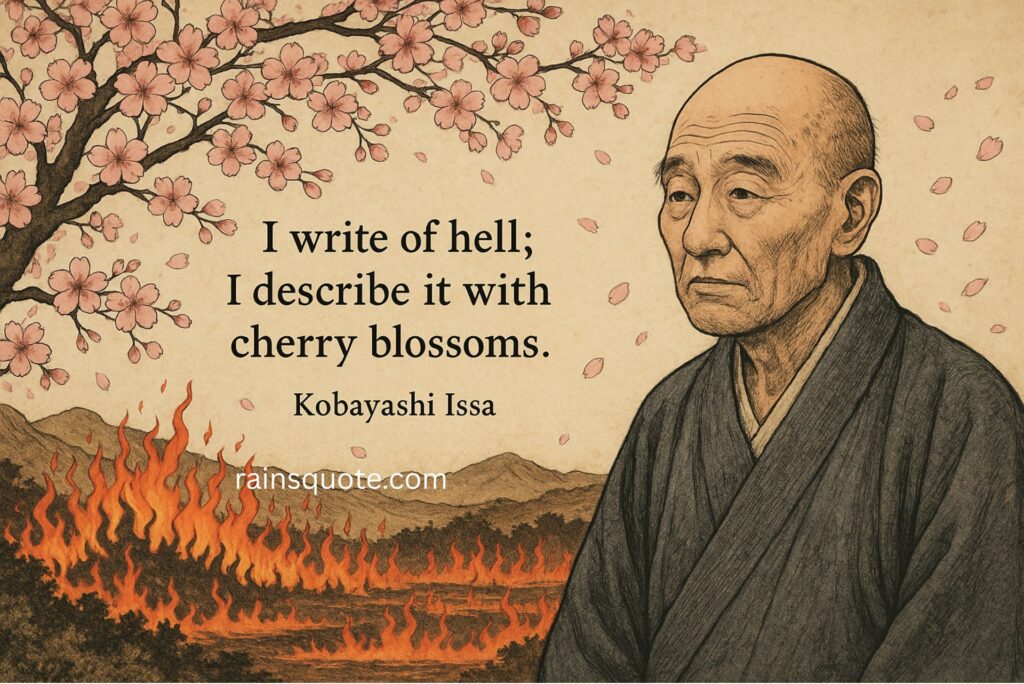
— Kobayashi Issa
Author: Kobayashi Issa was a Japanese haiku poet known for his deeply emotional and human-centered poetry. His works often mix suffering, humor, and compassion, reflecting both hardship and the beauty of life.
🎬 Context of the Quote: This quote contrasts suffering with beauty, showing how even painful realities can be expressed through natural imagery like cherry blossoms. It reflects the idea that beauty and pain often exist side by side in life.
12.“In the cherry blossom’s shade there’s no such thing as a stranger.”
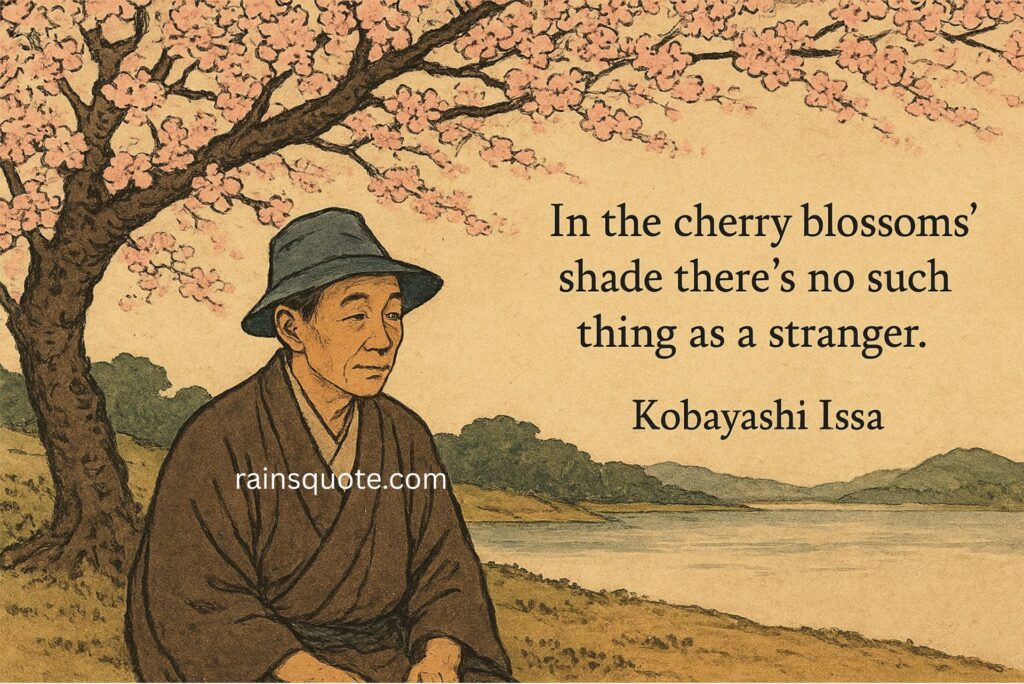
— Kobayashi Issa
Author: Kobayashi Issa was a Japanese haiku poet known for his simple yet deeply emotional style. His poetry often reflects compassion, equality, and a strong connection between humans and nature.
🎬 Context of the Quote: This quote highlights the feeling of unity and shared humanity found in nature’s beauty. It suggests that in moments of wonder, social barriers disappear and people feel connected to each other.
13.“The blossoms by the roadside make me yearn for home.”
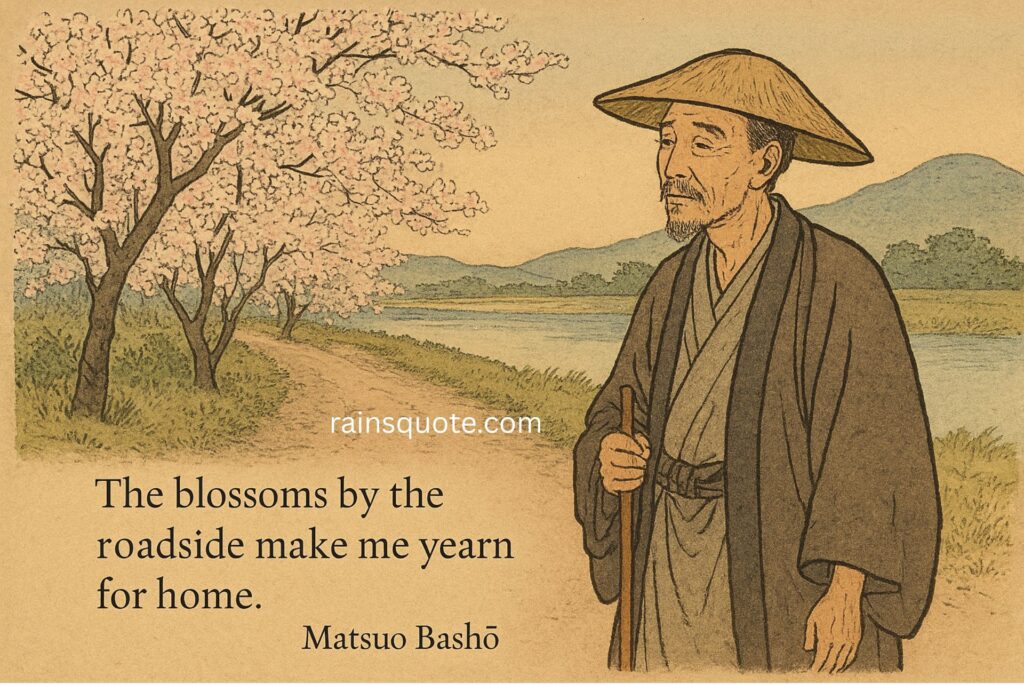
— Matsuo Bashō,
Author: Matsuo Bashō was a renowned Japanese haiku master of the Edo period. He is famous for his travel journals and nature-inspired poetry that express deep emotion through simple, vivid imagery.
🎬 Context of the Quote: This quote reflects the feeling of nostalgia triggered by natural beauty. It shows how cherry blossoms can remind a traveler of home and awaken emotional longing.
14.“The cherry blossoms scatter even as we gaze at them, yet we long for them every spring.”
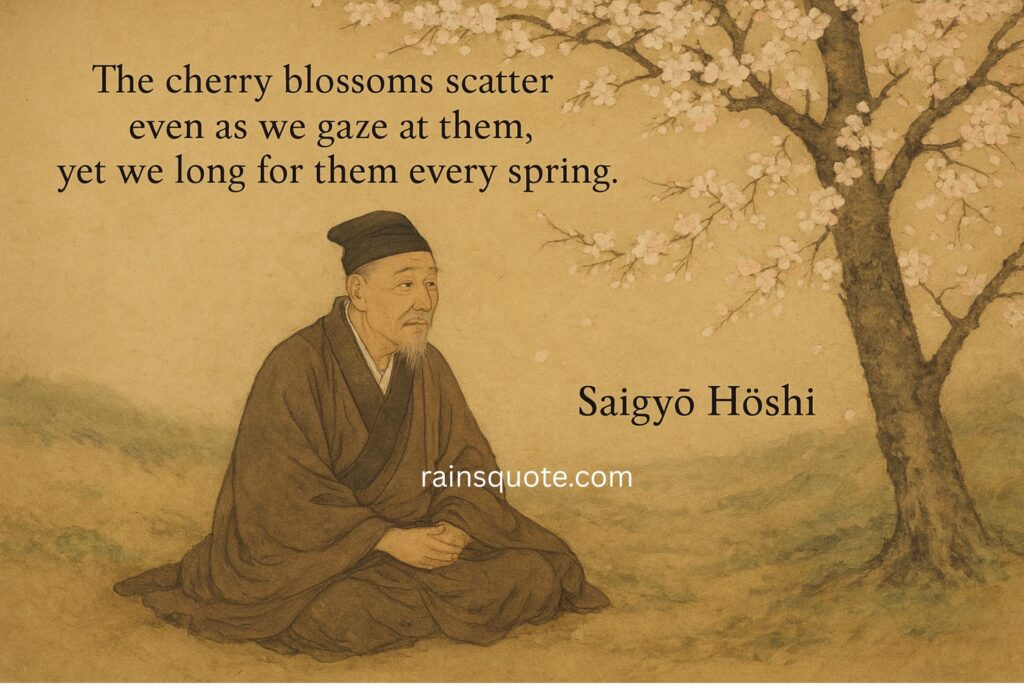
— Saigyō Hōshi,
Author: Saigyō Hōshi was a Japanese Buddhist monk and one of the most influential waka poets. His poetry often reflects themes of impermanence, nature, solitude, and spiritual reflection.
🎬 Context of the Quote: This quote expresses the fleeting nature of beauty and human desire. It shows how cherry blossoms symbolize impermanence, yet people continue to cherish and await them each year.
15.“From all these trees, in the salads, the soup, everywhere, cherry blossoms fall.”
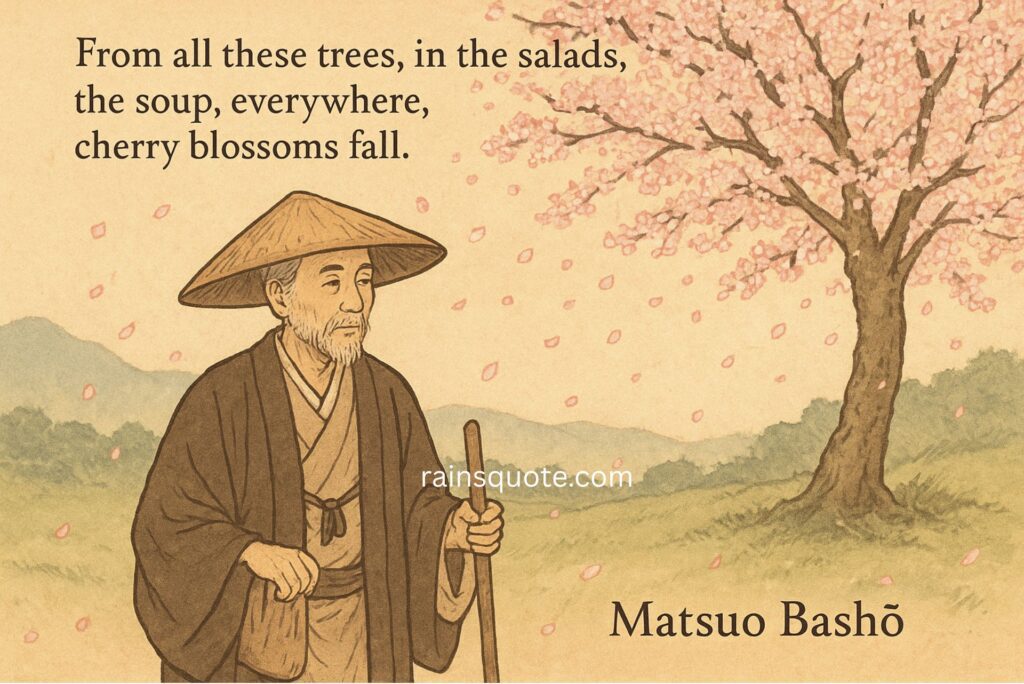
— Matsuo Bashō,
Author: Matsuo Bashō was a famous Japanese haiku master of the Edo period, known for his travel poetry and deep appreciation of nature’s fleeting beauty. His work often captures simple moments that reflect profound emotional and philosophical meaning.
🎬 Context of the Quote: This quote humorously and poetically shows how cherry blossoms fall everywhere, becoming part of daily life. It reflects Bashō’s ability to blend nature with everyday human experience in a simple yet meaningful way.
16. “Let us live like flowers, wild and beautiful and drenched in sun.”
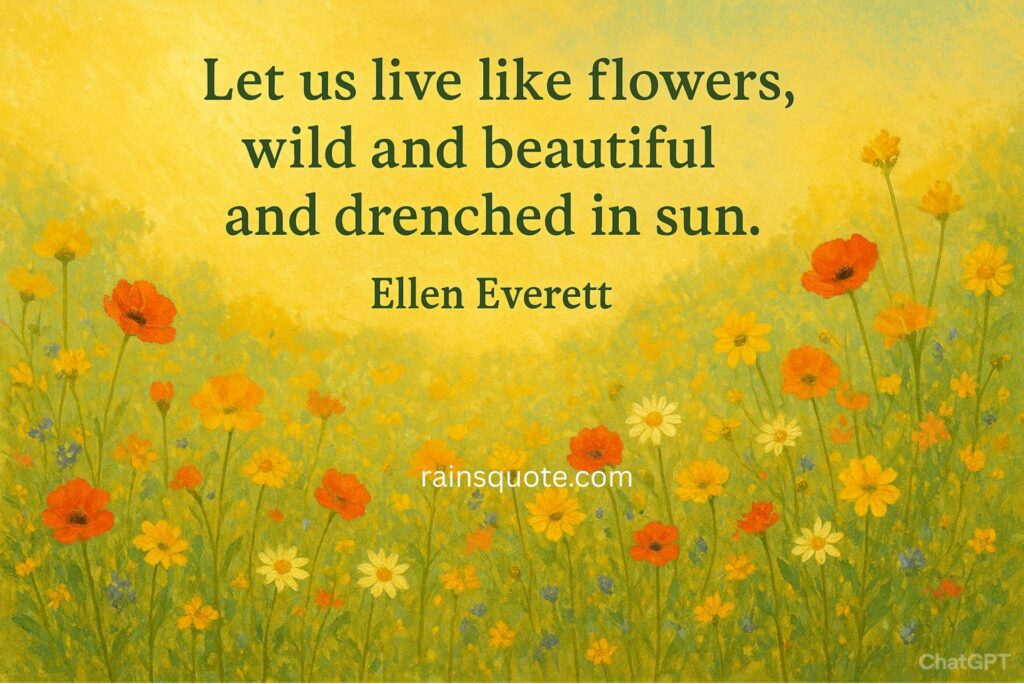
— Ellen Everett
Author: Ellen Everett is often cited in modern inspirational quote collections, though detailed verified biographical information about her remains limited. Her work is mainly known through short poetic and motivational lines shared in literature and social media.
🎬 Context of the Quote: This quote encourages living freely and fully, like flowers growing naturally in sunlight. It symbolizes embracing beauty, freedom, and authenticity in life.
17. “Cherry blossoms in the evening. Ah well, someday we’ll meet again.”
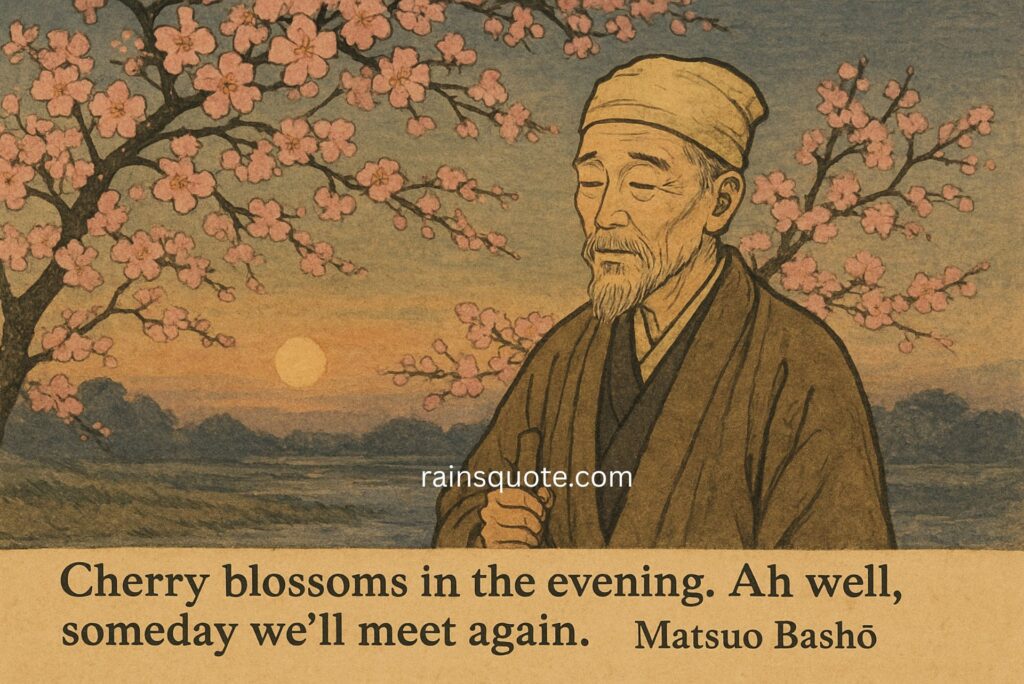
— Matsuo Bashō
Author: Matsuo Bashō was a master of haiku poetry in Japan’s Edo period. He is known for expressing deep emotion through simple images of nature, especially themes of travel, impermanence, and memory.
🎬 Context of the Quote: This quote reflects a gentle sense of farewell and hope. It connects the beauty of cherry blossoms with parting, suggesting that separation is temporary and reunion may come again in time.
18.“Love is like the cherry blossoms—brief, yet unforgettable.”
— Traditional Japanese Saying
Author: This is a traditional Japanese proverb-style saying, often used in modern inspirational collections. It is not tied to a single verified historical author, but reflects cultural themes commonly found in Japanese poetry and folklore about nature and impermanence.
🎬 Context of the Quote: This quote compares love to cherry blossoms, showing that even short-lived moments can leave a lasting emotional impact. It reflects the idea that beauty and meaning often come from things that don’t last long.
Conclusion
These quotes remind us how old poets used falling flowers to show the meaning of life. They saw beauty in things that do not last and taught that everything in life is always changing.
In the end, the message is simple: life is short, so every moment matters. Like blossoms that fall and return again, we should value the time we have and notice the beauty around us.
FAQS
1. What do cherry blossoms symbolize?
For me, cherry blossoms remind me how short life is. They bloom beautifully, but only for a while, teaching me to value every moment.
2. What is a famous quote about sakura?
Once I read a sakura quote that said blossoms fall even at their best. It made me realize that even in our brightest times, change will always come.
3. Do cherry blossoms have a scent?
When I stood under a cherry tree, I noticed the scent was faint, almost hidden. Just like some joys in life—soft, but unforgettable.
4. Which country is famous for cherry blossoms?
I always dream of Japan in spring. The whole country turns pink with blossoms, and it feels like the world pauses to breathe beauty.
5. What is the meaning of “hanami”?
I learned that “hanami” means watching blossoms. To me, it’s more than that—it’s stopping for a moment to enjoy life as it is.
6. What do cherry blossoms represent in life?
Whenever I see them fall, I think of endings that are also beginnings. They remind me not to fear change, but to see beauty in it.