Lilies are more than just beautiful flowers. Their soft beauty and peaceful presence have inspired people for years. That’s why many writers and poets have shared beautiful Lily flower Quotes to express deep feelings and meaningful thoughts.
In these quotes, each author describes lilies in a unique way. Some connect them with love and purity, while others see them as symbols of peace, strength, and life’s simple lessons.
1.“There is a garden in her eyes where roses and white lilies flow.”
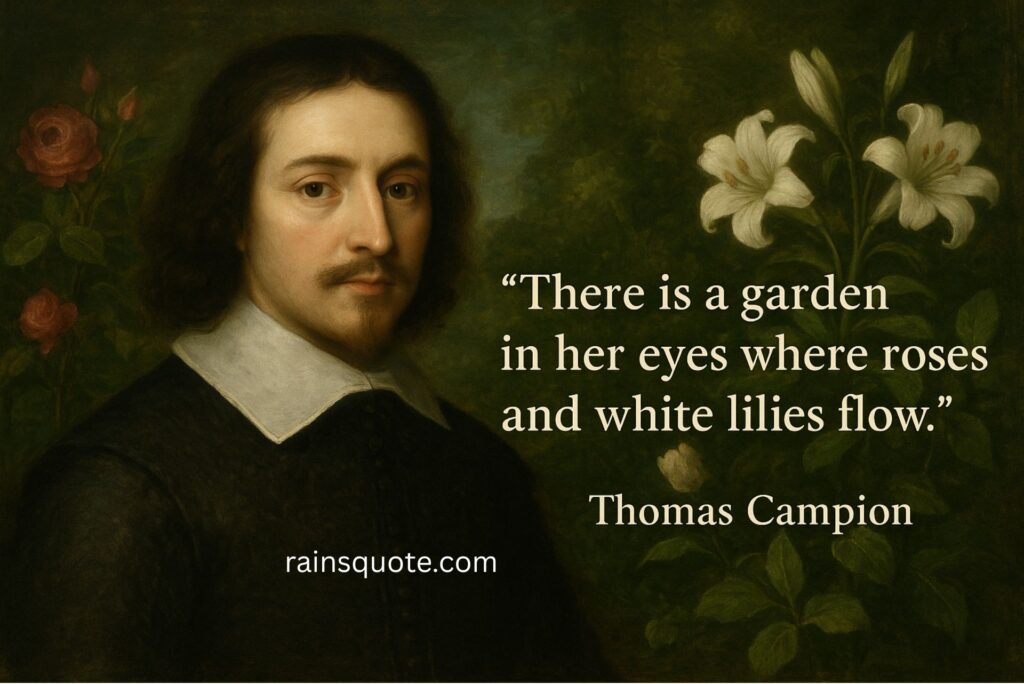
— Thomas Campion
Author: Thomas Campion was an English poet, composer, and doctor from the Renaissance period. He is well known for his lyrical poetry and beautiful songs that often explore love and nature.
🎬 Context of the Quote: This quote uses romantic imagery to describe a woman’s eyes as a beautiful garden filled with flowers. It reflects deep admiration, love, and poetic beauty through nature symbolism.
2.“A lily or a rose never pretends, and its beauty is that it is what it is.”
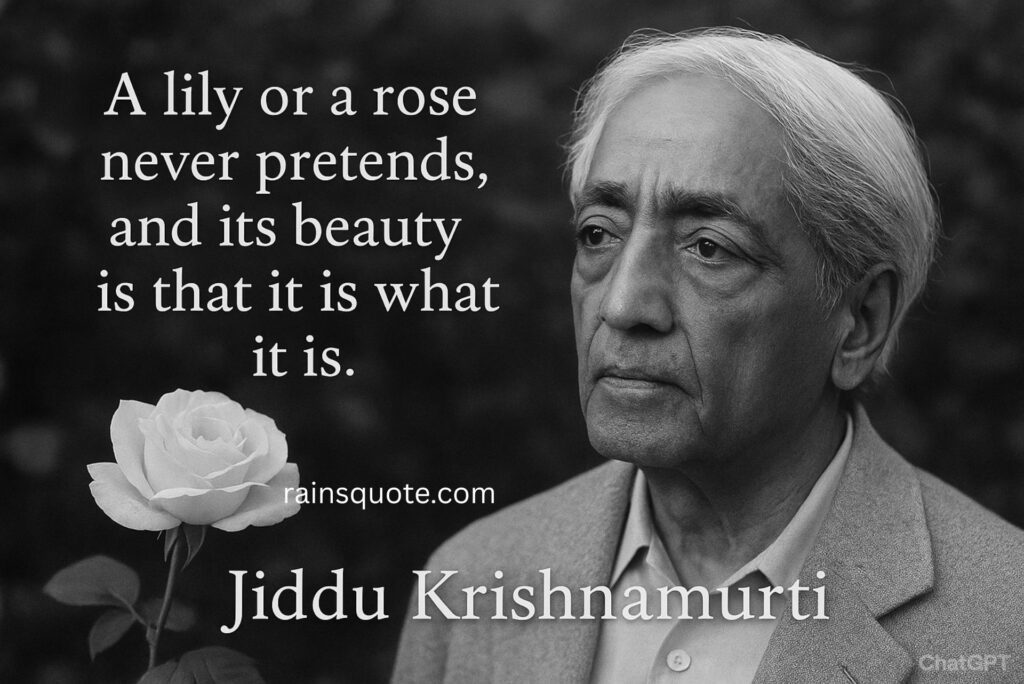
— Jiddu Krishnamurti
Author: Jiddu Krishnamurti was an Indian philosopher and speaker known for his teachings on self-awareness, freedom from conditioning, and living with truth. He rejected organized belief systems and encouraged independent thinking.
🎬 Context of the Quote: This quote emphasizes authenticity and natural simplicity. It suggests that true beauty comes from being genuine, without pretending or trying to be something else.
3.“As the lily among thorns, so is my love among the daughters.”
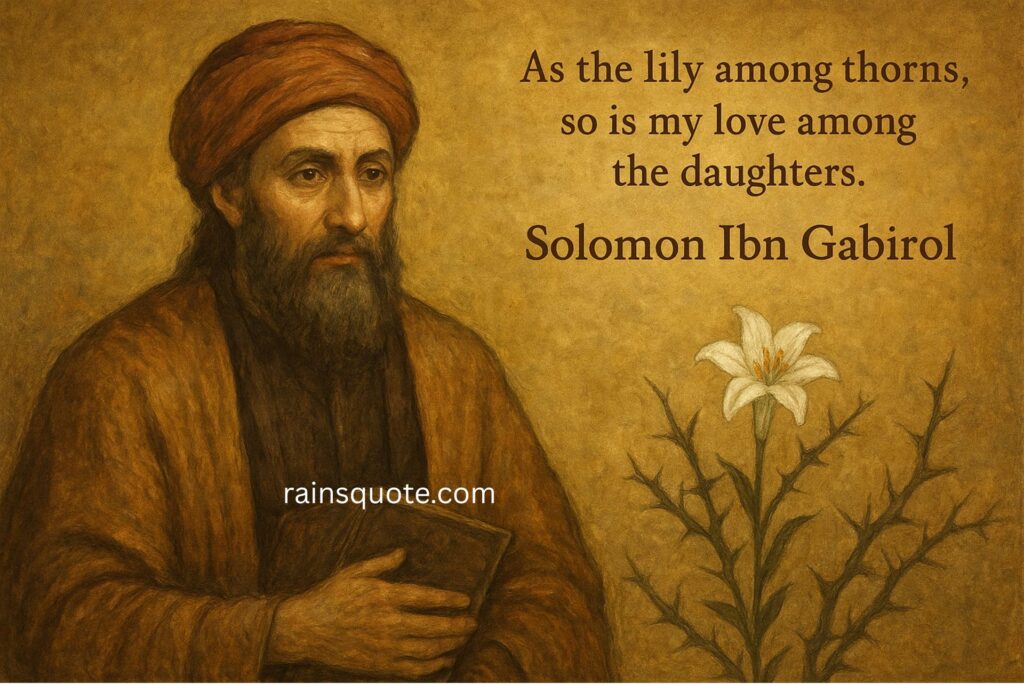
— Solomon Ibn Gabirol
Author: Solomon Ibn Gabirol was a medieval Jewish philosopher and poet from Al-Andalus. He is known for his deep spiritual writings and poetic expressions that often blend philosophy with emotional and religious themes.
🎬 Context of the Quote: This quote uses a poetic comparison to highlight the uniqueness and beauty of a loved one. It suggests that the beloved stands out gracefully and purely among others, like a lily among thorns.
4.“Had it lived long, it would have been Lilies without roses within.”
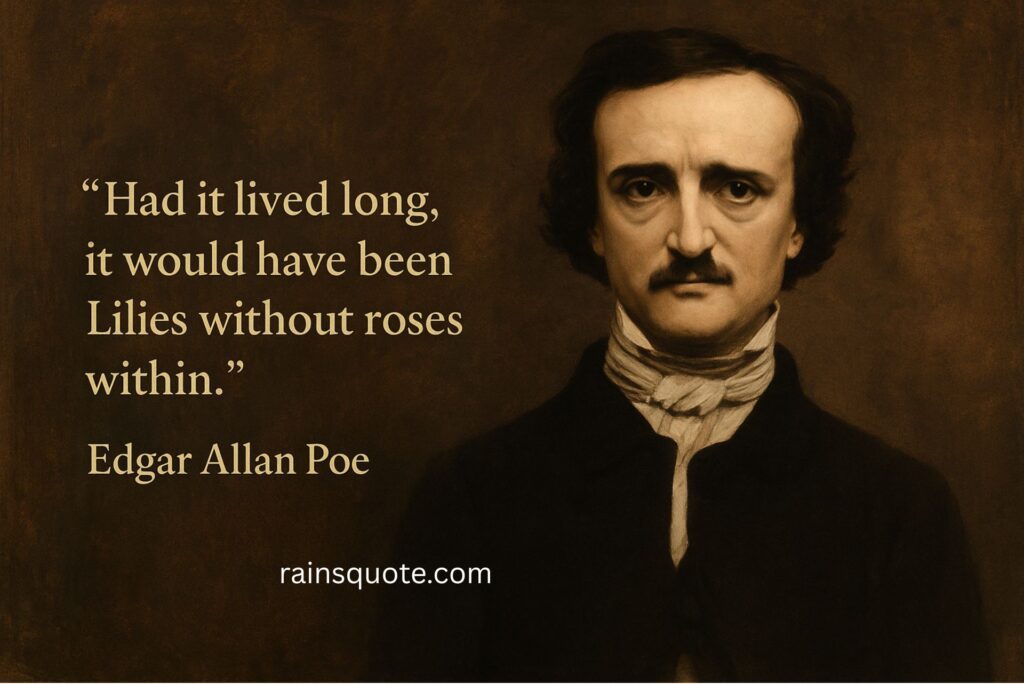
— Edgar Allan Poe
Author: Edgar Allan Poe was a 19th-century American author known for his dark, emotional, and gothic style of writing. He is famous for poems and stories like The Raven and The Tell-Tale Heart, which explore themes of love, loss, and mystery.
🎬 Context of the Quote: This quote reflects Poe’s poetic and symbolic style, using flowers to represent beauty and emotion. It suggests a contrast between outward purity and inner depth, often hinting at loss or unrealized potential.
5.“A lily is a water’s diamond.”
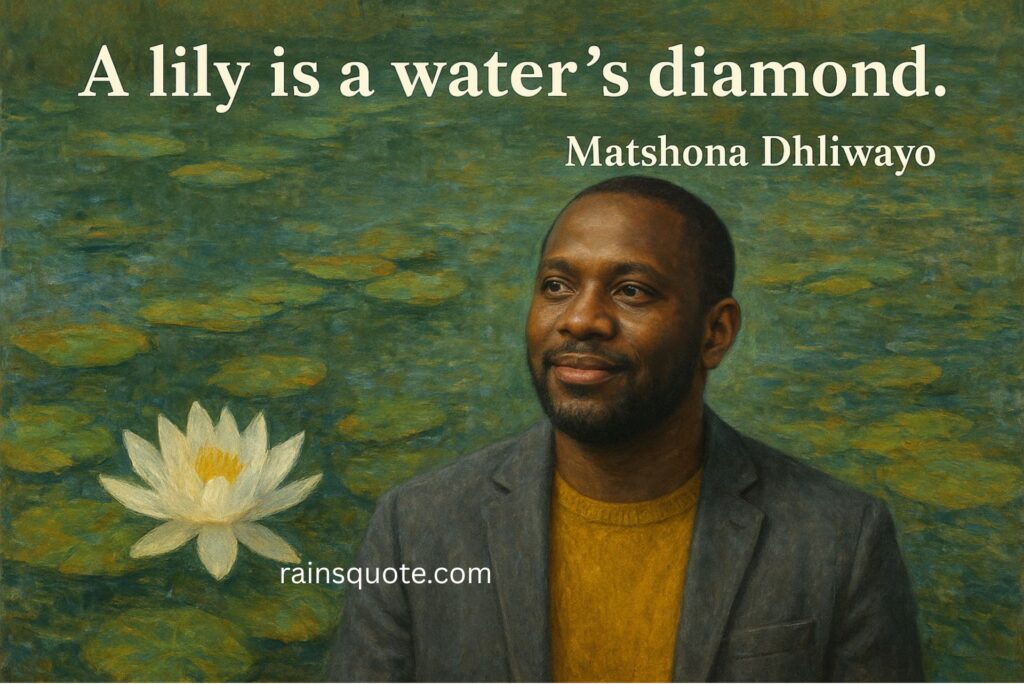
— Matshona Dhliwayo
Author: Matshona Dhliwayo is a Canadian-based philosopher and writer known for his inspirational and thought-provoking quotes. His work often focuses on wisdom, nature, love, and self-growth.
🎬 Context of the Quote: This quote compares a lily floating on water to a diamond, highlighting its rare and natural beauty. It suggests that true elegance and value often exist in simple, natural forms.
6. “Consider the lilies of the field whose bloom is brief:
We are as they;
Like them we fade away
As doth a leaf.”
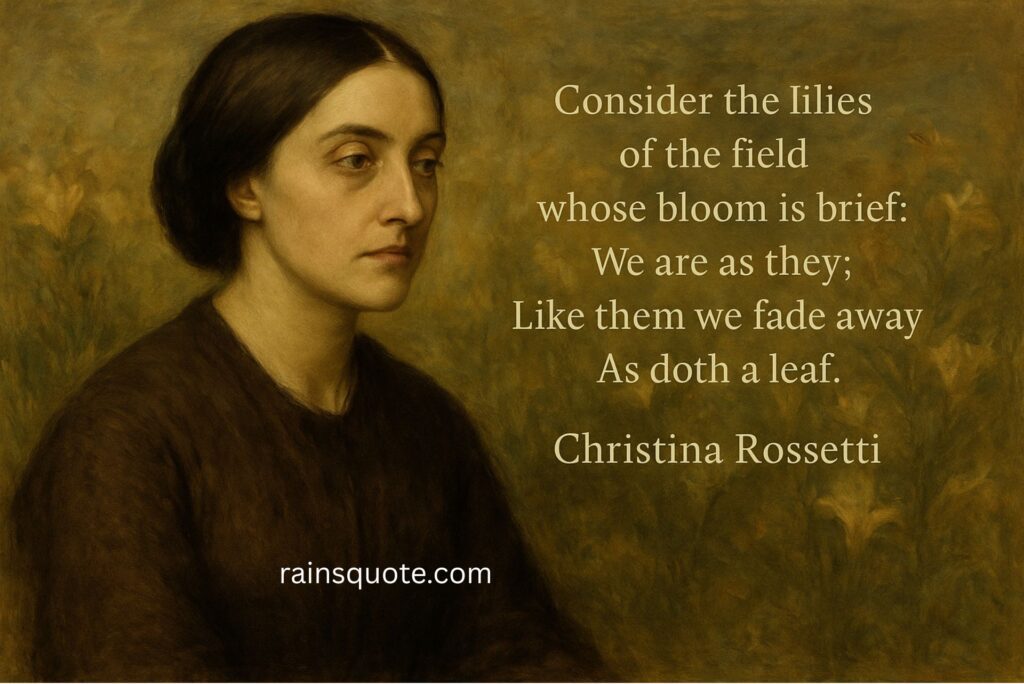
— Christina Rossetti
Author: Christina Rossetti was a 19th-century English poet known for her emotional, religious, and nature-inspired poetry. Her works often explore themes of mortality, faith, and the fleeting beauty of life.
🎬 Context of the Quote: This quote reflects on the temporary nature of life and beauty. It compares human existence to lilies and leaves, reminding us that everything in life is brief and eventually fades.
7. “It is not growing like a tree in bulk, doth make man better be… A lily of a day is fairer far in May, Although it falls and die that night—It was the plant and flower of Light.”
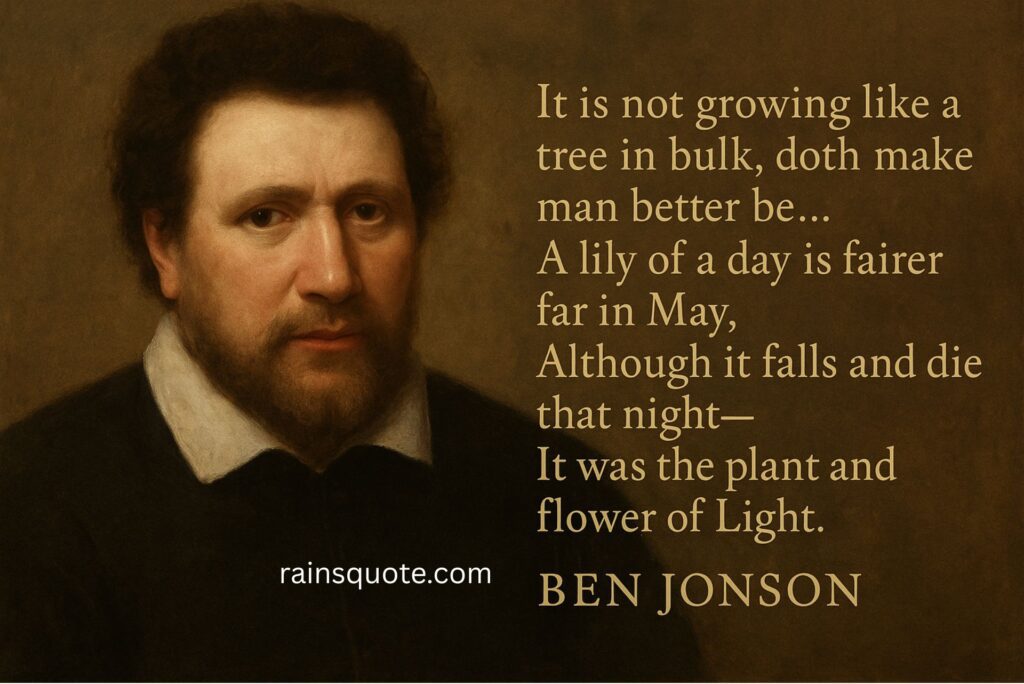
— Ben Jonson
Author: Ben Jonson was a major English poet and dramatist of the Renaissance era. He is known for his sharp wit, classical style, and influential works in poetry and theatre alongside Shakespeare’s time.
🎬 Context of the Quote: This quote reflects that true beauty and meaning are not about long life or size, but about purity and light. Even something short-lived, like a lily that lasts only a day, can be more beautiful and meaningful than something that grows slowly but lacks essence.
8. “Look to the lilies and how they grow! ‘Twas thus the Saviour said, that we, Even in the simplest flowers that blow, God’s ever-watchful care might see.”
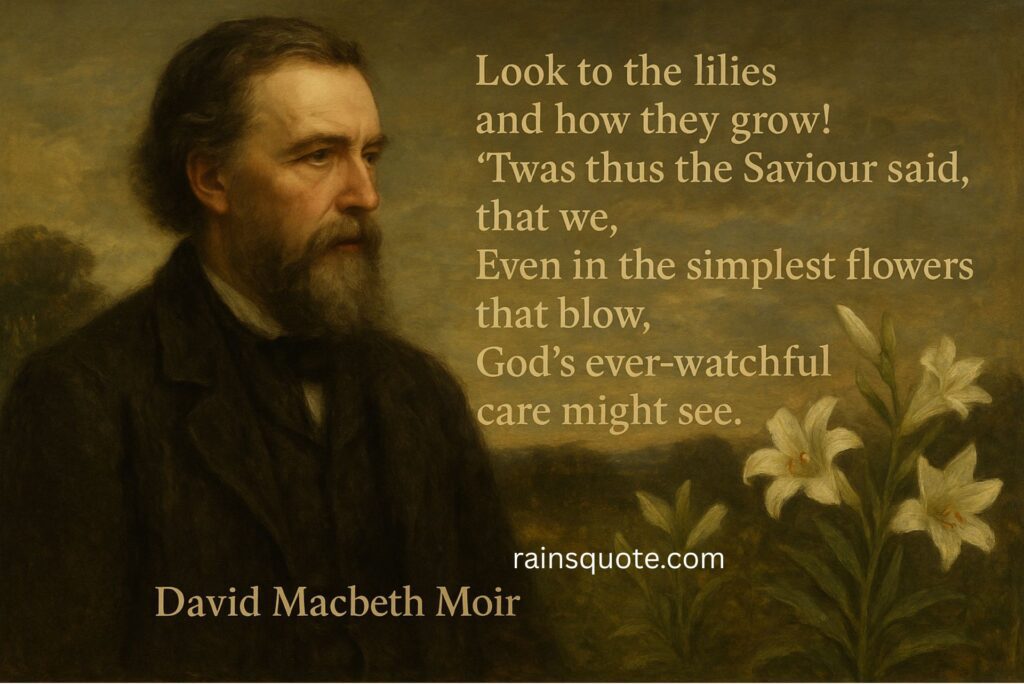
— David Macbeth Moir
Author: David Macbeth Moir was a Scottish poet and doctor known for his reflective and religiously inspired poetry. His works often combine nature, faith, and moral lessons in a simple, heartfelt style.
🎬 Context of the Quote: This quote reflects a spiritual lesson drawn from nature, encouraging people to observe lilies as a symbol of divine care. It suggests that even the simplest flowers remind us of God’s protection and presence in everyday life.
9.“The ocean’s dirt does not affect the lily’s beauty.”
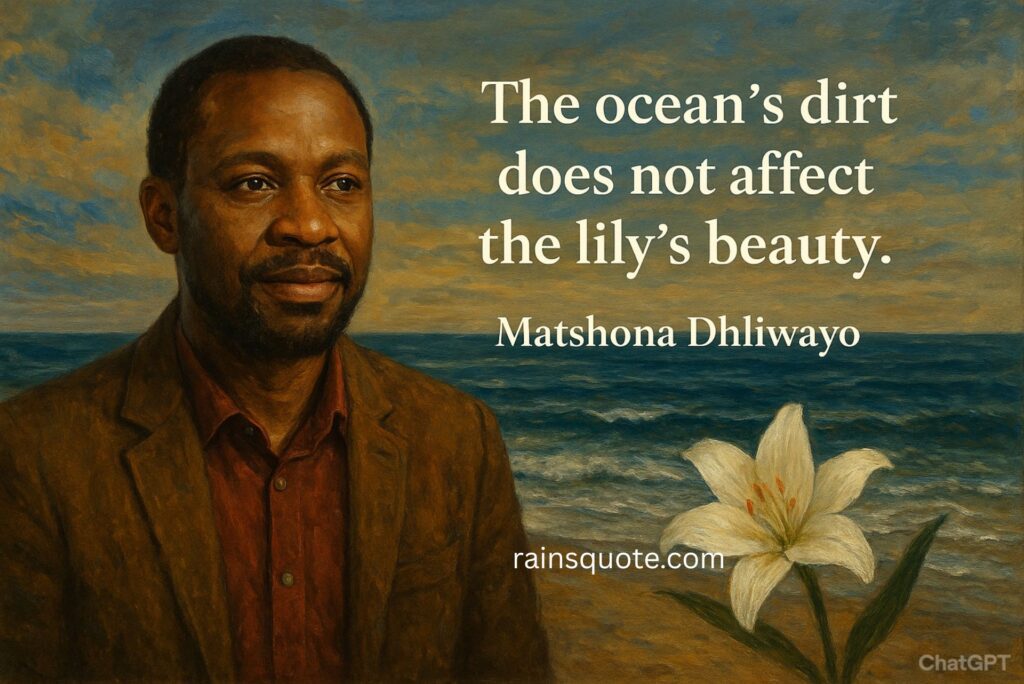
— Matshona Dhliwayo
Author: Matshona Dhliwayo is a modern philosopher and writer known for his inspirational sayings. His quotes often focus on inner strength, purity, and rising above negativity through wisdom and self-belief.
🎬 Context of the Quote: This quote highlights the idea that true beauty and inner worth cannot be harmed by external negativity. It suggests that a strong and pure character remains unaffected even in a polluted or challenging environment.
10. “Is not this lily pure? What fuller can procure A white so perfect, spotless clear As in this flower doth appear?”
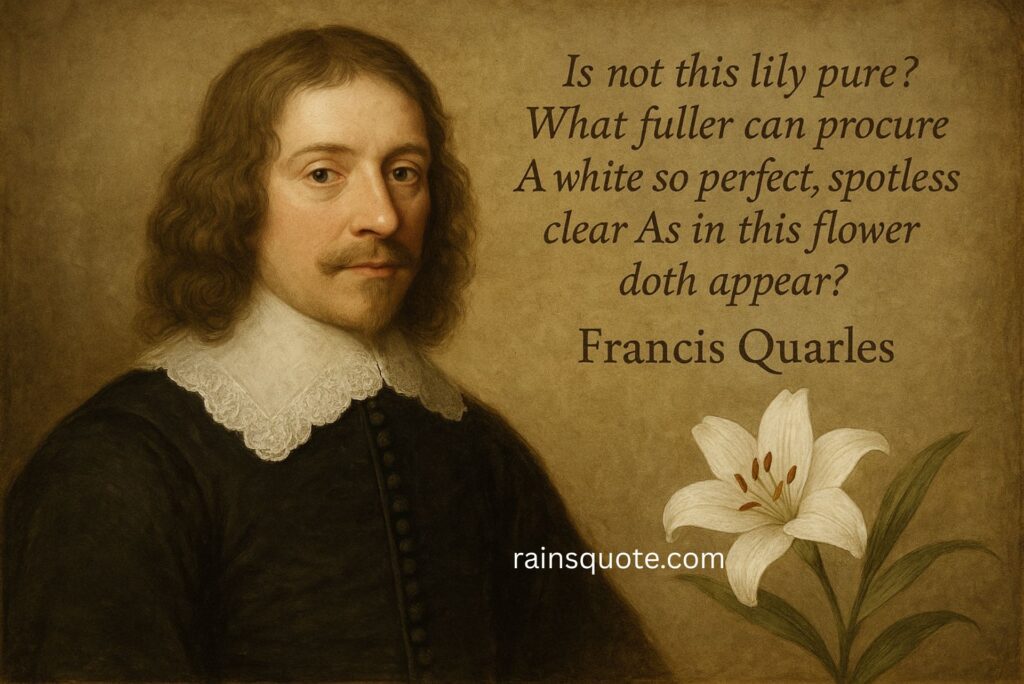
— Francis Quarles
Author: Francis Quarles was a 17th-century English poet famous for his religious and symbolic poetry. His works often used natural imagery to express spiritual purity and moral lessons.
🎬 Context of the Quote: This quote praises the lily as a symbol of perfect purity and untouched beauty. It reflects admiration for nature’s simplicity and suggests that true perfection can be found in natural creation.
11. “But who will watch my lilies,
When their blossoms open white?
By day the sun shall be sentry,
And the moon and the stars by night!”
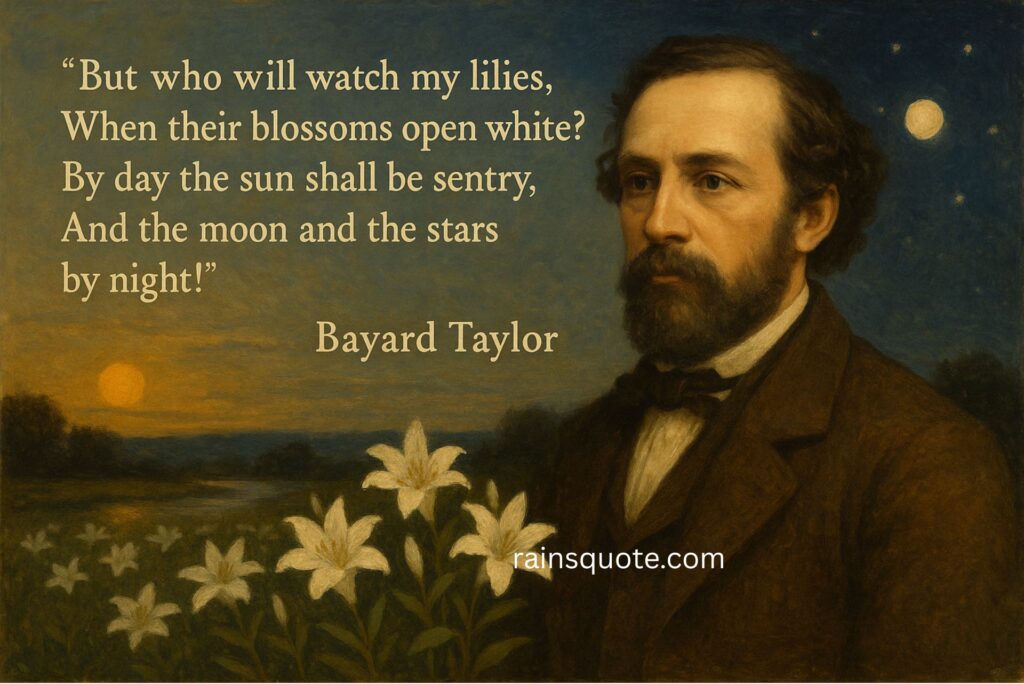
— Bayard Taylor
Author: Bayard Taylor was a 19th-century American writer known for his poetry, travel literature, and translations. His works often reflect a deep appreciation for nature, imagination, and romantic expression.
🎬 Context of the Quote: This quote describes nature as a guardian of beauty, where celestial forces protect the lilies. It reflects a romantic idea that the sun, moon, and stars watch over the natural world with care and harmony.
12.“The rose is the flower and handmaiden of love – the lily, her fair associate, is the emblem of beauty and purity.”
— Dorothea Dix
Author: Dorothea Dix was a 19th-century American reformer known for her pioneering work in improving mental health care and prison conditions. She also contributed writings that reflected her thoughtful and humanitarian outlook on life and symbolism.
🎬 Context of the Quote: This quote highlights symbolic meanings of flowers, where the rose represents love and the lily represents purity and beauty. It reflects a poetic way of expressing emotional and moral qualities through nature.
13. “And the stately lilies stand
Fair in the silvery light,
Like saintly vestals, pale in prayer;
Their pure breath sanctifies the air,
As its fragrance fills the night.”
— Julia C.R. Dorr
Author: Julia C. R. Dorr was a 19th-century American poet known for her lyrical and reflective poetry. Her works often focus on nature, spirituality, and gentle moral imagery expressed in a graceful style.
🎬 Context of the Quote: This quote describes lilies as sacred and pure symbols in nature, glowing peacefully in moonlight. It reflects a spiritual view of nature where beauty feels holy and calming, almost like a prayer in silence.
14.“I would far rather have two or three lilies of the valley gathered for me by a person I like, than the most expensive bouquet that can be bought.”
— Elizabeth Gaskell
Author: Elizabeth Gaskell was a 19th-century English writer known for her novels about social life, class differences, and human relationships. Her works often highlight kindness, sincerity, and emotional depth in everyday life.
🎬 Context of the Quote: This quote emphasizes the value of love and sincerity over material wealth. It suggests that simple, heartfelt gestures from someone you care about are more meaningful than expensive gifts.
Conclusion
In the end, these quotes show how a simple flower can carry deep meaning. They remind us that beauty is not just about looks, but also about purity, peace, and inner strength.
Different writers express the same idea in their own way, but all point toward one truth—real beauty is natural, simple, and full of meaning.
FAQs
1. What do lily flowers represent?
Lily flowers usually represent purity, peace, love, and inner beauty. They are often used in poetry to express deep emotions and calm feelings.
2. Why are lilies often used in quotes and poetry?
Lilies are seen as simple yet powerful symbols of nature. Writers use them to show ideas like beauty, innocence, love, and the meaning of life.
3. Do lilies have a meaning in love?
Yes, in many writings lilies are linked with love, especially pure and gentle love. They are not loud or passionate symbols, but soft and meaningful ones.
4. What is special about lily flowers?
Lilies are special because of their natural elegance and calm beauty. They are often connected with hope, strength, and peaceful thoughts.